
Can You Ever Win a Nobel Prize in Literature?
The alternating interpretations of Nobel’s will and the controversies about the award.
Winning a Nobel Prize in Literature is probably a dream of every writer. Having no geographical restrictions makes everyone eligible for the prize, but are we, really? Even though the main mission of the Nobel Committee is to identify the finest author and their work, it’s not always that straightforward in reality. Many argue that the political and national interests of the jury have come in the way during the selection process, leaving the true laureates empty-handed.
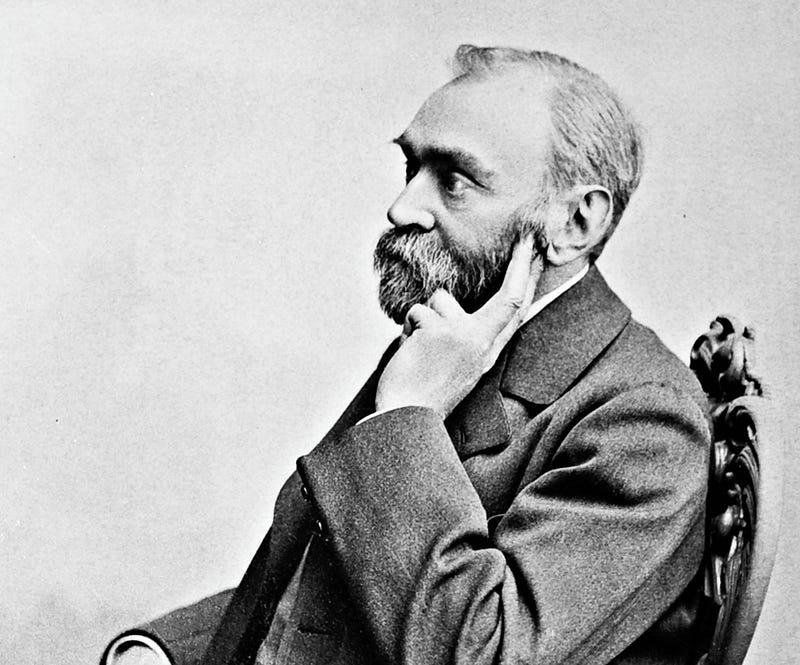
Alfred Nobel and his disputable will
Alfred Nobel was born in Stockholm, Sweden, in 1833. He had three brothers. His father, Immanuel Nobel, was an inventor just like him. Even though Alfred’s main interest was in Literature and Poetry, he was expected to follow his father’s footsteps. With this in mind, he was sent abroad to study chemical engineering. There he met a scientist who invented Nitroglycerine, a highly explosive chemical not yet fit for practical use. Alfred, being a genius as he was, didn’t give up on the chemical and with his father, he worked on the explosive that was later successfully used in construction work. He didn’t stop there either and after many experiments came to make the first dynamite ever. Unfortunately, many people were killed during the experiments, including his little brother Emil.
It is known that Alfred wrote many wills before he passed away, but the last one, establishing the world’s most prestigious Nobel Prize, is the one we care about today. He devoted 94% of his total assets, counting $198 million, to the fund for the Nobel Prize. This money had to be:
“distributed annually as prizes to those who, during the preceding year, have conferred the greatest benefit to humankind.”
And, as we are well aware of now, Alfred saw five leading sciences eligible for his wealth: physics, chemistry, medicine or physiology, literature, and fighting for peace.
Fun fact: At the end of his will Alfred asked for his arteries to be “severed”, and only after the doctors were sure he was dead, was he to be cremated.
Alfred Nobel died in 1896 and it took his executors four consecutive years to convince his family and others to follow his will. In 1901 success was achieved and the first Nobel Prizes were awarded.
Apart from the five fields listed above, the Nobel Prize is also given for achievements in economic sciences. In 1968 Sweden’s central bank established an award for economic sciences in memory of Alfred Nobel and ever since it is considered as such.
The process of choosing the award winner
“For the most outstanding work in an ideal direction.”
— From the will of Alfred Nobel.
The Nobel Prize in Literature, along with the other prizes, is given out annually and the laureate of the prize is announced in October. Having strong connections and/or a very broad reach has never been more important: The Nobel Prize candidates are chosen by Members of the Academy, members of literature academies and societies, professors of literature and language, former Nobel literature laureates, and the presidents of writers’ organizations. If none of these highest-profile people know that you exist, then the Nobel Prize has no chance of finding its way to you either.
Each year the committee sends out requests to the aforementioned experts and in return, they get about 300–350 nominees back. All of the submissions have to be received until the 1st of February of that year. After accepting the submissions, the Nobel Prize people, more precisely the Swedish Academy, reviews the nominees and picks around 20 people by April, and by May they narrow it even more to five people only. The upcoming four months are spent in exploring and reviewing the short-listed writers. In October, we get to know who exactly they picked.
Further rules, facts, and limitations:
- Everyone is eligible for the Nobel Prize, regardless of their language, race, gender, age, and so on.
- The Swedish Academy is a master of 13 languages, but if a nominee writes in an unknown language, they call out for experts for help;
- A candidate must be nominated at least twice to be eligible for the Nobel Prize;
- A candidate has to have some work published in the previous year (although the Nobel Prize committee deviates from this rule every now and then);
- As of 1974, a candidate must be alive at least before the announcement to receive the Nobel Prize. Erik Axel Karlfeldt was the only posthumous Literature laureate (1931);
- It is possible for a maximum of three people to receive the Nobel Prize in the same year. In that case, the cash prize is shared equally between the laureates (though only two have ever received a shared prize in Literature up until 2019);
- The winner of the Nobel Prize receives a gold medal, a diploma with a citation, and a sum of money that varies from year to year, but as of 2012, it has been around $1,100,000.
- There are 18 judges in the committee and up until 2018, they were unable to resign. After the change of rules though, the judges can resign and they may be asked to resign if they haven’t been active in the work of the academy for the past two years.
How Alfred Nobel’s will has been interpreted over the years

Alfred Nobel turned out to be quite vague when composing his final will the year before he died. He wished his prize to be awarded to those who have “conferred the greatest benefit on humankind”, and, furthermore for the award in Literature, to those who wrote “in an ideal direction”. Both concepts have puzzled the Nobel Prize committee A LOT. Because of the lack of specificity, they have come up with different interpretations, with some points alternating over the years, or having writers who fell in two or more criteria at once:
1. A lofty and sound idealism (1901–1912)
Defined by Carl David af Wirsén and characterized as conservative idealism, holding the church, the state, and the family as sacred. Even though this type of romantic idealism was far from Alfred Nobel’s ideology, it was because of this definition that Bjornson, Kipling, and Heyse were awarded in those years instead of Tolstoy, Ibsen, and Emil Zola (which caused a lot of criticism, obviously).
2. A policy of neutrality (world war I)
Well, here the name defines itself quite well — the Nobel committee was not favoring any side during the world war and choosing writers mainly from non-combatant countries. This policy is also how they explain the nominations of so many Scandinavian writers in this period.
3. The great style (the 1920s)
This definition was close to Wirsen’s perception of idealism and favored a more classical style of writing. Although, in this period the Nobel Committee softened the requirement for “an ideal direction”, changing it to “wide-hearted humanity”. This brought Anatole France, Bernard Shaw, and other writers on the rise who were rejected previously.
4. Universal interest (the 1930s)
Here the main focus was more on the “benefit on humankind”, favoring writers within everybody’s reach, like Sinclair Lewis, Pearl Buck, Paul Valery, and Paul Claudel.
5. The pioneers (1946-)
Yep, world war II affected the Swedish academy just as much as everybody else. Anders Österling, the new secretary, played an important role too. The academy decided to shift its focus more towards fresh writers who introduced new techniques and styles. This interpretation, being thought of as more exclusive but at the same time more generous, awarded writers such as William Faulkner, T.S. Eliot, and André Gide. Later on from 1988, the focus from innovation shifted towards the pioneers “of specific linguistic areas”. This interpretation brought fame to Naguib Mahfouz for creating a contemporary novel in the Arabic world, Camilo Cela who mastered post-war fiction in the Spanish world, and so on.
6. Attention to unknown masters (1978-)
As more and more academy judges asked for noticing the unnoticed, the label “pioneers” changed with that of the “unknown masters”. The logical reasoning behind this decision was to present to the world the writers who, without such notice, might have been missed. During this period, awards went to Isaac Bashevis Singer, Odysseus Elytis, Elias Canetti, and others.
7. The Literature of the whole world (1986-)
Here the Nobel Prize committee returned to Alfred’s will and mainly the section noting that the process of nomination should not favor anyone by their nationality. The committee admits too that it is not quite just that the amount of European laureates is much greater than those from other continents. The reason for this was, as by the committee, the fact that they didn’t have a system for fairly identifying great writers from unknown languages. But, from the 1980s they started trying harder, I guess. The awards went to such writers as Wole Soyinka from Nigeria, Nadine Gordimer from South Africa, and Kenzaburo Oe from Japan.
Also Notable,
Many writers have been upset by the fact that the Nobel Committee (and many other prestigious awards) is rejecting works of genre fiction. Although some laureates like Doris Lessing have produced genre fiction over their lives, it was never their main field of writing.
The controversies and criticism
As it usually happens with everything, the Nobel Prize Committee has also been criticized for a bunch of decisions they’ve made throughout the years. Many believe that regardless of Alfred’s will, the Swedish Academy has favored Scandinavian authors, or, more broadly, Europeans. They have been alleged for holding political preferences when making a decision, letting their personal interests ruin fair judgment.
Politics in the way — good or bad?
It is mentioned often that the Nobel Prize in Literature has “become widely seen as a political one — a peace prize in literary disguise”. And, this is something that the committee talks about quite openly, using political preferences and actions as reasons for choosing the laureate. Truthfully speaking, winning the Nobel Prize does give people credibility and authority, and if ill-doers get awarded, they have a better chance of committing more “crime”. But, then again, is that how one’s writing skills should be determined?
Coming back to Alfred’s will, a work “in an ideal direction” doesn’t necessarily narrow things down to writing skills. Furthermore, “the greatest benefit to humankind” certainly points towards the consideration of a candidate’s ideas and ideologies. But, the same cannot be said when it comes to the nationality:
“It is my express wish that when awarding the prizes, no consideration be given to nationality, but that the prize be awarded to the worthiest person, whether or not they are Scandinavian.” — From Alfred’s will.
Now, when it comes to this, the debate gets more fierce. To me, the allegations seem a bit too exaggerated:
Although Scandinavians have definitely obtained the most Nobel Prizes in Literature (16), this is partly explained by the post-world war I period. Furthermore, most awards to a country have been given to the French (15) and second-most to Americans and British (12 each), while Swedes, in particular, have only received 8 Nobel Prizes. It’s true that that’s more than all of Asia and Latin America (with 7 each), but, then again and again, don’t we all agree that nationality should be the least of reasons for preferring some writers over the others? If that argument holds when it comes to choosing a laureate, why does it fail when it comes to judging the committee’s decisions? After all, it may be so that Europeans, Swedes, French, or Americans are simply better. As much as we don’t like to admit it, they do have access to better educational resources and opportunities for success.
On an ending note
No committee of 18 or 100 people can ever decide objectively who had the most beneficial influence on humankind and/or who expanded the borders of idealism. Only time can determine the exact value and significance of a writer’s work. This we saw clearly when, after more than a century, more of us remember Tolstoy and Zola then Bjornson or Heyse. A true writer writes because they simply can’t breathe otherwise. And, when they do, there should be a reader in their minds, not the judges. As Jean-Paul Sartre famously noted after being the first and only writer to reject the Nobel Prize without any pressure from the outside forces:
“ A writer must refuse to allow himself to be transformed into an institution, even if it takes place in the most honorable form”.
For further reading on the differences between genre and literary fiction go to:


