
Can You Ever Go Home Again?
Answers From Ancient Greece & Today

What Does Going Home Mean, Exactly?
It’s funny how as we grow older, the term home begins to resemble less the house we spent our childhoods in, and more the time in which those years unfolded.
Though we can draw a straight line between now and then, it somehow always feels unreachably far. Distant. Lost.
Really, like we’ll never find it again. I was thinking this as I walked the lighted streets of Woodley Park, Washington this week, where I’ve been living for the last month and a half.
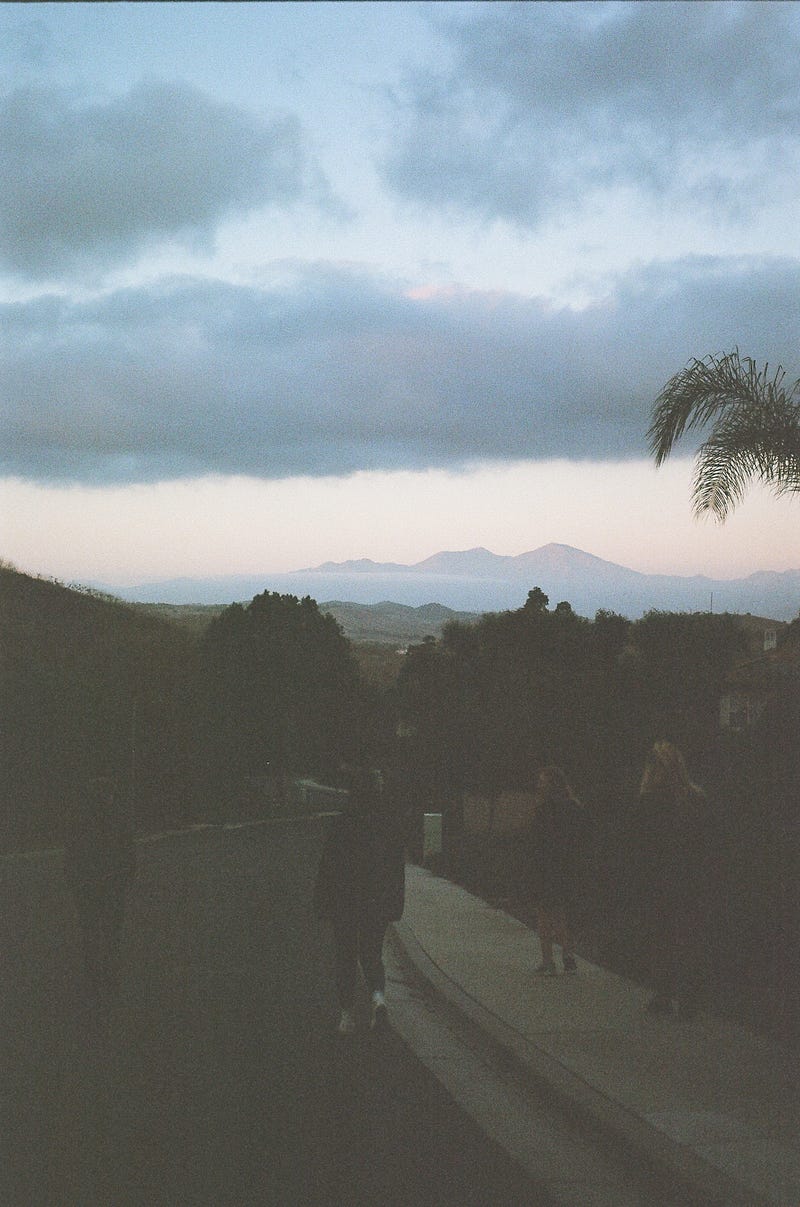
Walled-in on all sides by beautiful homes, I was reminded of similar walks taken in my own childhood neighborhood years before — a place that goes cold-blue in winter and yet has flowers on the trees year round.
Out wandering on one of those evenings this last Christmas, I wondered if my entire life’s travels up until that point hadn’t been an attempt to find that same deep, winter blue calm, only some place else.
Even as I had the thought, I couldn’t explain why the place had to be elsewhere. Why here wasn’t perfectly good enough. Why I couldn’t go home again and this time stay.
An Ancient Greek Guide To Journeying
In Ancient Greece there is the idea of Nostos, or the epic story of the hero returning home after a long period away. The most famous of these is the Odyssey, which after the decade-long set-up of the Trojan War, chronicles Odysseus’s long trip back to Ithaca.
It’s a story that’s touched us culturally like few others—the proof of this being baked into its very composition:
It is believed by historians that instead of writing the poem down as was originally thought, Homer likely composed the Odyssey as a series of verses (12,110 total) that were then sung and passed down through verbal tradition over the course of generations.
That in those intervening centuries it wasn’t snuffed out by war or famine as so many other Greek epics were, shows how something about its contents struck those guarding its passage. For far from merely surviving, it’s flourished.
This poem which began its journey some 3,000 years ago is still circling the globe today, and finding homes in our collective imagination.
Was the Travel Worth It?
There is a painting by Guiseppe Bottani from the 18th century, titled Athena Revealing Ithaca to Ulysses, in which the armored goddess holds out her hand as if pulling back a curtain, to point to the suddenly appeared terrain of an island.
The hero — Ulysses (in Greek, Odysseus)—looks on almost timidly. Not so tough for once, he seems to be asking with his half-spread stance, could it be true?
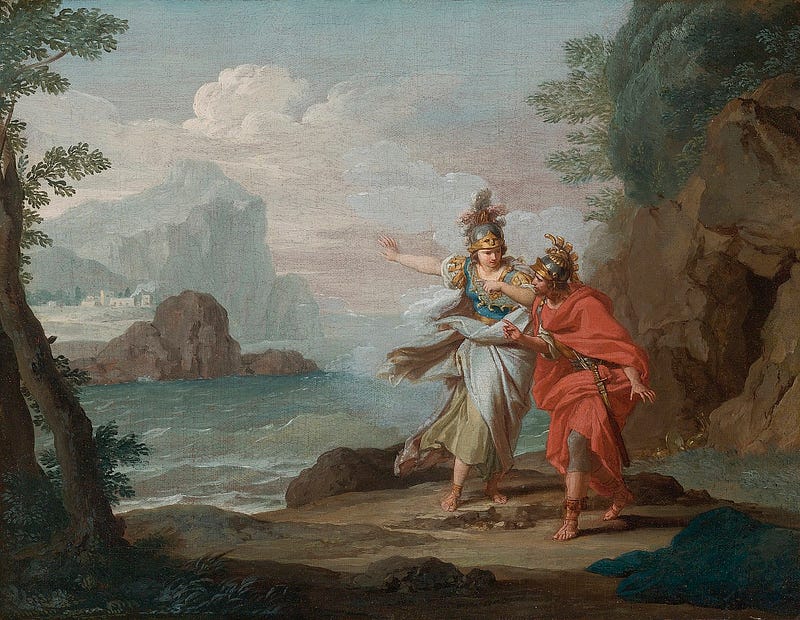
The island, far-off and verdant, is the romantic ideal not of home, but the adventurous shores that draw us away from home. It looks wild first and then habitable only second (and after we’ve squinted at it a bit).
Bottani, alive and working during the Romantic period when world exploration was in the public zeitgeist, can’t be blamed for his rendition. However, if he were forced to paint Ulysses on Ithaca, sitting at his hearth instead and without the aid of wide expanses, would the scene be so daring?
Or in reigning things in, would he risk making things a bit dull.
It’s an idea that Tennyson toyed with over a century later in his poem Ulysses:
It little profits that an idle king, By this still hearth, among these barren crags, Match’d with an aged wife, I mete and dole Unequal laws unto a savage race, That hoard, and sleep, and feed, and know not me … How dull it is to pause, to make an end, To rust unburnish’d, not to shine in use!
In finding Ulysses at home we discover not our old hero but a bitter old man. Ithaca has failed to live up to the adventures preceding it, and he’s struggling now to conceal his disappointment.
The poem ends with his vowing to set out again, “to sail beyond the sunset, and the baths of all the western stars, until I die,” in a sentiment familiar to those of us who, after finally arriving home, discover the warm feelings that drove us there may have been replaced with the singular thought:
What was I missing so much about home in the first place?
Home Is What You Make It (Ultimately)
That home wasn’t what Ulysses had hoped for is plausible enough. Going home now this last Christmas, I found things different too. The structure of my family had changed, and our house, under the great care of my architect father, had been touched up and modified.
Sitting in the newly redone living room, or kitchen, the result was somehow foreign — as if I’d wandered into a real-estate showroom and not the place I’d spent 18 years of adolescence. My old home had knicks in the baseboards, holes in the window screens, and dents where my siblings and I had crashed our razor scooters into walls and cabinets.
Now these had been smoothed away.
My dad loves his touched-up house (it’s what he’s always dreamed of making it), and yet while I see the value in his corrections, for me it’s no longer what it once was. For me, it’s no longer my home.
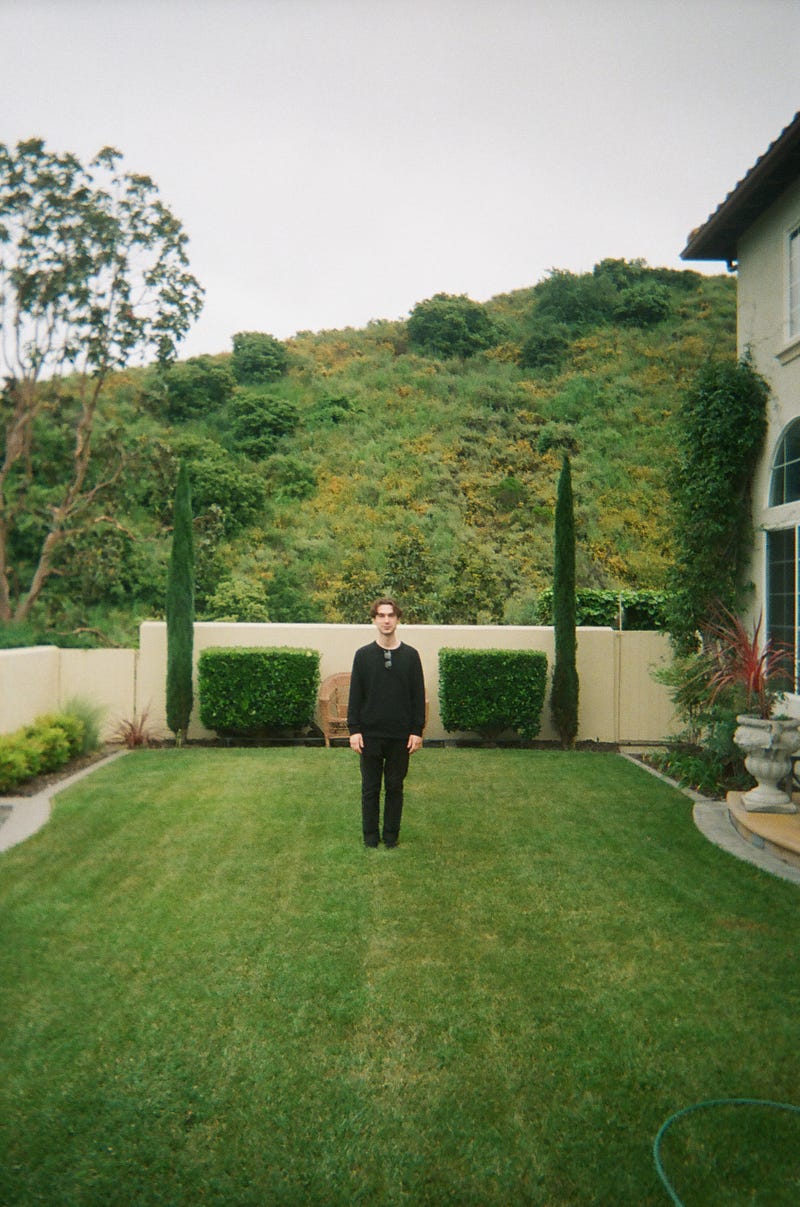
And while this saddens me, I’ve also come to realize it couldn’t have been even if he’d made a shrine out of our childhood destructions. No, I realize now that home stopped being home the moment I left it. The spell was broken when I walked out the front door for college — as it is for so many of us––and it’s one of the few spells in life we can’t recast.
It is what it is, and ultimately one is healthier for it.
As mankind seeks new shores, homelands must vanish behind the receding horizon. And so now in these cold blue evenings, as I linger on memories from that time like the last tendrils of a fading scent, I wonder:
Where will home be next?