
Can We Please Stop Referring To Women as ‘Strong’ or ‘Outspoken’
Using these words implies some women are an anomaly of their gender
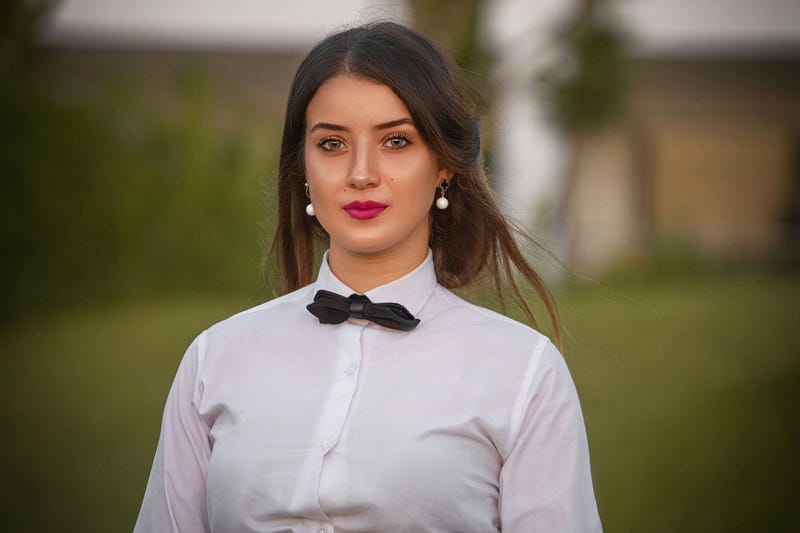
When did you last hear a man described as strong or outspoken?
The sad news of the death of Rosalynn Carter, former first lady, is tainted by the choice of words used to encapsulate her. Google tells me that every single news platform that published a story about her death referred to her as “outspoken.”
I suspect it was a male who submitted that press release.
Don’t get me wrong, I pride myself on being a strong and outspoken female and have used these terms countless times. But something is not sitting right with me.
Be honest: when you hear of women described as strong or outspoken, how do your biases depict them? The more truthful of you will admit that you think of a more masculine woman.
A strong woman isn’t viewed as typical
By calling women strong, we are implying they are an exception to the rule of the female species.
Oh, you know, yes, they are female, but they aren’t like other females — they are strong.
The word “strong” highlights the subject is not a typical female; they stand apart from other females.
Other females who are weak.
A strong female becomes an anomaly instead of the standard.
Society presumes females are subservient. Weak, physically, mentally, and spiritually. We already know an assertive female is regarded as bossy. Whereas a male with similar qualities is recognised as a good leader.
So, each time I hear a female referred to as strong, I don’t hear the quality of the woman in question. Rather, I hear the reinforcement that females, in general, are not strong, and this woman is a deviation from the norm.
I read countless personal stories where women refer to themselves as “strong,” and I am sure they are. But I have yet to read a personal story where a man refers to himself as strong, and while he may not be, we presume he is. Because — well — he is a man!
Why is this?
Our presumption that a female is weak is the ying to the yang of our presumption that a male is strong. We don’t need to describe a man as strong as this is already given.
Isn’t this perverse when we think about it?
So, yes, I am a strong person. And maybe that’s the word I need to change, the gender indicator. I am strong physically and mentally. But much of my mental and character strength derives from my ability to be vulnerable and authentic.
Going full circle, with the presumption that men are strong, we place an unfair expectation on men.
I’m not sure I have heard a female described as “weak,” yet I have heard a male described as such, not often, but I have heard it used a few times. And this wasn’t in a complimentary way.
Eradicate the “man up” term
We are working hard for young girls to have an equal place in society. Females in the younger generations are being raised as leaders. We are treating them as more than just pretty faces and cute dresses. Little girls are empowered to be more than sugar, spice, and all things nice.
Gender equality is a wheel in motion, but it hasn’t quite reached its destination.
To achieve full gender equality, we need to give young boys permission to cry and express their emotions.
To hell with the “man up” term; it’s high time we give boys and men the necessary space to process hurt and joy and feel their own energy. If we expect emotionally intelligent men, we must encourage them to attune to their emotions and lean into gentleness and kindness from a young age.
Vulnerability and kindness is not weakness, nor is it emasculating.
Outspoken women are trouble
Even in organisations that claim to be steaming ahead with equality, diversity, and inclusion, the outspoken woman is to be feared and kept in her box. I experienced this during my service in the Police Force.
Society is full to the brim of people who are uncomfortable with women having opinions and being given talk time. Or, god forbid — claiming talk time.
In my days as a Detective in the police, I was called “feisty,” “opinionated,” and a “jobsworth.” Sure, I’m not backward at coming forward, but many people — men and women alike — are suspicious of outspoken women.
Yes, our world is riddled with narrow-minded Neanderthals who believe a woman should show up and shut up. Look pretty, smile sweetly, agree with men, and keep their silly little notions to herself.
Women having opinions outside the home still earns them the label of “outspoken.” Whereas men of a similar disposition are knowledgeable or passionate.
Should we abolish the “strong woman” term or not?
When describing women, it’s time we shred the term “outspoken.” But I’m torn about whether or not we should do away with calling women “strong.”
I don’t like what the term “strong woman” insinuates about women in general. But perhaps we need this stage in our language to help the more ignorant of society realise women are strong, full stop, the end. Perhaps we aren’t ready to drop this descriptive term yet.
Until I am fully decided, I will describe myself as a strong person. I am strong, not by comparison with other females, but by comparison with other people in general.
To women everywhere, you are strong as you are. And keep using your voice, don’t let anyone silence you by casting you as too outspoken. You are passionate and fierce and that’s nothing to be ashamed of.
To men everywhere, know you can be vulnerable and kind; and that these are strengths, not weaknesses.