
Can We Have A Real Talk About Death?
Meet people in their space of pain
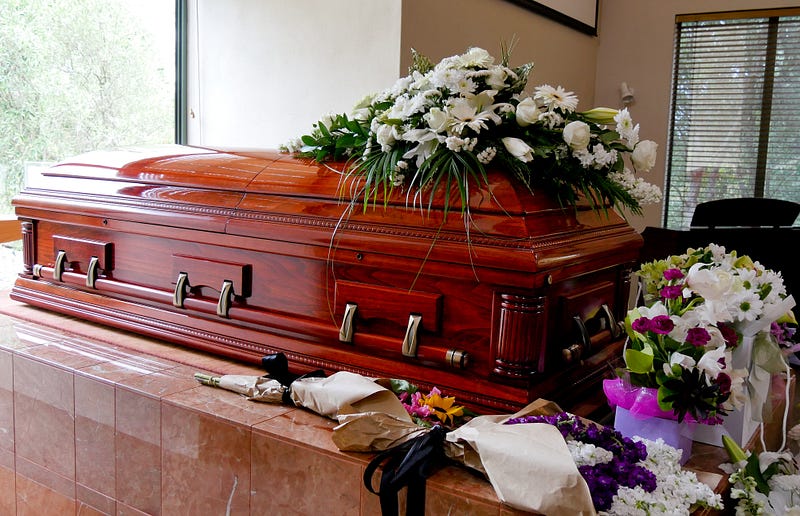
This week I had another run-in with death, obviously not my own. I’m not afraid to die and, at some point, thought dying might be easier than living without a loved one. This article is a conversation about the pain that comes with the loss of life. Exit now if you don’t have the heart for it. I wouldn’t read this article myself. But it is one that I need to write.
Shadow of Death
I feel like death has followed me all of my life, creeping around corners and lurking in the shadows. I remember hearing about a neighborhood boy who drowned in the neighborhood pool. I was too young to grasp the meaning of death at the time. I also lost cousins and other distant relatives before graduating from high school. So, I came to accept death as just a part of life.
Honestly, I think religion pretty much instilled in me that death just meant people were going to a better place. I never saw anyone grieve over someone’s death, so people shared this understanding. Then, my grandmother died when I was 22 years old, and I saw my mother mourn.
My grandparents all lived in South Carolina while I grew up in Pennsylvania. So, I was not very attached to them, although I loved them a great deal. I could see the sadness in my mother, and I hated seeing my mother cry, even at funerals. I didn’t want to accept that level of vulnerability in her.
I learned that not all death resulted in mourning. I didn’t blink an eye when one of the men who violated me as a child died, a cousin. I also didn’t cry at my father’s funeral. He had raised too much hell and hurt too many people up until he became feeble. Then, I watched my mother care for and bury him out of grace even though they were separated due to his attempts to cause her harm.
Ghost of Christmas Past
I have tried to wrap my head around the meaning of death, the response to death, and the preparation of it. I have written my share of poems about death, including people’s right to choose death, as I fully understand that life doesn’t always seem worth living.
However, there are no words of comfort or reasoning with the mind that can subside the pain of losing someone that you never imagined living without.
On August 2nd, while distracting myself from the sadness of being separated from my husband on our 29th anniversary due to the COVID-19 pandemic, I received a horrifying text from a friend whose daughter had gone missing. After searching for the 22-year old for several days, her body was found. I was in the middle of an online presentation and chose to ignore the text and maintain a professional composure.
Truthfully, I didn’t want to respond. I didn’t want to open the flood gates of grief from decades ago. When my best friend was murdered by her seemingly loving husband when I was 34-years-old, I felt the realness of death for the first time. I sensed agony beyond any discomfort my mind could ever perceive. She was murdered three days before Christmas, which became the saddest holiday of the year.
Too Young To Die
I met my best friend in high school, and we were almost college roommates. But, when I was offered a scholarship to an Ivy League University, I rescinded my acceptance to Penn State. My friend ended up not finishing college before she got married, and our lives took different paths. But, early death was not supposed to be on the path.
The unacceptable finality of death is often sustained by guilt. I believed that at some point, there must have been something I could have done differently to avoid the outcome of death. Would her life had been different if I had not disappointed her and chose a different college? A ridiculous notion, but more palatable than the assumption of irreversible fate.
I spent time with her family to help plan the funeral. They invited me to speak, but I couldn’t get past my state of shock. At the funeral, I couldn’t even look at the body. I remained in my seat the entire time.
I was no longer living in our hometown when my best friend died. So, I would see her infrequently, and we talked less once we started our families. Our last conversation had been two months before her death. I lived in a town where no one knew of her or our relationship. My husband had met her as my maid of honor, and my children were too young to remember their godmother. So, I had to mourn alone — the worst.
When my doctoral classes resumed in January, I made sure to tidy up my emotions. At least I thought I had until I ended up having a crying breakdown right before class. I explained to my professor that I was mourning, and she excused me from class for the day. One night I woke my husband to yell at him for not noticing that I had been crying in bed for a week. I had no idea how to mourn. So, I just went on earning my Ph.D.
When Death Is A Family Affair
Less than a decade later, I lost three close family members in 27 months, including my 44-year old brother, 19-year old nephew, and my sister’s husband. I didn’t know my heart could keep beating while I felt so dead inside. I wasn’t sure that I wanted it to.
I had requested my mother to sign a “do not resuscitate” order to facilitate a peaceful transition for my brother. My siblings all agreed, and I helped my mother make all of the funeral arrangements. I showed tremendous strength, right up until his casket closed at the funeral.
As the casket closed, I watched my spirit leave my body and jump into the coffin with my brother. I couldn’t move after that. My body became paralyzed, and my siblings had to physically assist me in getting into the limousine after the service.
I sobbed in one of my brother’s arms all of the way from the church to the cemetery and refused to get out of the car. I could not stand the thought of watching the body go into the ground. My brother forced me out of the car to watch, deepening a state of trauma.
The remainder of the day was an out of body experience watching my relatives gather at my mother’s house. I could not connect to expressions of sympathy, and all of my helpfulness was depleted. I felt like a zombie.
My brother was two years older than me. I had never known life without him and expected to grow old with him, as we were the two youngest of seven siblings. As much as I loved my other siblings, I would never be able to bond with them the same way.
I remained with my mother for several days to make sure she was OK, knowing that I wasn’t. I was the only sibling not living within driving distance. Like when my friend died, I had to return home to a place where no one knew my brother or understood my grief.
When I returned home to my husband and children to resume a life of normalcy, I was not whole. The part of me that jumped into the casket had not returned. My homeschooled children were deprived of their usual high-quality care. My 12-year-old daughter took on the responsibility of caring for me. She learned how to force me to eat.
Where Does Grief Go To Die?
Grief takes over the entire mind and body when it is not processed. Breathing is labored, and fatigue sets in. Eating becomes erratic, too little, or too much. After my brother died from lupus, I swore I had symptoms and demanded to test every six months. My doctor finally shamed me into reason by telling me I was too old to develop the systemic disease.
All the sentiments and expressions of sympathy mean absolutely nothing, because no one can handle how you really feel. Everyone wants to give you advice about how to move on without understanding where you are.
You cannot describe to anyone the black hole in which you live. You may look like the same person, but you are not the same. I was less intelligent, less capable, and less responsible than when I was a teenager. Before I could recover from my brother’s death, I was faced with the loss of others.
Each death compounds previously unprocessed grief. Instead of healing from grief, I learned how to numb out effectively. I engrossed myself in fitness and dysfunctional relationships that offered more fun than reality. I eventually ended up in the emergency room from dehydration and low blood pressure that caused me to go in and out of consciousness for several hours.
The world stops for the dead but spins out of control for those left to mourn. Getting used to navigating the world with the loss of an emotional limb will make you limp through life. Your grief can get triggered by the most mundane activity that reminds you of your loss.
Life Support
After a sleepless night, I got up the nerve to call my friend who lost her daughter. I hoped that she would be too busy making arrangements to answer the phone. But, when your close friend calls you in a time of grief, you answer. We were on the phone less than two minutes before we were both sobbing. She knew of my experience with grief, and my previous mourning wrapped itself around her trauma. We cried and laughed together.
I didn’t offer her any of the clichés about being in a better place and time healing all wounds. Instead, I gave an emotional outburst about how much life sucks and how unfair it all seems at times. I told her I would suspend my belief in God, except I needed someone to blame all this bullshit on. That’s when we started laughing through the sobs.
Most importantly, I shared with her my tendency to just numb out and run the other direction when I hear of someone dying, but that her experience hit too close to home for me.
I assured her that I would stand in the pain with her, whatever that meant for her. When she told me she had thoughts of wanting to just go with her daughter, I said, “I understand.” I didn’t suggest a suicidal assessment or therapy.
I told her to put me on speed dial because those ugly thoughts were likely to come and go. I gave her permission to feel all of the emotions, and whenever she needed someone to feel it with her, I would be there.
She thanked me for “being real with it.” I hung up the phone and felt physically ill. I had to lie down, and I cried myself to sleep in the middle of the day.


