Can We Find Hope in the Japanese Art of Kintsugi?
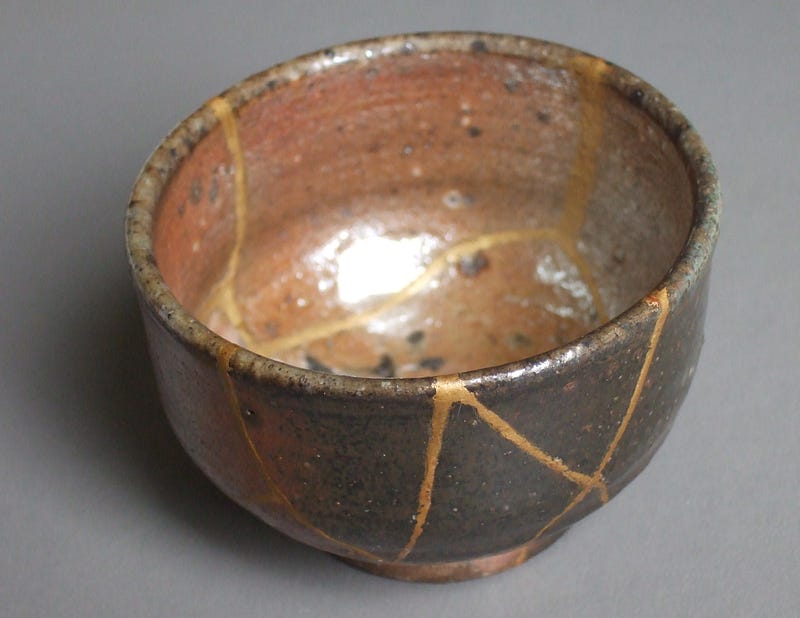
Kintsugi repairs cracks in pottery with gold dust to create something even more beautiful out of the ruins. Can America fix its cracks?
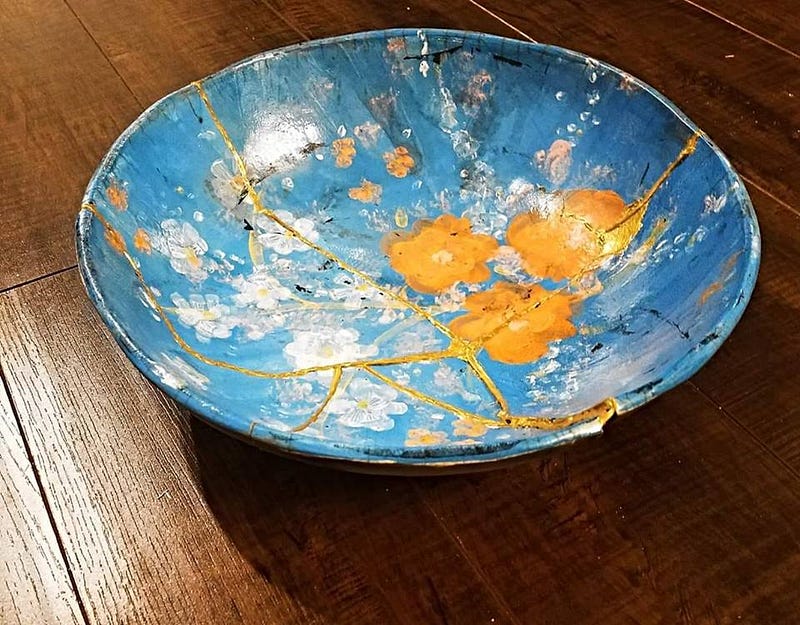
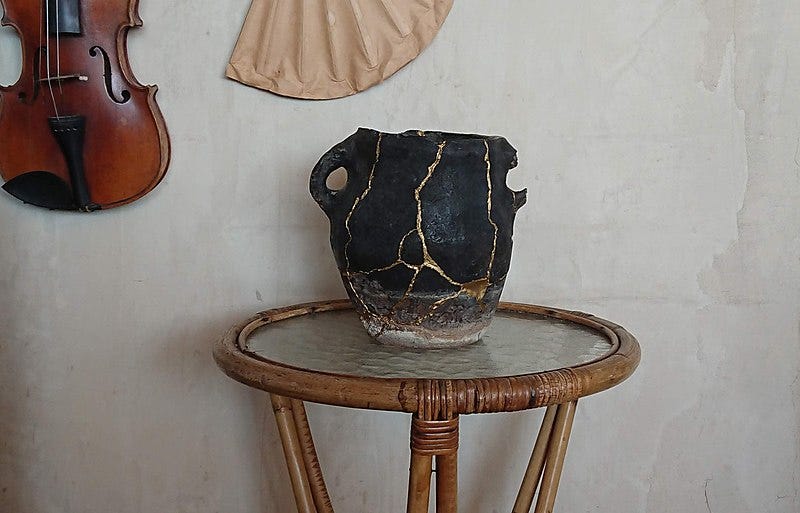
Kintsugi is a repair technique that uses a special lacquer mixed with powdered gold to repair broken pottery. This ancient method can be traced back as far as the 15th century. This unique way of repairing pottery doesn’t try to hide the cracks. It highlights them in shimmery gold. The flaws become part of the piece and the object is transformed into something completely different.
It’s not just a method for fixing broken pottery, it’s a philosophy and it’s intertwined with other Japanese philosophies.
- Wabi-sabi — the belief in the beauty of imperfections.
- Mottainai — the regret of wasted things.
- Mushin — the acceptance of change and fate.
The first time I heard of Kintsugi, I thought of it as a personal philosophy. We may have broken things about us, but rather than hiding our flaws, we can embrace them. This philosophy teaches us that when we heal, we don’t become “new” again, but we get remade into something special and unique. Just like two pieces of kintsugi-repaired pottery will never be alike, neither will two people.
Can America be repaired?
With the beautiful images of the golden cracks in my mind, I wonder is it possible we can apply this philosophy to our nation? America is so deeply flawed, so cracked and broken. Yes, still full of hope.
There is a movement occurring bigger than anything I’ve seen in my lifetime. The protests against racism and police brutality are massive and show no signs of abating. No longer limited to big cities, they’ve spread to rural areas. They’ve spread across the world. Suddenly, Black Lives Matter has become the rallying cry for people of all colors all around the world.
This movement feels different. It feels like real change.
Rather than trying to hide the cracks, the gold highlights them.
The idea of America is such a beautiful idea. Democracy, equality, freedom of speech. It’s a great, expansive country with enough space for everyone to carve out their own little corner. But there are deep cracks in our ideals.
It all began when the Europeans came to America and wiped out almost the entire population of Native Americans that had lived here for thousands of years. And then came the slave trade. Slave traders stole an estimated 12.5 million men, women, and children from Africa to bring to the New World.
Slavery may have ended in American with the Emancipation Proclamation in 1863, but the struggle was far from over. The struggle continues today.
Change has begun
The massive protests over the senseless killing of George Floyd have not only awoken the world to rampant racism in the police force, it’s already beginning to change policies.
A Harvard study from three years ago determined that the size of a protest affects political change not by changing the minds of policy-makers, but by motivating people to get politically active. In this study, larger protest crowds had lasting effects on voting, ideology, and political participation.
Throughout history, protesters have made a difference. From the Boston Tea Party, to the Women’s Suffrage Movement in the early 1900s, to the March on Washington for Jobs and Freedom in 1963, protests like these have changed the world.
Police reform bill
House Democrats will present a police reform bill next week, the Justice in Policing Act 2020. There’s a lot in this bill. According to CBS News, it’s 136 pages long. Led by the Congressional Black Caucus, the bill will make it easier to prosecute police officers for acts of misconduct in civil court and it includes reforms such as:
- Ban police officers from barging into people’s homes in drug cases.
- Mandate racial training in police stations.
- Create transparency by requiring state and local law enforcement to provide data on the use of force by race, gender, religion, age, and disability.
Minneapolis city council voted to rebuild their police force
The city where George Floyd died at the hands of the police officers has heard the people and they’ve announced they will be making a change. There was a veto-proof vote from the city council to defund and dismantle the police force to create a new system for public safety. Although short on details at this stage, council members vow to focus on community-based strategies and how to replace the current police department.
Emphasize the cracks
There’s no hiding the racial inequalities and the pain and suffering they have brought. Nor should we want to. The time for silence is over.
In America, we can create change by our vote. The current administration is not interested in police reform. Obama-era criminal justice reforms were quickly reversed by Trump’s attorney general.
And look where that has brought us. What we can hope is that these current protests have sparked people to act. And that they will act by their vote. Policies won’t change unless we put people in office that are willing to make the changes.
A piece of pottery fixed by Kintsugi is beautiful. It’s unique and even more resilient than it was when it was brand new. Let’s fix this country. We won’t hide where it’s gone wrong, but we’ll make it better.