
Can We Be As Fit As Animals?
Predators can teach us how to combat our sitting karma

About 12 years ago, I watched a TV show about how predators keep fit. Big cats would lie all day on the ground and then click, and they were chasing the prey at full speed. No warming up, no exercising, no fitness program, any time of the day or night, animals were full of energy and ready to fight. If they were not, they were prey.
That was exactly what I needed. You hammer all day long on your computer, or torture your sofa practicing a couch potato, and then, even without standing up, do the trick, and voilà! You are ready to fight. Magic! To find the way how animals stay fit was a decent goal to pursue.
Two major types of fitness activities all observed predators do are regular special intensive workouts and frequent muscle stretch-tensing.
I was not a zoologist. I was an office worker. Unlike the animals in the show, the more I sat at my desk, the less fit I felt. Why could lazy animals still chase prey? While I, a 45 year old physical wreck couldn’t run for 5 minutes on a treadmill. Can I be back fit like a tiger? Can I combat the effects of my sitting karma?
First, I asked the internet. Much to my surprise, there was and still is so little scientific information on the subject. Most of the articles lamented there was no sufficient research. Even if you search the internet now, you will come across a couple of old articles, a lot of guesswork like mine, and that’s it. I enjoyed the article ‘Do animals exercise to keep fit?’ by Lewis G. Halsey.
I’ve read in various articles genetics plays an important role in animal fitness. Maybe we need more evidence. But I question the role is that big every time I see my sisters’ overfed cats. Their most strenuous sports event is to come to eat. The excuse can be they are pets, not wild animals. But if it were only thanks to genetics, I would expect them to do more despite their obesity.
I started observing animals.
Below are my observations. I wish scientists and physiologists can support or bust my conclusions.
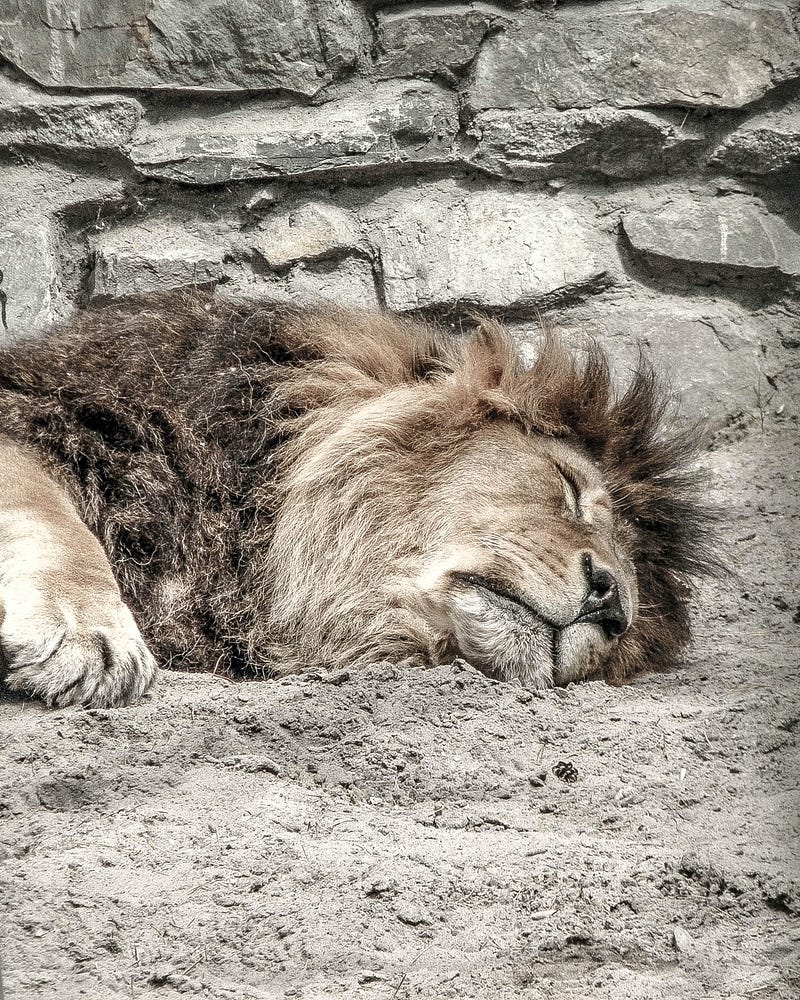
1. Long resting
Observed animals have long relaxing rests between major challenges (fight, hunt, run away, play).
My biggest question was how animals could perform these sudden intensive workouts so professionally without warm-ups? How do they keep their muscles in a standby condition?
Lions sleep for days and then go for a hunt. What is your cat or dog doing any time you look at them? Right, sleeping, or resting. Well, cats and dogs are pets, and not all of them are fit thanks to their owners.
Good night sleep, no hangover, no useless stressing, fresh air, and intermittent fasting are essential to be fit like an animal.
2. They are lucky to not have human brains that are obsessed with things that don’t matter.
When a bus is going to hit you, you stress to activate your adrenalin stimulating your muscles to run back to the pavement. But if you stress every day over losing a job, you don’t act like an animal. Lions don’t stress about not catching prey tomorrow. So, you need to find a way how to lower your stress. I will not contemplate the vastness of the subject here.
3. No fixed set of exercises or a training plan
Animals don’t follow any fitness program or plan. They exercise frequently when their bodies require it. To be strong, fast, and enduring, they also take part in regular unscheduled competitions (hunt, fight, run away, play).
Two major types of fitness activities all observed predators do are regular special intensive workouts and frequent muscle stretch-tensing.

4. Regular special intensive workouts
Animals do regular hyper-intensive or super-durable workouts like chasing prey, fighting, running away, or playing vigorous games all their life. That’s their strength, speed, and endurance training.
My biggest question was how animals could perform these sudden intensive workouts so professionally without warm-ups? How do they keep their muscles in a standby condition?
I found an answer. It resulted in the type of exercises I worked out and have been practicing for more than 10 years. Thanks to these exercises, in my 57 year old age, I can run up the stairs in a 5-level building without any prior warm-up, almost at any time. I no longer have back or neck pains with sitting jobs. I feel almost like a tiger.
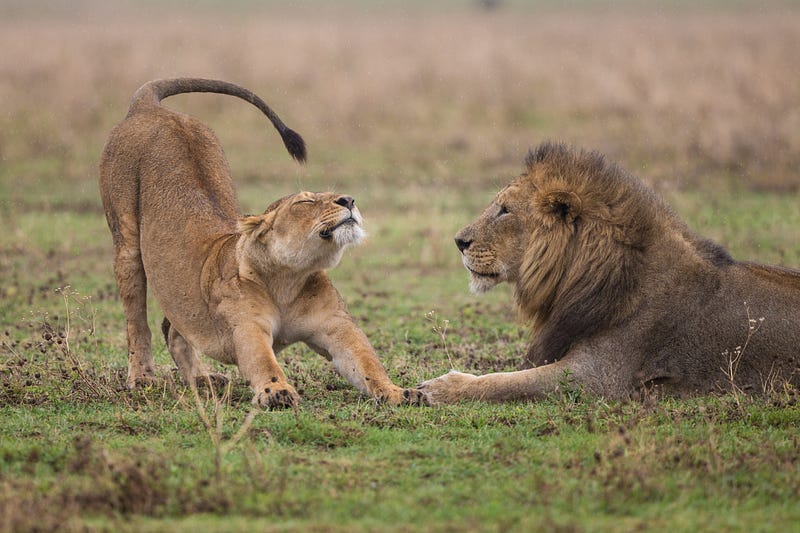
5. That type of exercise is frequent muscle stretching and tensing (I call it stretch-tense)
Every time animals feel they’ve been too much in the same position, they stretch, tense, and relax their muscles. Stretch-tensing energizes and relaxes muscles. They all do it in a very similar way: legs stretched out, head lowered on legs, the back is up, and then they tense the entire body.
Because their muscles are always relaxed and in tone, animals can perform sudden intensive tasks at any time.
Animals don’t do this type of exercise often because they don’t sit for 12 hours in the chair. Instead, they find the coziest position on the ground or floor. Their muscles are not engaged. That’s why they don’t require frequent stretch-tensing. When we are sleeping on a comfortable mattress, we don’t need to exercise either.
Our skeletal tonic muscles responsible for keeping our vertical posture are always engaged in maintaining our verticality.
But our bodies are different from other animals’. We are vertical. We sit and walk vertically. We also have long legs and long arms. Our head is supported vertically by our neck. No other animal is a total match in such a combination.
Our skeletal tonic muscles responsible for keeping our vertical posture are always engaged in maintaining our verticality.
When we walk or do slow physical activity like garden work, our muscles work in a constant tensing/relaxing combination. This makes them stay in tonus and not overstrained. Once our body is in a fixed position as when we sit in a chair, the muscles contract to support the body posture and don’t relax. It leads to pains and injuries.
So, our stretch-tense exercises have to be similar to how animals perform, but different in frequency and the variety because of our verticality and sitting burden.
How to do frequent stretch-tense exercises

When tensing, it should feel the same pleasure as when you do your wake up stretch-tensing. You know how sweet it feels when you do it. You probably did it today. This pleasant feeling will be your guide for how long you need to tense the muscles.
Separate stretching like various yogas or a very close to what I mean tensing exercises for all body parts proliferate on the internet. What you need to do is to add just one missing component. Tensing to stretching or stretching to tensing exercises.
Exercise example. I sit in a chair for more than 20 minutes, and my back starts feeling stiff. It is my body asking me to do the exercise. The first exercise I do is straighten my back and lift my arms, hands together. I stretch my back as if I am pulling it up with my hands. I pause and tense the right back and shoulder muscles, then left. The exercise takes me less than a minute. I do these exercises very often during the day.
This above exercise is a guide for you to develop your exercises. You can pick up any stretching or tensing exercises from the internet and make them a stretch-tensing set.
During breaks and flights, I do the whole set from toes to fingers and head. It takes me about 5–6 minutes.
Don’t do stretch-tensing to overstrained or chronically contracted muscles. Long-lasting pains in your back and neck can mean your muscles are overstrained. Stretch-tensing is the best tool to relax them, but you need to learn how not to exacerbate. Tensing can also slightly build up your blood pressure. In both cases, you need to consult your physician before exercising.
Stretch-tense exercises are universal and can be used in fitness, sports, and psycho-physiotherapeutic applications.
To be fit like animals, we, humans, need to do both types of physical activities: frequent muscle stretching-energizing-relaxing exercises, and regular intensive and durable workouts based on a deep respect for good rest.
Before writing this article, I’ve searched Medium for articles about sitting. I enjoyed Sitting Is Still Hurting You More Than You Realize by Cris Cage. I recommend reading it for deeper insight into what happens to our bodies with the sitting peril.