avatarAbdelfattah Sekak

Free AI web copilot to create summaries, insights and extended knowledge, download it at here

2299

Abstract

ce would likely continue to provide internet connectivity, albeit with dramatically reduced bandwidth.</p><h2 id="003a">2 — Effacing Domain Names</h2><p id="bfbe">Another method proposed to hinder Russia’s internet access targets domain names. Specifically, the Ukrainian government has suggested deleting the ‘.ru’ domain suffix, rendering most <b><i>.ru-based</i></b> sites inaccessible. A third strategy could involve blocking the Domain Name System (DNS) servers in Russia — affecting internet navigation similar to how GPS disruptions affect physical location services.</p><figure id="80f4"><img src="https://cdn-images-1.readmedium.com/v2/resize:fit:800/0*2uRk-jGL8fMeb4Fg.jpg"><figcaption>A diagram of how domain name works — source : <a href="https://www.temok.com/blog/what-is-ru-domain/">https://www.temok.com/blog/what-is-ru-domain/</a></figcaption></figure><h1 id="a36a">Limitations and Legalities</h1><p id="7fe9">The Internet Corporation for Assigned Names and Numbers (<b><i>ICANN</i></b>) indicates that these options are not legitimate possibilities. Although <b>ICANN</b> may establish internet protocols, the authority to deactivate servers resides with independent companies.</p><p id="f11a">A similar situation applies to <i>Secure Sockets Layer</i> (<b><i>SSL</i></b>) certificates. Despite potentially having the authority to eliminate all .ru websites, <b>ICANN</b> has expressly declined to take such measures.</p><p id="7c77">It is essential to understand the broader implications of the increasing fragmentation of the global internet. The so-called “<b>splinternet</b>” has gained significant attention from government entities worldwide, including those within the United States and the European Union.</p><p id="1db4"><i>The “<b>splinternet</b>” is defined as the fragmentation of the internet due to various factors such as <b>technology</b>, <b>commerce</b>, <b>politics</b>, <b>nationalism</b>, <b>and diverging national interests</b>. This idea asserts that the open, globally connected Internet is splintering into a collection of fragmented networks controlled by governments or corporations</i></p><h1 id="326e">China’s great firewall</h1><p id="b49c">China’s digital infrastructure provides a stark example of what a splintered internet could look like. In <b>1

Options

994</b>, the Chinese government began implementing digital censorship measures that ultimately led to the creation of the “<b>Great Firewall</b>.” This empowers the Chinese government to control access to foreign websites and promote exclusively Chinese services and businesses.</p><figure id="baee"><img src="https://cdn-images-1.readmedium.com/v2/resize:fit:800/0*8mUpJsr2V3h-9ukp"><figcaption>China’s Great Firewall — generated by the author via Midjourney</figcaption></figure><h1 id="c17f">Russia’s move towards autonomy</h1><p id="a512">Russia is presently on a similar trajectory toward greater autonomy in its internet infrastructure. It has severed ties with <b>Google</b>, replacing it with <b>Yandex</b>, and aims to develop and control its national internet further. This fragmentation, referred to as the “<b>splinternet</b>,” could have profound effects on communication, work, learning, and consumption.</p><h1 id="8c78">The importance of open and accessible internet</h1><p id="b23c">Preserving an open and accessible internet is crucial, as evidenced by the <b>Arab Spring</b>, during which the vast majority of protestors in Tunisia and Egypt relied on social media to organize and disseminate information. Access to a global internet connection proved critical for transforming these movements into effective forces for change.</p><figure id="68ff"><img src="https://cdn-images-1.readmedium.com/v2/resize:fit:800/0*9IlsZFDtl2Mf_EM5"><figcaption><b>Globally connected Internet — generated by the author via Midjourney</b></figcaption></figure><p id="c4bb">Given these historical examples, it is essential for individuals, particularly entrepreneurs and writers, to advocate for an open and global internet that fosters innovation and knowledge sharing. Additionally, it is crucial to actively seek out diverse sources of information for staying informed in an ever-changing landscape. Lastly, reflecting on the internet’s role in personal and professional lives is necessary for responsible and ethical usage.</p><p id="0d59">Although the global internet’s future appears uncertain, each individual holds the power to influence its course. By working together, it is possible to preserve an open web that can nurture innovation and inspire generations to come.</p></article></body>

Can We Ban Russia From the Internet?

This story objectively investigates the feasibility of such a ban and its possible ramifications.

In light of recent geopolitical events involving the war in Ukraine, several major companies, including prominent players such as Apple, Google, and Microsoft, have exited the Russian market. Among the subsequent actions being considered is the imposition of a ban on Russia’s access to the global internet.

Russia banned from the internet — generated by the author via Midjourney

Two strategies to isolate a country

1 — Cutting undersea cables

To begin with, the most straightforward approach to disconnecting a country from the internet would be to cut the undersea cables that physically connect different continents. These robust cables act as the internet’s highways, enabling data transmission worldwide. However, merely severing a single cable might not have the desired effect, as the internet’s architecture possesses inherent resilience. Alternative routes can take up the load if one pathway is disrupted.
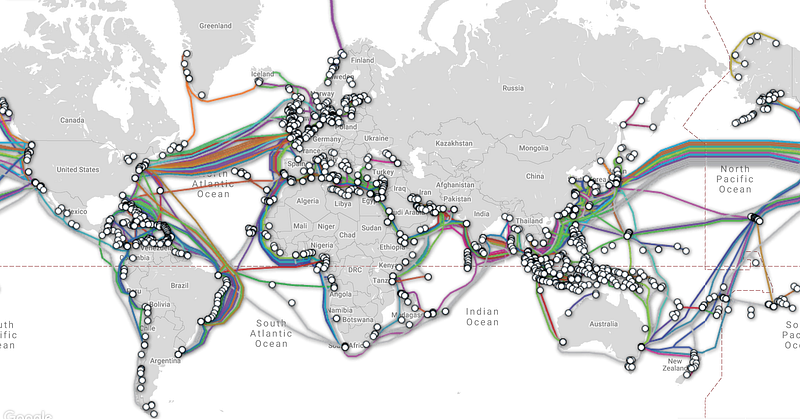
TeleGeography’s Submarine Cable Map (March 2019).

To effectively isolate Russia, it would theoretically be necessary to sever all seven main cables connecting the nation to the remainder of the world — an arduous but potentially achievable task. Additionally, Russia likely maintains terrestrial cable connections with neighboring countries, thereby complicating attempts to remove its internet access.

Cogent Communications, a major network provider, has already blacklisted Russia. The action had a significant impact on Rostelecom, one of the largest Russian mobile operators. Despite this disruption, Rostelecom managed to maintain near-normal traffic by utilizing alternate providers. Furthermore, Russia’s satellite presence would likely continue to provide internet connectivity, albeit with dramatically reduced bandwidth.

2 — Effacing Domain Names

Another method proposed to hinder Russia’s internet access targets domain names. Specifically, the Ukrainian government has suggested deleting the ‘.ru’ domain suffix, rendering most .ru-based sites inaccessible. A third strategy could involve blocking the Domain Name System (DNS) servers in Russia — affecting internet navigation similar to how GPS disruptions affect physical location services.
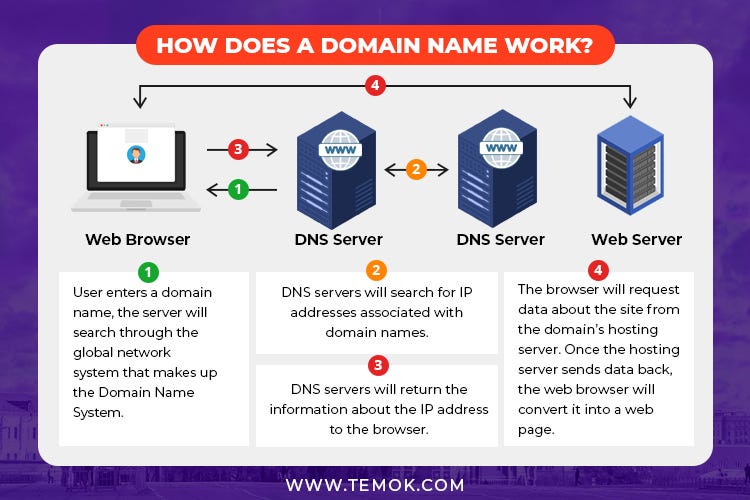
A diagram of how domain name works — source : https://www.temok.com/blog/what-is-ru-domain/

Limitations and Legalities

The Internet Corporation for Assigned Names and Numbers (ICANN) indicates that these options are not legitimate possibilities. Although ICANN may establish internet protocols, the authority to deactivate servers resides with independent companies.

A similar situation applies to Secure Sockets Layer (SSL) certificates. Despite potentially having the authority to eliminate all .ru websites, ICANN has expressly declined to take such measures.

It is essential to understand the broader implications of the increasing fragmentation of the global internet. The so-called “splinternet” has gained significant attention from government entities worldwide, including those within the United States and the European Union.

The “splinternet” is defined as the fragmentation of the internet due to various factors such as technology, commerce, politics, nationalism, and diverging national interests. This idea asserts that the open, globally connected Internet is splintering into a collection of fragmented networks controlled by governments or corporations

China’s great firewall

China’s digital infrastructure provides a stark example of what a splintered internet could look like. In 1994, the Chinese government began implementing digital censorship measures that ultimately led to the creation of the “Great Firewall.” This empowers the Chinese government to control access to foreign websites and promote exclusively Chinese services and businesses.
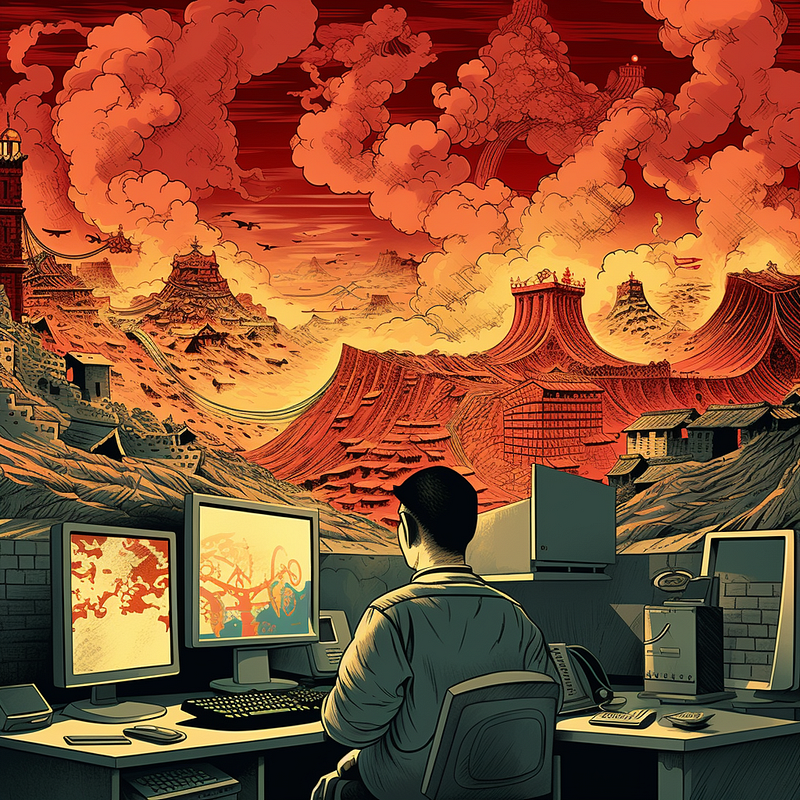
China’s Great Firewall — generated by the author via Midjourney

Russia’s move towards autonomy

Russia is presently on a similar trajectory toward greater autonomy in its internet infrastructure. It has severed ties with Google, replacing it with Yandex, and aims to develop and control its national internet further. This fragmentation, referred to as the “splinternet,” could have profound effects on communication, work, learning, and consumption.

The importance of open and accessible internet

Preserving an open and accessible internet is crucial, as evidenced by the Arab Spring, during which the vast majority of protestors in Tunisia and Egypt relied on social media to organize and disseminate information. Access to a global internet connection proved critical for transforming these movements into effective forces for change.
Globally connected Internet — generated by the author via Midjourney

Given these historical examples, it is essential for individuals, particularly entrepreneurs and writers, to advocate for an open and global internet that fosters innovation and knowledge sharing. Additionally, it is crucial to actively seek out diverse sources of information for staying informed in an ever-changing landscape. Lastly, reflecting on the internet’s role in personal and professional lives is necessary for responsible and ethical usage.

Although the global internet’s future appears uncertain, each individual holds the power to influence its course. By working together, it is possible to preserve an open web that can nurture innovation and inspire generations to come.

Internet
Technology
Politics
Culture
Russia
Recommended from ReadMedium