
Can we acquire immunity against Coronavirus?
How the human immune system responds to Covid-19 is among the many uncertainties that remain about this infection and what that means for the spread of the disease
The best approach is to construct a conceptual model — a set of assumptions about how immunity might work — based on current knowledge of the immune system and information about related viruses, and then identify how each aspect of that model might be wrong, how one would know and what the implications would be.
Coronavirus
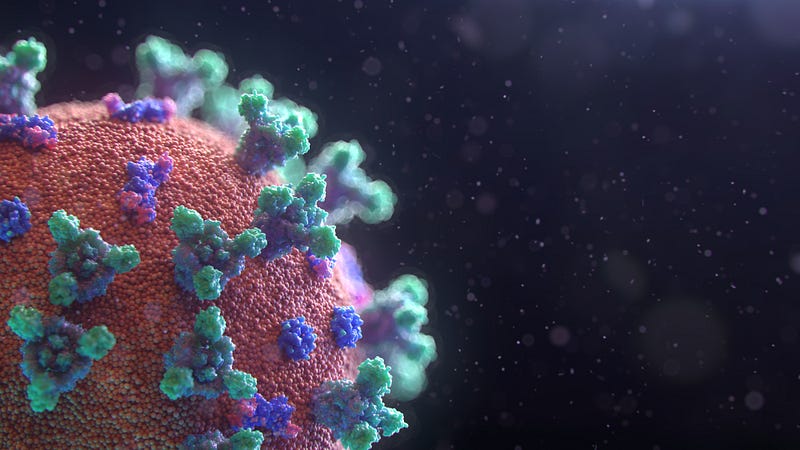
Coronavirus are a large family of viruses that are known to cause illness ranging from the common cold to more severe diseases such as Middle East respiratory syndrome (MERS) and Severe acute respiratory syndrome (SARS). There are 7 types of coronavirus. These groups of viruses jump from animal host to human host. SARS-CoV-2 (type of coronavirus causing COVID-19 disease) is the third major coronavirus epidemic.
What is immunity
Everyone must be familiar with this term, that is, it provides protection to our body against any foreign invaders. But have you ever thought how immunity works?
Before getting into depth, here is a general introduction of immunity
There are 2 main types of immunity called Innate immunity and Adaptive immunity. Adaptive immunity is the one which we acquire throughout our life after being exposed to the microorganism. It further divided into 4 types
When exposed to microorganisms, acquired immunity gets into actions and starts producing antibodies against the invader. Same thing is expected to happen when coronavirus enters the body. After being infected with SARS-CoV-2, immune response of every individual is different, some have better than others. However, that initial response depends upon the persons overall health and most importantly age.
When a virus attacks its first cell in the body, it sends out a cascade of chemical signals that will activate an army of immune cells to come to battle the invading virus by releasing proteins called interferon. When interferon land on neighbouring cells, they trigger those cells to enter defensive mode.
However, it has been found that SARS-CoV-2 virus appears to block this interferon signal, meaning it messes with the cell’s second job. The cells in the lungs don’t enter defensive mode and so remain vulnerable to viral infection. As the virus keeps replicating, the immune army that arrives to battle it starts doing its job: attacking infected cells, digesting debris and chemicals spewed out by dying cells, even killing nearby cells. There are 90% chances a person infected once with this virus develops immunity against it, the strength of it depends on the person's physical health.
It has been found through experiments that survivors of COVID-19 will retain immunity to the virus.
Can a person catch coronavirus again?
Ever since the outbreak of coronavirus, scientists all around the world have studied thoroughly about this virus. Many researches and experiments have been conducted in order to find a cure and develop vaccines for it and most importantly to give answers to various questions, most important being if immunity is acquired when humans are exposed to this virus, the process of acquiring it and the time period of it. However only a few months have passed since its outbreak, thus scientists have to rely on the information they had gathered about the previous coronavirus like SARS and MERS
No human-challenge experiments have been conducted to study immunity to SARS and MERS. But measurements of antibodies in the blood of people who have survived those infections suggest that immunity is acquired to some extent and may persist for some time period: two years for SARS, and almost three years for MERS according to a study. These studies form the basis at what might happen with Covid-19 patients
According to a recent study, 175 Chinese patients with mild symptoms of Covid-19, 70% developed strong antibody responses, but about 25% developed a low response and about 5% developed no detectable response at all
To be clear, most experts do think an initial infection from the coronavirus, called SARS-CoV-2, which will ultimately cause COVID-19 will grant people immunity to the virus for some amount of time
Hence, experiments and studies have found high levels of antibodies to SARS-CoV-2 in recently recovered patients.
That means the person recovered from this infection, has the potential to resist against the possibility of being reinfected, due to the developed immunity against it. But the strength of the acquired immunity is still unknown and under study.
Still, the World Health Organization has stressed that the presumed further questions related to immunity can only be proven as scientists study those who have recovered for longer periods.
The agency is working on guidance for interpreting the results of antibody tests, also called serologic tests (antibody tests).
What are antibody tests? And how accurate?
The tests look for antibodies in the blood. Because antibodies are unique to a particular pathogen, their presence is proof the person was infected by the coronavirus and mounted an immune response “no test is 100% accurate, Even the best tests will generate some false positives (identifying antibodies that don’t actually exist) and some false negatives (missing antibodies that really are there)
How long will COVID-19 immunity last?
The coronavirus SARS-CoV-2 has only been circulating in human hosts for five or six months, which means that there is simply no way to know whether immunity to the disease lasts longer than that.
Ultimately, researchers are still uncertain about what level of long-term immune memory is sufficient to protect against future coronavirus infection, and how long it takes for the immune system to drop below that level.


