avatarMazin Hussain

Free AI web copilot to create summaries, insights and extended knowledge, download it at here

4189

Abstract

ing data for the Federal Government. In cases, going down to the county level. It was this data by the USDS that was used to keep the public informed and decide on allocation of medical supplies by the Federal Government.</li><li>Assisting the CDC in overhauling its website to rapidly publish critical information regarding the spread of COVID-19.</li><li>Supporting the Small Business Administration in delivering loans to businesses hit hard by the economic downturn.</li><li>Enabling federal departments to work remotely. A few examples being the Center for Medicare & Medicaid Services, the Department of Veterans Affairs, and the Department of Homeland Security.</li></ul><p id="7583">Prior to the pandemic, the U.S. Digital Service had many other notable achievements under its belt.</p><p id="d538" type="7">“COVID has revealed that government needs to be effective and efficient and it needs to be able to move fast.” — Matt Cutts</p><p id="72f8">By fixing many broken and outdated services, the USDS has improved access to crucial resources for those in need. A few notable example are:</p><ul><li>Redesigning the IT infrastructure of the U.S. Department of Veterans Affairs. <a href="https://readmedium.com/saving-va-100-million-dollars-c5d992e0cf54">By shifting much of it to the cloud, the VA was able to save $100 million.</a></li><li>Introducing an app that allowed <a href="https://readmedium.com/introducing-a-new-digital-application-for-healthcare-at-va-610d8bac4c78">veterans to submit healthcare applications online</a>.</li><li><a href="https://readmedium.com/improving-the-experience-for-veterans-scheduling-medical-appointments-online-d60d5c0a25df">Fixing the only app that allowed veterans to schedule medical appointments online.</a> A move that made a once frustrating process transparent and simple.</li><li>Helped low-income families apply for and renew access to public assistance programmes <a href="https://readmedium.com/redesigning-the-journey-to-critical-benefits-for-americans-in-poverty-2ca068591f32">by making them all available on a single app.</a></li><li>Improving the immigration process <a href="https://readmedium.com/technology-is-helping-to-modernize-our-immigration-system-here-s-how-96162d615b6a">with the creation of a single platform that allowed immigrants to easily obtain the information they required.</a></li></ul><p id="f477">These may not be grand gestures that make the entire government work overnight. Yet, with every tiny step, it’s possible for one cog in the bureaucratic machine work better. In turn, making things better for one more group of people in need.</p><h1 id="5997">The people behind the U.S. Digital Service</h1><p id="861f">The success of the USDS is largely due to the people behind it. Many of them can be characterized by its Administrator, Matt Cutts.</p><figure id="5634"><img src="https://cdn-images-1.readmedium.com/v2/resize:fit:800/1*Ws48SAyv2DhaZvCFi-lFRw.jpeg"><figcaption>Matt Cutts, the current Administrator of the U.S. Digital Service (Image credits: Washingtonian)</figcaption></figure><p id="8840">In 2000, Cutts joined Google as employee number 71 and earned the nickname of <i>porn cookie guy</i>. The name was born as he became famous for his work on the web spam team and designing Safe Search. So if anyone at Google found any unwanted pornography in search results, Cutts offered them some of his wife’s homemade cookies.</p><p id="df2a">After 15 years at Google, Cutts began exploring new options and landed at the U.S. Digital Service. Originally, Cutts planned to spend no more than 3-months. <a href="https://www.mattcutts.com/blog/join-the-us-digital-service/">That was extended to 6-months</a>. Only a few short months later, he witnessed the departure of 20% of the USDS. This included much of its leadership following the election of Donald Trump as President.</p><figure id="302f"><img src="https://cdn-images-1.readmedium.com/v2/resize:fit:800/1*LtgK35ZBnHy7fjBFugjSLA.jpeg"><figcaption>A glimpse inside the offices of the U.S. Digital Service and it’s people, which resemble a Silicon Valley tech startup more than any Federal Government office (Image credits: Alan Lessig |

Options

Federal Times)</figcaption></figure><p id="af6e">Soon after, Cutts was appointed as the Administrator of the U.S. Digital Service. Despite the air of uncertainty at the time, he stayed on as he puts it in his own words because “Saving society — that was our job.” Much of the USDS that stayed back and joined since <a href="https://www.federaltimes.com/it-networks/2018/07/25/inside-the-agency-where-you-wish-you-worked/#:~:text=The%20United%20States%20Digital%20Service,time%20in%20other%20agencies%27%20offices.">have felt the same</a>.</p><blockquote id="355e"><p>As Jonathan Sullivan, a former deputy executive director, put it, “A lot of people come here for three months, and it’s like they get hooked. <b>There is something about the impact and the ability to make a change that people go back to their regular jobs and are like, ‘Wait, what am I doing?’</b> And two or three months later, you’ll hear that this person is coming back.”</p></blockquote><p id="6057">This has resulted in the U.S. Digital Service being a unique federal agency. Its offices are decorated with memorabilia and crab-themed décor celebrating its lightsaber-wielding unofficial mascot known as Mollie the Crab. Neither does it have a strict dress code for suits and opts for shirts and jeans.</p><p id="90f4">In every sense of the word, the U.S. Digital Service embodies the spirit of a startup. A feat that is only possible because of the people behind it.</p><h1 id="7879">Can other countries replicate this success?</h1><figure id="b1cd"><img src="https://cdn-images-1.readmedium.com/v2/resize:fit:800/1*Q6x_T5j_rpwqvF59Nmdb3w.jpeg"><figcaption>The USDS offers a blueprint for a government to better serve its people through technology. But can its success be replicated by other countries? (Image credits: U.S. Digital Service)</figcaption></figure><p id="ada4">In theory, yes. But in practice, it’s a lot more complicated than putting a few software engineers and designers in a room and asking them to magically fix a government.</p><p id="128f">Anyone can build a website or an app. But to get in the minds of users, identify their real problems, and then design real solutions for their pains? That’s where the real challenge lies. All too often, governments everywhere have tried and failed in utilizing technology to better serve their people.</p><p id="15da">The U.S. Digital Service offers a blueprint for government to actually serve the people. Yet, it requires a delicate balance in execution. It calls for a typical tech startup placed within the government.</p><p id="7d27">One that must collaborate and advise bureaucrats on technology. This has been a recurring characteristic of many USDS projects. The agency typically steps in and assists ongoing projects over starting anything new within federal departments.</p><p id="6743">Of course, it won’t magically fix a government overnight. There won’t be any fancy bells and whistles that can be boasted about during election campaigns. But it does offer a path to eliminate many existing frustrations when dealing with the government. All of this is driven by better designed digital solutions that put people at the heart of it.</p><figure id="686d"><img src="https://cdn-images-1.readmedium.com/v2/resize:fit:800/1*Dh2h87KnKfYBonz3BfSvfA.jpeg"><figcaption>Whether it’s applying for unemployment benefits or obtaining a visa online, the USDS shows that by fixing the digital touchpoints, it’s possible to make a better government (Image credits: Bay News 9)</figcaption></figure><p id="0040">Ultimately, it all adds up to greater digital inclusion levels — a necessity for a prosperous and just society in the 21st century.</p><p id="575b">But is this blueprint sustainable? <a href="https://www.theguardian.com/society/2020/sep/24/government-digital-service-truly-was-once-world-beating-what-happened">Sadly, like all things in government, it can all easily fall apart like a stack of cards without strong political will</a>. Nevertheless, that’s no reason to ignore the U.S. Digital Service. Its many achievements show that, even if it may take years, it is possible to fix a government to better serve its people.</p></article></body>

Can This Mysterious ‘Startup’ Fix Government?

And can its success be replicated across the world?
(Image credits: Ars Technica)

At least, that’s how Barack Obama describes the U.S. Digital Service.

When we typically think of startup, most of us picture Silicon Valley tech companies. The U.S. Digital Service is the furthest thing from that definition. But according to Eric Ries — Author of The Lean Startup, “A startup is a human institution designed to deliver a new product or service under conditions of extreme uncertainty.”

Even if it’s a department of the federal government, the U.S. Digital Service ticks all of those boxes. Working from the inside, these technologists (many of whom left cushy jobs) are building products to help the government better serve the people.

Even if you haven’t heard of them, their work has made an impact.

The origins of the U.S. Digital Service
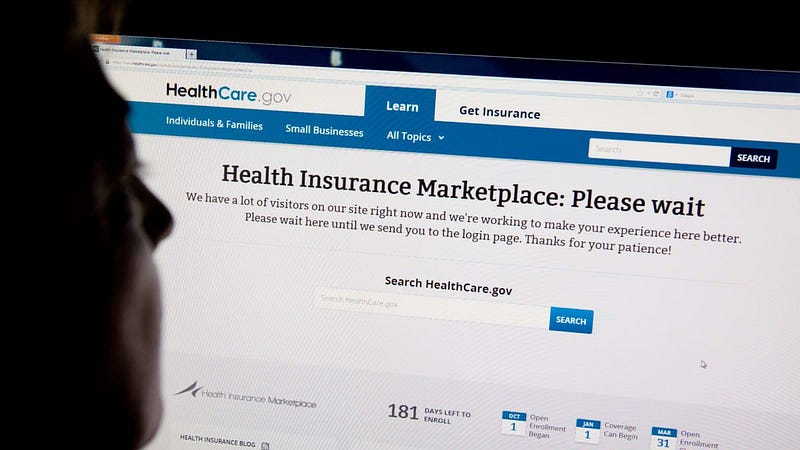
The HealthCare.gov saga was the first time a policy initiative risked failure because of the government couldn’t get the tech working correctly (Image credits: The Daily Beast)

Remember the HealthCare.gov fiasco? Let’s refresh your memory in 2010, the Affordable Care Act aka. Obamacare was passed.

The Act required the U.S. Department of Health and Human Services to launch HealthCare.gov by the 1st of October 2013. Its purpose was to allow people to examine healthcare plans prices, identify if they qualify for federal subsidies, and enrol in a chosen plan.

According to Bloomberg, the entire project cost $2.1 billion. When the website went live, it was a massive train wreck of a disaster. Its defining traits were long wait times, a shattered interface, and incorrect data sent to insurance providers. If you wanted an example of how not to build a website, this was it.
Taking the lessons from the HealthCare.gov saga to heart, the U.S. Digital Service was born to help the government with tech (Image credits: Code for America)

For the first time, a policy initiative risked failure because the tech was broken. It taught the government a valuable lesson — you can’t just throw money and expect tech to work flawlessly.

In response, the U.S. Digital Service was born in 2014. The brainchild of then U.S. Deputy CTO Jennifer Pahlka, it’s intended to be an elite technology team within the White House. Its mission is a simple one: prevent the next HealthCare.gov by getting the tech right for policy to move forward.

The impact of the U.S. Digital Service

Throughout the COVID-19 pandemic, the U.S. Digital Service has helped the federal government in its efforts to tackle the many crises it has brought on (Inage credits: Voice of America)

Since its founding, the U.S. Digital Service now has three presidencies under its belt. In that time, this silent force has had a profound impact.

Notably, it has assisted efforts to tackle the COVID-19 crisis from the Federal level down to individual States. Since the beginning of the pandemic, the U.S. Digital Service has been:

  • Collecting data for the Federal Government. In cases, going down to the county level. It was this data by the USDS that was used to keep the public informed and decide on allocation of medical supplies by the Federal Government.
  • Assisting the CDC in overhauling its website to rapidly publish critical information regarding the spread of COVID-19.
  • Supporting the Small Business Administration in delivering loans to businesses hit hard by the economic downturn.
  • Enabling federal departments to work remotely. A few examples being the Center for Medicare & Medicaid Services, the Department of Veterans Affairs, and the Department of Homeland Security.

Prior to the pandemic, the U.S. Digital Service had many other notable achievements under its belt.

“COVID has revealed that government needs to be effective and efficient and it needs to be able to move fast.” — Matt Cutts

By fixing many broken and outdated services, the USDS has improved access to crucial resources for those in need. A few notable example are:

These may not be grand gestures that make the entire government work overnight. Yet, with every tiny step, it’s possible for one cog in the bureaucratic machine work better. In turn, making things better for one more group of people in need.

The people behind the U.S. Digital Service

The success of the USDS is largely due to the people behind it. Many of them can be characterized by its Administrator, Matt Cutts.

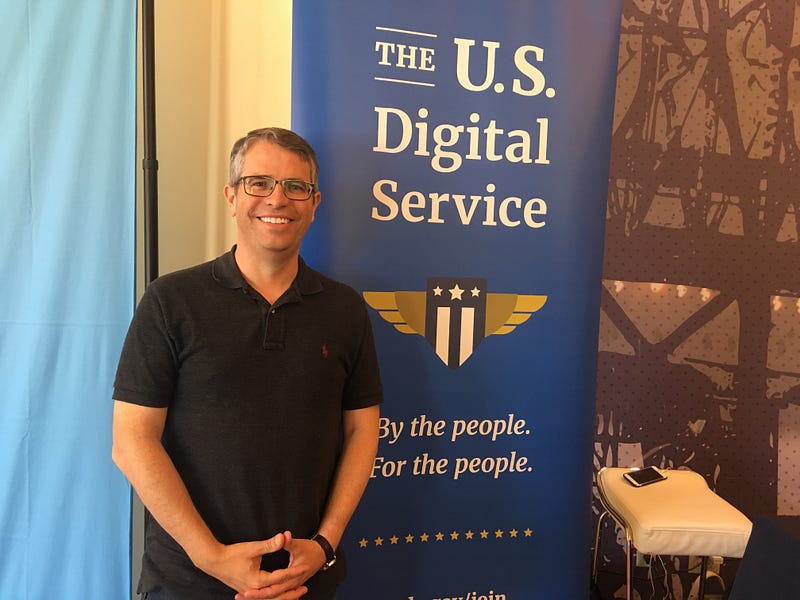
Matt Cutts, the current Administrator of the U.S. Digital Service (Image credits: Washingtonian)

In 2000, Cutts joined Google as employee number 71 and earned the nickname of porn cookie guy. The name was born as he became famous for his work on the web spam team and designing Safe Search. So if anyone at Google found any unwanted pornography in search results, Cutts offered them some of his wife’s homemade cookies.

After 15 years at Google, Cutts began exploring new options and landed at the U.S. Digital Service. Originally, Cutts planned to spend no more than 3-months. That was extended to 6-months. Only a few short months later, he witnessed the departure of 20% of the USDS. This included much of its leadership following the election of Donald Trump as President.
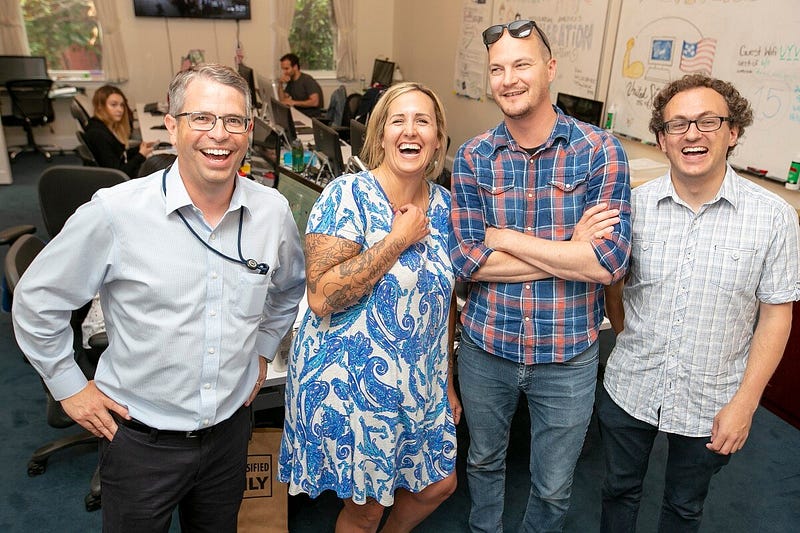
A glimpse inside the offices of the U.S. Digital Service and it’s people, which resemble a Silicon Valley tech startup more than any Federal Government office (Image credits: Alan Lessig | Federal Times)

Soon after, Cutts was appointed as the Administrator of the U.S. Digital Service. Despite the air of uncertainty at the time, he stayed on as he puts it in his own words because “Saving society — that was our job.” Much of the USDS that stayed back and joined since have felt the same.

As Jonathan Sullivan, a former deputy executive director, put it, “A lot of people come here for three months, and it’s like they get hooked. There is something about the impact and the ability to make a change that people go back to their regular jobs and are like, ‘Wait, what am I doing?’ And two or three months later, you’ll hear that this person is coming back.”

This has resulted in the U.S. Digital Service being a unique federal agency. Its offices are decorated with memorabilia and crab-themed décor celebrating its lightsaber-wielding unofficial mascot known as Mollie the Crab. Neither does it have a strict dress code for suits and opts for shirts and jeans.

In every sense of the word, the U.S. Digital Service embodies the spirit of a startup. A feat that is only possible because of the people behind it.

Can other countries replicate this success?
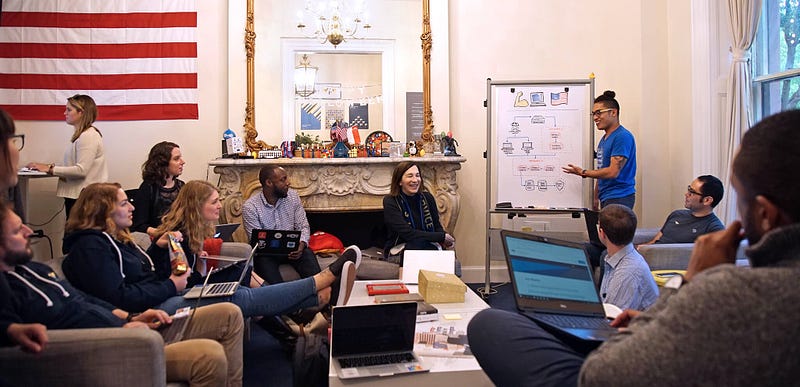
The USDS offers a blueprint for a government to better serve its people through technology. But can its success be replicated by other countries? (Image credits: U.S. Digital Service)

In theory, yes. But in practice, it’s a lot more complicated than putting a few software engineers and designers in a room and asking them to magically fix a government.

Anyone can build a website or an app. But to get in the minds of users, identify their real problems, and then design real solutions for their pains? That’s where the real challenge lies. All too often, governments everywhere have tried and failed in utilizing technology to better serve their people.

The U.S. Digital Service offers a blueprint for government to actually serve the people. Yet, it requires a delicate balance in execution. It calls for a typical tech startup placed within the government.

One that must collaborate and advise bureaucrats on technology. This has been a recurring characteristic of many USDS projects. The agency typically steps in and assists ongoing projects over starting anything new within federal departments.

Of course, it won’t magically fix a government overnight. There won’t be any fancy bells and whistles that can be boasted about during election campaigns. But it does offer a path to eliminate many existing frustrations when dealing with the government. All of this is driven by better designed digital solutions that put people at the heart of it.
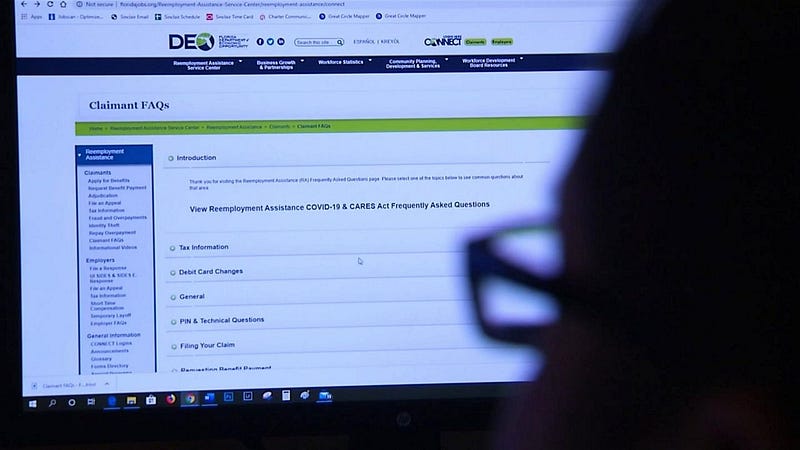
Whether it’s applying for unemployment benefits or obtaining a visa online, the USDS shows that by fixing the digital touchpoints, it’s possible to make a better government (Image credits: Bay News 9)

Ultimately, it all adds up to greater digital inclusion levels — a necessity for a prosperous and just society in the 21st century.

But is this blueprint sustainable? Sadly, like all things in government, it can all easily fall apart like a stack of cards without strong political will. Nevertheless, that’s no reason to ignore the U.S. Digital Service. Its many achievements show that, even if it may take years, it is possible to fix a government to better serve its people.

Government
Technology
Design
Startup
Equality
Recommended from ReadMedium