
Can the Soviet invasion of Afghanistan teach us a thing or two about the Ukraine war?
Almost 34 years ago, on this day — February 15th, 1989 — the last Soviet soldier left Afghanistan. As we mark this anniversary, I take a moment to reflect on the lessons learned from the Soviet invasion of Afghanistan, which may provide insights into the ongoing conflict in Ukraine.
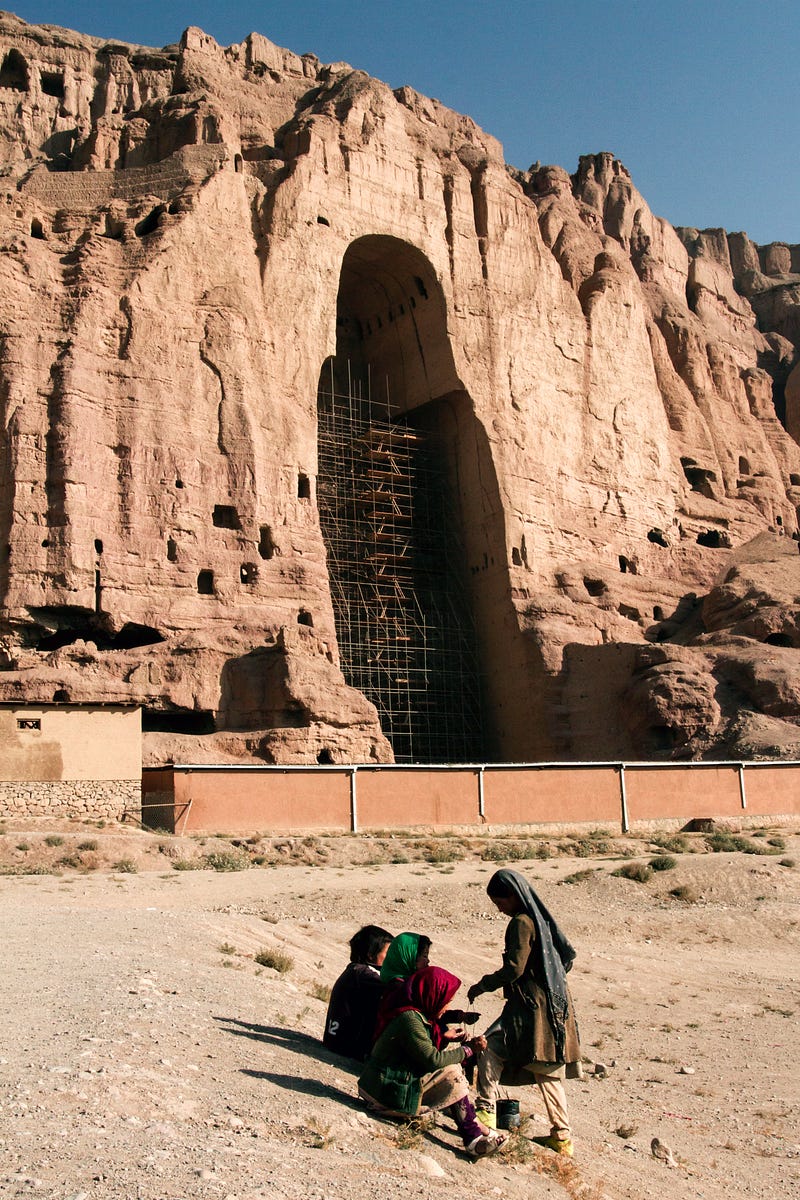
In 1979, when the Soviet Union invaded Afghanistan with about 115,000 soldiers, my father was in his twenties and joined the Jihad against the godless communists. One day, along with a group of the newly formed mujahideen, he went to a couple of villages down the valley to fight the Soviet army. But he and his fellow mujahideen did not have the weapons to fight the Soviet tanks except a couple of landmines. They planted the mines on the muddy road the Soviet tanks were crossing; he and his fellow mujahideen had gone up into the mountain (please remember the word mountain, we will come back to it) and watched what happened. They saw a tank upended when one of the landmines exploded, and he saw the underside of the tank for the first time. “it was like the iron used for pressing clothes,” in his own words. The Red Army soldiers inside the tank remained unharmed; they exited the tank, turned it back on its feet, and safely drove it back toward their base. Around the same time, the Western bloc bought Russian-made AK-47s from Egypt and secretly shipped them to Pakistan, distributed among the mujahideen groups. My father and his fellow mujahideen headed toward Pakistan to receive the guns and return to the country to continue their Jihad. He walked through mountains to avoid being captured by the Soviets or its puppet government. When he reached Peshawar city, he found that it was not easy to obtain guns if you were a Hazara. Those days Western weapons were channeled through the Pakistani government to the Mujahideen. It had its favorites among the Mujahideen, and Hazara-Shiite fighters were not among them. Those weapons went to the Peshawar-based Sunni groups, 80% to Hezbe-Islami of Gulbdedin Hekmatyar, dominated by the Pashtuns. My father changed his mind. After crossing the Zahidan border, he went to Iran and became a laborer in a stone factory that produced construction materials. He remained in Iran for several years and never returned to Jihad again. But the Jihad continued, and his mujahideen fellows discovered that the RPG-7 grenade launcher was a match for the Red Army fighter tanks should it be appropriately aimed at the tank's barrel.
The mujahideen devastated the USSR tanks with their skills in launching RPG-7; they also mastered using AK-47. Still, both RPG-7 and AK-47 proved insufficient to repel the USSR invasion as they were vulnerable to Soviet helicopters and airpower. As the war prolonged, the US and its allies gathered the courage to provide the mujahideen with FIM-92 Stinger missiles (for infotainment, watch the movie Charlie Wilson's War with Tom Hanks and Julia Robert as the protagonist. The film portrays how a US congressman managed to obtain Stinger missiles for the mujahideen). The FIM-92 Stinger gave the mujahideen an advantage against the Soviet helicopters. But the real help came from Afghanistan’s mountains, as the Mujahideen could climb up the hills where they could reduce their distance to the helicopters that flew up or down the valleys bombarding the villages. The mountains gave the mujahideen a clear shot at the Soviet choppers and helicopters. The Soviet invasion continued for almost one decade. Finally, the Soviets leader Mikhail Gorbachev withdrew from Afghanistan in 1988 after mutually agreeing with the Western bloc to disengage with Afghanistan.
Now that the US, Germany, and UK are providing Ukraine with the latest Leopard 2, Challenger 2, and Abrahams tanks, hopes are heightened that they might change the war dynamics in Ukraine's favor. Are these tanks vulnerable to any weapons? What about Russian missiles and airpower? During the Afghanistan war on terror, American tanks were particularly susceptible to the Taliban landmines. The German Leopard 2 seems to be ‘easy prey’ to the Russian missiles. What about Ukraine's war geography? On whose side is the geography of the Russian-Ukraine war? The author of Prisoners of Geography: Ten Maps That Tell You Everything You Need to Know About Global Politics, Tim Marshal, who worked in Afghanistan, argues that geography matters the most in the outcomes of wars. The plain terrain makes it easy for invaders with large armies to capture territories. What devastated the Red Army was Afghanistan’s geography. It was too hot for the Russians in the summer, and in the winter, it was impenetrable due to cold, ice, and snow.
I have zero knowledge of Ukrainian territories and the terrains where the battle is fought. ُWashington Post argues that the geography is against the Russian Army. The wetland and muddy soils create problems in army movements. Only during the winter months of January and February, when the ground is frozen, can the army move, which explains why Putin invaded Ukraine in February and gained territories in the past months. However, as John Mearsheimer would argue, and he does argue in his now most watched lecture that Russia does not need to capture Ukraine; it only needs to devastate it to reach its strategic goal of stopping it from joining NATO and the EU.
Many factors, including arms and logistics, decide the war outcomes, army commitment, and morale, but most importantly by, geography and the terrain where the wars are fought. However, as Carl von Clausewitz said, “War is the continuation of policy with other means,” then why not listen to Sun Tzu, who would urge that war is best won without putting up a fight? After all, although the Mujahideen in Afghanistan succeeded in causing the Red Army withdrawal, they shot those same AK-47s, RPG-7s, and MIF-92 Stingers at each other during the civil wars. Many of those same mujahideen, including those I know, ended up regretting participating in the Jihad.