
Can My Rescue Dog’s Love for Digging Help Inspire Your Writing?
Have writer’s block? I bet you’ll unearth at least one new topic to write about by the end of this article.
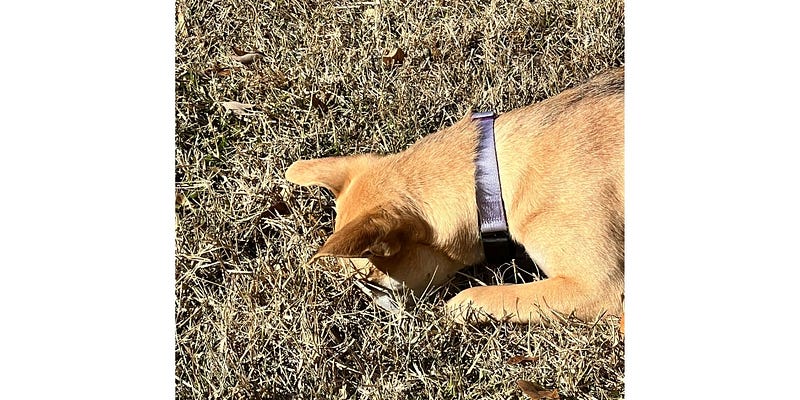
As our newly adopted rescue dog, Lucy, has settled in, I’ve noticed an unusual new behavior.
She has a whole big backyard filled with interesting stuff to explore — balls and bones and squirrels and neighbor dogs. But that’s not what she’s interested in.
Instead, she’s focused on what lies beneath. If you ask her, the really good stuff is buried down below — the stuff you don’t even realize is there! Unless you take the time to look, that is.
She scurries around the backyard, nose to the ground, searching for something she can sense but not see. (Moles? Rabbits? What else is there?) Eventually, she hones in on something. Her head cocks to one side, then the other. (I’ll admit, it’s a little freaky to watch how she legitimately hears something.)
And then she nosedives into the ground, pawing at the spot.
She could care less about what’s around her. Nothing will distract her now. Instead, she just wants to go deeper than surface level. To get to some mysterious yet priceless thing.
And that’s much of the charm that makes her, her.
The Problem With Keeping Writing Surface-Level
If you’ve been struggling to find writing inspiration lately, or you’re just looking for a new take on an old topic … I think you can learn a thing or two from Lucy.
I know I can.
As a writing coach for high school students applying to colleges, I’ve been employing Lucy’s sniffsational techniques for years now.
Let me share.
When my essay coaching students are looking for a topic for their college admission essays, I urge them to go deep — like Lucy does.
It’s easy for my students to want to write about the obvious things — the things on the surface — like tearing ACLs or moving to a new high school or getting involved with the robotics club or the swim team. They’re the seemingly no-brainer kinds of topics.
Now, while those aren’t terrible topics, they’re a little common. A little cliché. They don’t tell me much about what the student is really like — their personality and their passions. They’re definitely harder to stand out with.
And that means they’re probably not going to hold the reader’s attention — and probably definitely not the admissions officer’s attention — much like those games of fetch with Lucy that get old to her … fast. (Sound familiar, fellow writer?)
But the mystery that lies beneath the obvious?
Now that’s something to consider.
What Can Writers Learn From Lucy’s Curiosity?
So my advice to students writing their admission essays? Or to fellow Medium writers looking for their next topic?
Follow Lucy’s lead. Sniff beneath the surface. You never know what you might find.
What are your more unusual interests, hobbies, or experiences? What’s a story that could’ve only happened to you? Do you love escape rooms because you’re a born leader and brilliant problem-solver? Take your chore of rolling out the bins on trash day very seriously because it’s taught you dedication and the importance of doing even small tasks well? Are you insistent on plain-and-dry hamburgers for every restaurant meal but surprisingly flexible in other ways?
Can you write on something a little deeper? A little more vulnerable? A little more personal?
(How many other people could write about a squirrel interrupting my lunch at their deceased mother’s house by divebombing directly into your lap? Probably just me.)
I can just about guarantee you’ll feel like you know me a little better by the end of this piece — and my squirrel story. And that’s just what a great piece of personal writing is supposed to do.
These Questions Are All But Guaranteed to Inspire You
So now you’re ready to write a more personal story. Maybe peel back a couple of those layers and dig like Lucy.
But how to get started?
Still stuck? Try answering one or more of these questions:
- What’s the most memorable thing that’s happened to you?
- What 5 songs are on your motivational playlist — and why?
- What’s the most interesting conversation you’ve ever had?
- What’s the most useful word you know?
- What’s the dumbest thing you’ve ever done?
- What’s your favorite gift you ever received? Ever gave?
- What piece of clothing makes you feel invincible?
- What are you known for?
- What’s the weirdest thing in your backpack/purse/briefcase? Why is it there?
- When was the last time you were so excited you couldn’t sleep?
- What have you done that you wish you could do over?
- Does pineapple belong on pizza? Defend your answer.
- What 5 hashtags best describe you?
- If your home was on fire and you could save only five items, what would they be? Why?
- What’s your favorite memory with your parent or grandparent?
- What’s your canon event? (If you’re not hip to the term, a “canon” event is something that has happened in your life/storyline that has helped build your character and make you who you are. It could be a choice, a mistake, or just an unavoidable event.)
I haven’t been using this just for my own writing. For Christmas, I helped my mother-in-law recount her memories from her 80 years of life, and we talked through some of these questions and answers. It was so much fun … and so revealing. (More later on how I did it and the final product!)
Dig, Lucy, Dig!
Sometimes, digging a little deeper and even asking yourself some tough questions are exactly what you need to find your next bit of writing inspiration. Hopefully, one of these questions (or the answers) will help you do just that.
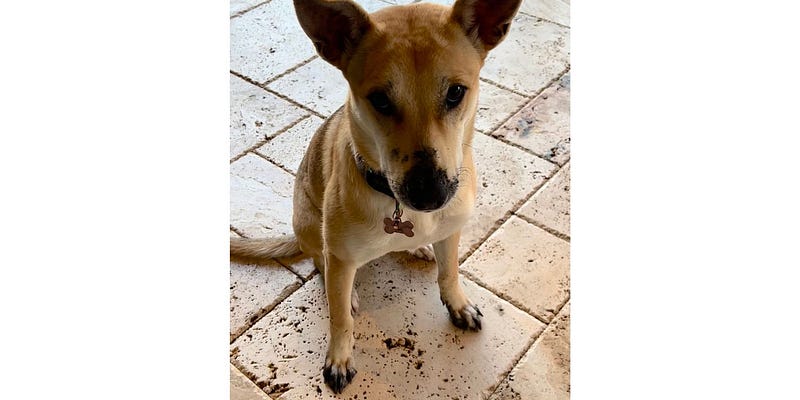
Writers: Let me know. How do you find your inspiration? What questions do you ask yourself when you’re finding your next topic for a personal narrative? What advice do you have for stuck writers? I’d love to hear.
Meanwhile, I’m headed back out with Lucy to find more buried treasure.
Julia Byrd has been a word enthusiast since elementary school, where she “published” handmade reference books for her school library. With over 20 years of writing experience under her belt, she’s been a copyeditor for an international brokerage firm, a tech writer for a government contractor, and an in-house wordsmith for an event planning firm, just to name a few. Nowadays, she’s a college admission essay writing coach. When she’s not helping students, you’ll likely find her on a quest for the world’s best French Dip sandwich or writing for her personal website. Julia’s got a soft spot for the apostrophe, because, in the words of Imagine Dragons, it’s “a symbol to remind you that there’s more to see.”


