
Can I Say Anything Related to Men Without Having to Apologise for It?
The shame about the need for the #notallmen
Since the #metoo movement, we all think that hashtagging something will increase its importance and anything with a hashtag will automatically become of substance.
There is one hashtag that stands out and it’s on the top of my pet-hate list: #notallmen.
I hate that I have to use it when I would like to express any opinion that might be offensive to some men. I hate that just because some men are doing heinous things, others feel the urge to pitch in and express that it’s not all men doing it.
Thankfully, even though our society is revolving around rape culture, victim-blaming, slut-shaming and mansplaining, there are good men out there. Even though I was a victim of abuse, rape, sexual assault, victim-blaming, slut-shaming and I am continuously exposed to mansplaining, I still think that men are great.
But I have to add: #notallmen. And I hate that I have to add it.
Following an article I wrote, I received a comment from a helpful reader who felt the urge to point out how my views are distorted, how my mental capacity is low and how I should figure the F out how to be decent. In the same comment I was called selfish, greedy and a feminist.
As if being feminist was a curse word.
As if asking for equality for women would be outrageous and a negative trait.
According to the definition, the term feminism means the advocacy of women’s rights on the basis of the equality of the sexes. It promotes the belief that men and women should have equal rights and opportunities in social, political or economic situations.
Feminism is not about superiority of women, it is about equality.
The ideology of feminism is attacked often based on the idea that women are not the same as men. We need to understand first and foremost that feminism is not and it cannot be about sameness. Men and women are not the same.
They are different in terms of physical and biological attributes, they have different bodies, different hormonal setup, different physical capabilities. Staring with the obvious: women are able to deliver babies, men are not. Physically and anatomically women are usually smaller and weaker, while men are bigger and stronger.
Feminism — as the concept — is not claiming that women are the same as men. Feminism claims that despite the existing or perceived differences, both women and men are supposed to have equal access to opportunities.
However, looking in the depths of it, the idea of sameness is used as a narrowminded excuse. If we strip equality from gender differences and just focus on an example of people being different, most would agree that just because one man is stronger and another is weaker, they both should have equal access to the same opportunities — the right to vote and to decide about their bodies, the right to earn the same wage, or treated in the same way
Yet when it comes to fighting for equal rights (not sameness) for women the excuse for not granting equal rights to women stems from the perceived or real differences.
This is how patriarchy is thriving. This is how patriarchal beliefs can point out physical differences, or even mental capacity to make an argument for not granting equal rights to women in earning the same wages, in deciding about their own bodies, in living out their own sexuality.
Think about the wage gap, the abortion laws, the different forms of misogyny such as the key and lock theory, the concept for virginity or judging women for their sexual choices.
Think about the subtle or not too subtle examples of mansplaining, when it is automatically assumed that a woman needs an explanation — at the workplace, at home, even in the bedroom.
Using feminism as a derogatory term is quite common — as it is confused with misandrism, which is the counterpart of misogyny, attacking and hating men.
The mere fact that we need to come up with a hashtag for not all men is wrong on so many levels.
When the #metoo movement came out, it was about an increasing tsunami of women coming out about sexual assault, abuse, and rape. It was a concept that encouraged women to raise their voices — without the fear of being judged for something that happened upon them. The concept of #metoo — in my understanding — was to provide a safety net for women to speak up, to stop being afraid and to prevent other women from having to suffer from the burden of keeping their traumas a secret.
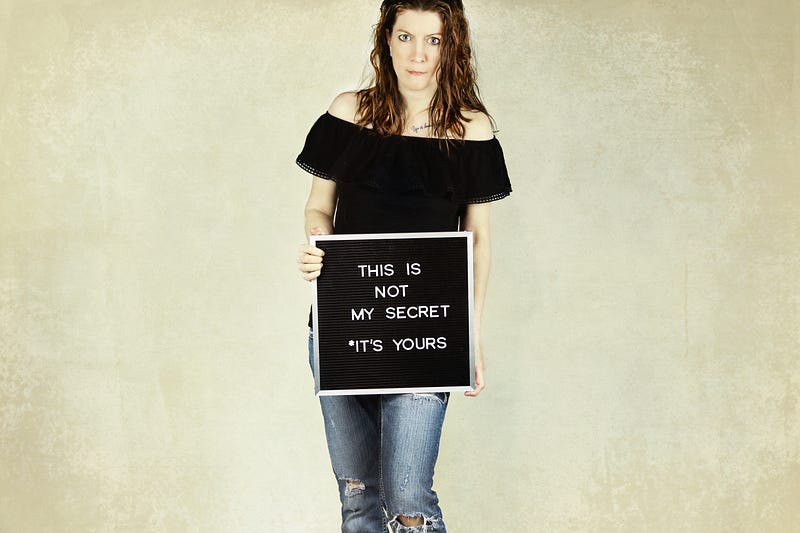
There was no need to create a #notallwomen, because there was nothing shameful about falling victim to heinous crimes. Even those women who never suffered from anything close to an assault, could sadly relate to it; as it happened to too many, in the family, among friends, and the fear was real — even if an assault never actually happened. All women could relate, and this made it inclusive.
#notallmen starts from a defensive stance. It starts by defending men, even when not all men are attacked. It is removing the collective societal responsibility — saying it wasn’t me.
When we talk about #notallmen, we are looking at the same picture in a distorted way. #metoo never claimed that all men are monsters — it merely said that we have monsters around us and the possibility is more real than we thought before.
The inclusiveness of #metoo evoked the exception of #notallmen.
And we know it! Even those who went through the ordeal of rape, assault or any other manifestation of the rape culture know that it’s not all men.
But the voice #notallmen starts from a defensive stance. It starts by defending men, even when not all men are attacked. It is removing the collective societal responsibility — saying it wasn’t me.
But instead of taking a stronger stance that not only passively defends men, who don’t do it, it could actively promote how to behave, what to do and what not to do.
There are men — good men, good husbands, respectful fathers, sons, brothers — who do everything in their power to protect and respect women. They even go to the lengths of trying to spread the word and educate others. And guess what, these men never use the #notallmen, because they know that the issue is not with them. And I can speak on behalf of #allwomen that we are eternally grateful for the respect and maturity, adding with all honesty that we wish we shouldn’t have to applaud it as some rarity.
Women too have a say in their own lives — they can shout it from the rooftops how much they are entitled to the same treatment, same wages, same rights to their bodies, same number of orgasms and same amount of pleasure. And they do.
Yet when it is spelled out, we are called feminists — as a derogatory term, a curse word. Yet when we ask not to be mansplained it is pointed out that mansplaining is a loaded term and we might be attacked for it.
It is indeed loaded. It is heavily loaded with disrespect and the idea that women are the lesser sex and their mental capacity evokes the need to help them out with explaining topics and concepts.
There are some personal opinions, personal stories that have nothing to do with men as a gender in general — we have conflicts on a personal level too, we have misunderstanings and arguments that are not based on rape culture. It might come distantly from a societal belief, but it can also be just a personal trait that I have a comment about. It can be about a jerk — and I know that it’s not all men. It can be a suggestion from a woman to a man — and I know it’s not all men. It can be a general observation about a certain generation, stereotyping the cohort of Millennials comparing them to GenX — and I know that it’s not all men.
I would like to express my opinion about men — in a safe way.
I’d like to be able to tell what I think, using the freedom of speech, without naming the person, without libel, without smearing their names. I’d like to be allowed to be upset if I feel that someone is taking away my agency or questioning my mental capacity — without needing to point out that I am not referring to men in general, that I am not making an assumption of almost half of the population. I would like to just speak and be heard — be all those who want to relate and not by those who grab every opportunity to highlight the difference between the sexes.
Can I please talk about men without being called a feminist and without having to apologise, and correct myself in advance that I didn’t mean all men?
That would be another step towards equality.