
STORY | CONSCIOUSNESS
CAN HUMANS TRANSCEND LIMITED CONSCIOUSNESS?
What would trans-consciousness look like
January 27, 2000
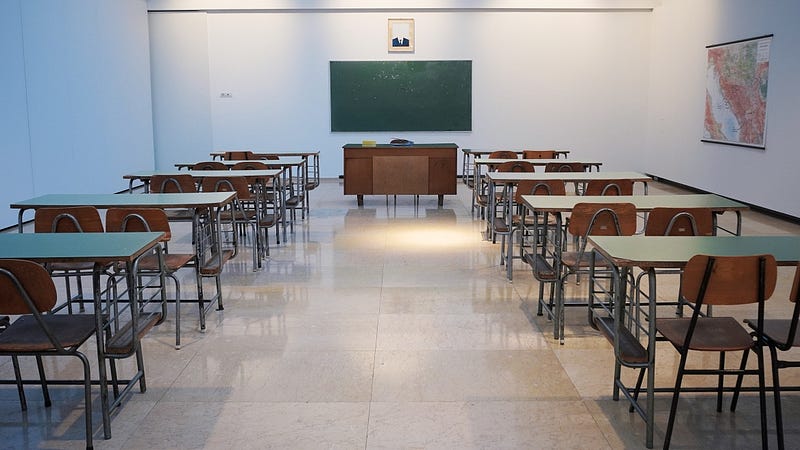
As students were still coming into his classroom at The Columbia University Biology department, Dr Martin Halverson, MD, PhD, a distinguished professor in neurophysiology was writing with chalk on an old fashioned blackboard.
“Quiet, Students, please find your seat quickly and relax. My name is Dr Martin Halverson and this class is called, ‘An introduction to Neurophysiology.’ It is a lecture format and if you plan to pass this class, you must take notes. There will be a plethora of information to memorize and analyze and there will be questions that need to be answered, terminology which needs to be mastered and even though I will set aside ten minutes in every class for questions, it will incumbent upon you and only you to master the concepts and special terminology which will be necessary to pass this course. The effort and dedication required by many of you may be unprecedented, but I assure you that those who are willing to go the extra mile, to even beyond that, will attain a transformational understanding of what we call human consciousness.”
Dr Halverson wrote on the board a question. “What is Human consciousness?”
He underlined the question twice with two crossing lines resembling a DNA double helix. He sat the chalk down on the board.
“There are many among my peers, who because of the abundance of foundational research currently underway, are beginning to question whether consciousness exists. There is much that I will tell you in this class which will surprise you because it is counterintuitive to how we daily experience our world. I am not one of those who believe we are living in a matrix, like the movie. I believe the world we experience is real. It exists, but not in the way we have all agreed to experience it. Our brains in a real sense create this common shared experience. We are beginning to understand the biochemical processes which make consciousness possible. We can map neural synapses and come to an understanding of how even the sensation of duration, the feeling of the passing of time from one moment to the next, our brains create, through neurotransmitters, merely the electrical computations of this massive electrochemical computer we call the human brain. So we begin.”
Dr Halverson paused a moment. “The textbook which we will use in this class is the Biochemistry of Neurophysiology by Anderson Carmichael. I had the privilege of working with Professor Carmichael for a year and I believe his textbook perfectly encapsulates the current research and thinking on this subject matter. I recommend you purchase it, you read it. It will give you the clearest overview of the material necessary to master this class. Any questions before we go on?”
One of the students raised his hand.
“Yes, please state your name and your question,” Dr Halverson told him.
“I’ve reviewed the synopsis of recommended reading for this class and I have a question.”
“Your name please,” Dr Halverson interrupted.
“George, George Brubaker,” he answered. “My question concerns the diversity of viewpoints expressed by the various writers you cite in the synopsis. You had Rupert Sheldrake and Karl Pribram and Richard Nussmann. They have vastly different perspectives even from your own. Rupert Sheldrake with his morphic resonance, Karl Pribram with his holographic theory of consciousness and Dr Nussman with his theory of transcendent consciousness.”
“My first question to you, Mr Brubaker,” Dr Halverson interrupted him, “Are you sure you are in the correct class? As I said at the beginning, this class is an introduction to neurophysiology. The mere fact that you are aware of the various theories of consciousness indicates you already have some knowledge of the subject matter of this class.”
“I have read the course material already, Professor.”
“Brubaker,” Dr Halverson repeated. “Are you any relation to Gregory Brubaker?”
“He is my brother,” George answered.
“Your brother was one of those who heeded my instructions and has gone on to make a name for himself at Fordham.”
“My brother is a genius,” George acknowledged.
“On that, we can agree. But as an introduction to future things, I believe with ample evidence that despite your brother’s stellar abilities, there must exist somewhere those individuals whose brains work at a completely different and transformative level of magnitude even above your brother’s level of cognition. Somewhere among the billions of brains currently inhabiting this world, there must be an individual, or individuals, who can process and analyse sensory data, and sense perceptions, in a completely innovative fashion. Like the philosopher Kant, If we can conceive of such a consciousness greater than our own, someone who has the abilities to perceive beyond the somnambulant and zombified normalcy we currently experience in our post-modern world, that person must exist somewhere.”
“Describe her or him,” a young woman interjected.
“Please state your name.”
“Candace Fisher. My name is Candace Fisher.”
“Thank you, Ms Fisher.”
Dr Halverson was surprised by the direction his lecture had suddenly taken. He hesitated a short time, but then gave into the moment. He didn’t know why he was talking about this.
“Imagine someone for whom the normal limitations of the senses no longer apply. He can experience duration, what we call time bi-directionally. Imagine the ability to discern multiple event patterns simultaneously, to process and categorise connectivity, harmony and symmetry, and conversely disharmony and asymmetry with equal acumen. Imagine this ability going back into infancy, how this individual’s brain would develop in a completely different manner. By the time she or he was eleven or twelve years old, such a person would be on the threshold of transformational consciousness. An apt comparison would be the transformation of the computer industry from the Commodore 64 to the modern supercomputers. We’re talking about a different human being altogether.” He paused. “This certainly isn’t what I had planned to talk about in the first class. What we are going to talk about over the next few weeks are the limits of human perception, and the shortcuts our brains have developed for presenting to us a coherent and continuous world. We will not be speaking about philosophy, about the theoretical transcendence of these limitations by extraordinary means. One day I believe there will be an order of magnitude transformation in consciousness but not in this class at this time. You’ll have to earn your grades the old fashioned way, by hard work and discipline.”
Another student raised his hand to ask a question.
“How many tests, Profesor?”
“Again, I need your names.”
“Oliver Jimenez,” he answered.
“There will be four tests. Three tests are equally spaced and the final counts fifty per cent. Take notes.” He paused. “OK, that’s all for this class.”
What Dr Halverson could not have realized was that somewhere there was someone like the person he described who was watching and listening to him, someone who was not subject to the normal limitations of human perception. Someone who had trained himself to accomplish what he wanted to accomplish, in much the same way toddlers through systematic repetition of soundbites teach themselves to learn languages in order to speak to their caretakers what they want. Jonathan was finally ready to communicate what he wanted for and from the world.
Dr Halverson watched his students one by one leave the classroom. Then he turned off the light and entered the corridor. It was at this moment that Agnes Patterson arrived at the classroom.
She asked him, “Are you, Dr Halverson? Was this the class in neurophysiology?”
“Yes it was,” he answered. “But you’re late. I’d say very late.” He turned around to look at her and she was a petite woman with round eyeglasses.
“Are you registered for this class?” he asked her.
“Yes, I am. I had a problem with my alarm clock. It’s not keeping the right time.” She hesitated, “Oh, I’m sorry. I haven’t introduced myself. I’m Agnes Patterson.”
“Well, Ms Patterson, my suggestion for you is to buy another alarm clock. I’ll be back here in two days, and it is important to take notes, as many as possible.”
“I have a quick question if you don’t mind professor?”
“I have a quick question if you don’t mind?”
“One quick question. One simple answer is.”
She reached into her bag and took a folded drawing from it.
“I volunteer at the Spellman School, special needs school in Manhattan. One of the students there named Jonathan gave me this drawing a week ago. He just handed it to me as I was walking down the corridor. I want you to take a quick look at it.”
“I can’t spend more than a minute more.”
She unfolded the drawing and handed it to Dr Halverson. It was a drawing of her and Dr Halverson standing in the hallway near the classroom, staring at a drawing of her and Dr Halverson staring at a drawing.
“I don’t know what this is supposed to mean. What am I supposed to do about it?” she told him.
“There are some things, Ms Patterson that is best to disregard. Unfortunately, I have to get back to my office. I hope to see you in the next class.”
She folded up the drawing and returned it to her bag. She didn’t even know why she even showed it to Dr Halverson, but she had been restless for a week since Jonathan Margolis had given her the drawing. Despite all her misgivings about showing it to Dr Halverson, she had to see if what he had drawn would come true. Its realisation only prompted her to know more. What first began as an irritant would soon become a question, then become a quandary and then a dilemma and finally an ardent passion for understanding. In each step along the way, like a metal ball on an intricate interlaced inclined track, the curved rails of her consciousness were carefully guiding Agnes toward a seemingly inevitable conclusion.
Agnes arrived after her friends at the John Jay Dining Hall for their regularly scheduled Thursday lunch. George Brubaker was already sitting eating a hoagie with pastrami and cheddar, and Candace, his girlfriend, had just joined him, carrying a chef salad with vinaigrette dressing.
“We missed you today in class, Agnes,” George greeted her as she sat down across from him.
“My alarm clock isn’t working properly.”
“Oldest excuse in the book,” George told her. “I don’t think it’s going to fly with Professor Halverson. What would you like to eat? My treat.”
“That’s OK. I had a bagel this morning.”
“You can’t survive on bagels,” he told her.
“I beg to differ with you,” Oliver Jimenez joined them, carrying a bowl of chilli, and sitting down in the last chair. “I survived nearly half a semester on bagels and Philadelphia cheese.”
“So what do you think a tough course or a pushover?” Oliver asked.
“Pushover,” Candace responded. “A real tyrant wouldn’t work so hard to demonstrate it. He’d let his demeanour tell us everything.”
“I agree with you,” George acknowledged, “But I’ve heard he’s not above public humiliation if necessary.”
Agnes opened her purse and removed the folded drawing and laid it on the table in front of them.
“What is that?” Candace asked.
“It’s a drawing one of the boys at the Spellman School handed me a week ago.”
“What’s so important about a kid’s drawing?” Oliver asked.
“This is not an ordinary drawing,” She responded.
“Let’s look at it a moment,” Oliver answered. “I’m pretty good with puzzles.”
“I don’t think it’s a puzzle,” George interdicted.
She reluctantly handed the drawing to Oliver. He snatched it from her hand and she released it.
“What does this mean?” he responded. “Did this happen?”
“This morning when I went to the classroom. It’s a picture of me standing showing Dr Halverson a picture of me standing in the hallway with a picture.”
He moved the drawing closer to his face to look at it.
“I think this boy is playing with you. Do you know him?”
“This boy is mute and unresponsive. I gave him the pencils and drawing paper on his first day at school. I’ve just seen him in the hallways. I haven’t interacted with him since.” She paused. “You see the paradox, don’t you?
“ I’m not much into paradoxes,” Oliver responded. “Simple straightforward provable facts. That’s really all I’m interested in.”
“We all know about your obsessions, Oliver,” Candace chided him.
“Let me take a look at the drawing,” George acknowledged. George took the drawing from Oliver and examined it. After a moment he handed it back to Agnes.
“I don’t think we can resolve this issue at this table today,” he acknowledged. “To think this is some sort of premonition, I’m not ready to consider.”
“Do we have to talk about this drawing?” Candace urged.
“Alright, I’ll put it away for now.” She took the drawing and put it into her bag.
“Are you still thinking about veterinary school?” George asked her to change the subject.
“You know I love horses,” she answered. “I grew up with them. But since I’ve been at the Spellman School, I’ve been thinking about something with autism.”
“Because of your brother?” Candace asked her.
“My brother’s better. That’s why I volunteered at the school. I’m going back after the term ends. I feel worthwhile when I’m there.”
“It seems very stressful to me,” Candace acknowledged. “I’m not so sure I could handle it.”
When she returned to the Spellman School, at the end of the term, and for the next three years, afterwards Jonathan never again gave her another drawing. It would be over three years later before another glimpse of Jonathan’s growing abilities would come to full fruition and he would interact with her once more.
Little did anyone know that Jonathan was not the only one who was developing special abilities, that there was active research being conducted openly and clandestinely in laboratories and institutions all over the world, striving for methodologies to enhance human cognition. Jonathan, along with many others, would be the first fruits of this enterprise. Many of these projects were under the direct supervision of organisations, like the Jamison Foundation.