Can Early Peanut Introduction Protect Your Child From Allergic Reactions?
The latest info on peanut and other food allergy prevention — learn what studies say parents can do to help their children live an allergy-free life
Disclaimer: I am not a medical professional, and this article is not intended to provide medical advice. This article is intended to make parents aware of current research regarding peanut allergies. Please consult with a doctor if your child is at high risk for developing a peanut allergy.
Before I became a parent, one of my biggest fears about becoming a mom was the possibility of having a child with a peanut allergy. I freaking love peanut butter. Peanut butter is a central part of my diet and has been for as long as I can remember.
I was so terrified of having a child with a peanut allergy that while I was pregnant, I ate tons of peanuts and peanut butter products. I thought that maybe exposing my unborn child to peanuts while in utero would somehow prevent him from becoming allergic.
When he was born, I also ate tons of peanut butter while breastfeeding. I struggled with supply issues, so I ate oatmeal every morning in an attempt to boost my supply (and to provide my child exposure to peanut butter through my breast milk).
At six months old, I introduced him to baby oatmeal. He didn’t like the taste of plain oatmeal (don’t blame him, neither do I). So, I added tiny amounts of peanut butter and fruit.
There once was a time when parents were advised to hold off giving babies any nuts until they were three years old. Parents believed that holding off giving their kids nut products would reduce the risk of peanut allergies. New research suggests otherwise.
Can parents prevent peanut allergies?
New research aligns with my approach to introducing my child to peanuts. While studies are inconclusive on whether consuming peanuts while breastfeeding prevents peanut allergies, expectant and breastfeeding mothers are no longer advised to avoid peanuts like they once were.
Several recent studies also show that children exposed to peanuts at an early age are less likely to become allergic:
Learning About Peanut Butter Allergy (LEAP)
The LEAP 2015 study assessed 600 children for more than four years. Babies participating in the study were already considered at a higher risk for developing peanut allergies because they had been diagnosed with severe eczema, egg allergies, or both. This study did not include any kids already diagnosed with a peanut allergy.
Between 4 and 10 months, babies were separated into two groups. One group was not served peanut foods, and the other group was given a healthy amount of peanut foods each week.
The study concluded that by age 5, the group who had been given peanuts between 4 and 10 months old were much less likely to become allergic to them in later childhood.
National Institute of Allergy and Infectious Diseases (NIAID)
The NIAID reviewed 64 additional studies that supported the LEAP studies, revealing that children introduced to peanuts at an early age were 81% less likely to develop a peanut allergy.
When is the best time to introduce your baby to peanuts?
The current consensus is babies can be introduced to peanut products between 4 and 6 months old.
The National Institute of Allergy and Infection Diseases (NIAID) advises introducing high-risk children with peanut sIgE levels of less than 0.35 kUA /L or with a peanut SPT wheal of 2 mm or less to peanuts between 4 and 6 months of age.
…the risk of a severe reaction to peanut at first introduction is low, and introduction of peanut at home is an option. However, it is understandable that some caregivers of infants with severe eczema, egg allergy, or both may be uncomfortable introducing dietary peanut at home. In such cases the health care provider should offer the option of a supervised feeding of a peanut-containing food in the office. (source: x)
Children with moderate allergies are advised to start consuming peanut-containing foods around 6 months old.
If a child does not have other allergies or eczema, the NIAID advises parents to introduce peanut butter whenever they feel is appropriate.
Are peanut allergies on the rise? And why?
I remember when I was in school in the early 2000s, only one kid had a peanut allergy in my entire school. He had to sit at a separate table, though any classmate could choose to sit with him, and several students took turns. Students who sat with him had to promise not to have any peanuts in their lunch box.
Back then, it was normal to have peanut butter sandwiches in your lunch boxes. If I brought a cold lunch, my sandwiches of choice were peanut butter or plain cheese.
Today, peanuts are banned at most schools. They’re banned at my child’s daycare, and he also has a student in his class with a peanut allergy. It seems like you can’t go far without meeting a child with a peanut allergy.
Now, I feel guilty when giving my child a peanut snack in a public place. Last fall, my family was at a local park, and my son and I wanted a snack. Well, peanuts were the only snack in the car. We ate the peanuts, but I couldn’t help fearing we might cause harm to a nearby child.
According to Prevent Food Allergies, the rate of childhood peanut allergies more than tripled between 1997 and 2008.
Why is this?
One reason is because doctors changed their approach to peanut allergies in the 1990s and early 2000s. Until the 90s, doctors recommended giving peanut butter to children as soon as they started eating solid foods.
In the late 90s, doctors started advising parents to delay giving their kids peanut butter and other allergy-causing foods during the first year of life. Some doctors still give out this outdated advice if they are not up-to-date on recent research.
The American Academy of Pediatrics issued a recommendation in 2000 that instructed parents not to feed their babies peanuts until age three.
As we know now, this was poor advice and likely resulted in more children developing peanut allergies that could have been prevented.
Could there be other reasons?
Experts cite the change in recommendations for when to feed babies peanuts as just one reason for the rise in peanut allergies. Doctors originally advised delaying peanut introductions because they recognized peanuts carry a high allergic reaction risk.
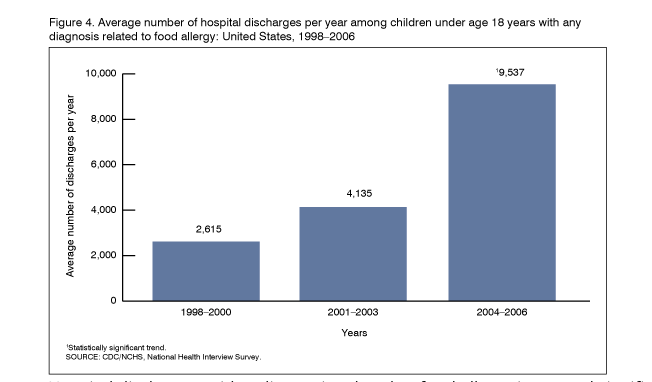
In general, food allergies are more prevalent today than in past years. According to the CDC, the number of food allergy-related hospital discharges increased significantly from 2004–2006.
Lifestyle changes that occurred during the 1990s could explain why:
- Children started staying indoors more
- Parents became increasingly concerned with health and hygiene, leading to cleaner environments
Since children are not exposed to as many environmental “invaders” at early ages, their immune systems may be more likely to react to new food proteins in their bodies.
With this knowledge, I’ve decided not to bathe my child every day, and I make sure he plays outside as much as possible. And sometimes that means coming home covered in dirt. Instead of jumping in the tub, I grab a washcloth and clean him with plain water whenever possible.
Let’s fight food allergies together!
I understand it can be scary to feed your children allergens, especially if you have another child with severe allergies or your child has had a severe allergic reaction to another food. If you are worried, consult with an allergist about doing a supervised introduction as early as possible.
We may be able to fight peanut allergies (and all food allergies) by introducing young children to a varied diet that includes allergens as well as allowing them to go outside and get dirty!


