
Can Disney UX Designers Save It From Stagnation?
A user story for the next 100 design sprints
My first visit to Orlando was in 2005 when I was in my twenties.
At that time, there was little room to plan in detail. Google was in its infancy. All I had was a free Disney DVD. Plus, there were reviews from TripAdvisor, but I could not relate much to the vocabulary of the reviews. Reason? This was my first theme park visit. I wasn’t visiting Disney, I was in the process of exposing myself to a completely new experience.
With no prior experience and no expectations, it was a trip full of energy. I visited the Magic Kingdom and the EPCOT. The rest 2 days were dedicated to Universal and Seaworld.
Although I am not much of a ride-person, the sheer combination of new adventures and atmosphere enthralled me. I didn’t enjoy every ride, but the novelty and the awe of the design truly overwhelmed me.
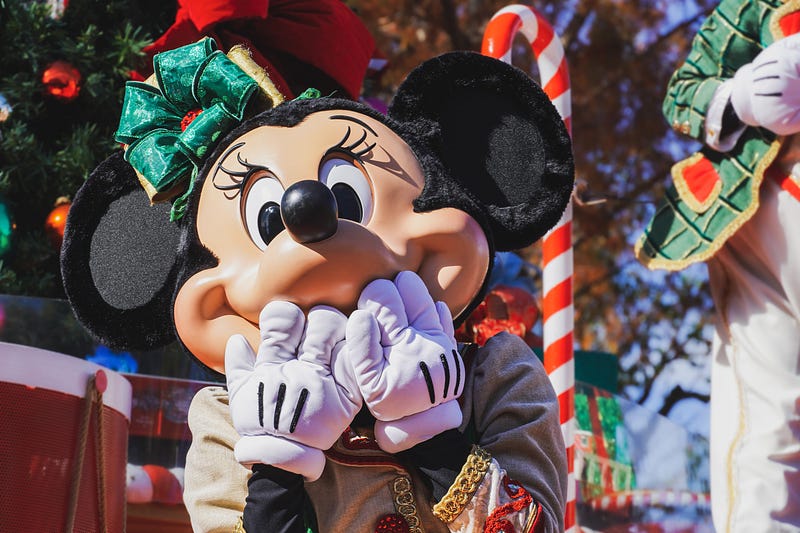
The pictures I took with Mickey Mouse are still stored in my photo album, alongside my childhood pictures.
Disney experience-revisited:
My wife and son had visited Disneyland Paris in 2018, and they had not found it very enjoyable. “Queues, queues and more queues” — that had been the summary of their experience.
“You only had a single day for the park.” I replied.“You should visit Orlando — and you will know what Disney truly is.”
It was a purely rhetorical response. But I had a rationale behind it: Multi-day visit would transport them into a zone, whose central feeling would be:
“We are amid an ocean of entertainment. There is no rush. Everything around us is energetic and memorable. Let’s be mindful of enjoying it.”
The memories of my 2005 visit were quite conspicuous in that feeling.
The moment arrived this summer. We visited the Magic Kingdom, the Animal Kingdom and the EPCOT. Barring EPCOT that was replete with mostly unchanged country exhibitions, the rides had completely changed.
The Diff: Disney 2005 vs. Disney 2023
I have a confession: I don’t follow much of the theme park stuff — not even Universal. Before my 2023 visit, I didn’t know that there existed a heavy-traffic website called Fandom.
However, as a software professional with regular encounters with UX concepts and ideas, I could not help but observe how Disney parks redefined relaxation tourism with its own brand of entertainment, and recently, how it has deviated from its core idea.
After landing in Orlando, we began to plan the next day’s activities. That’s when I made a huge mental note: Much of it is surrounding movie themes now.
I had no recollection of such an experience in the 2005 visit. However, a quick Wikipedia search revealed that attractions such as Mission to Mars, Pirates of the Caribbean, and The Haunted Mansion had in fact inspired movies before my first visit. At that time, even if there were attractions surrounding movies, the experience lacked an essential factor: Immersion — not the concept itself, but the degree.
Realizing this, I felt compelled to conduct more research surrounding what was in store for us the next day, and how could we make the best use of our days.
At 2 AM, my Google history was a repetition of the following pattern:
- The (2nd/3rd…) best Magic Kingdom attraction
- The Pirates of the Caribbean Magic Kingdom
- Some Disney Fandom page
That was in stark contrast with the overview DVD I had watched prior to my 2005 Disneyland visit. There was an element of curiosity there.
Now, I was anxious.
I didn’t know this was immersion, exactly.
Complete Immersion
They aren’t two words. It’s a sentence.
Immersion is why Disneyland was created in the first place. Because immersion brings authenticity — of both physicality and narrative.
Immersion isn’t limited to theme parks or VR games. It has been exploited by illusionists, magicians, and storytellers. Immersion is everywhere, but the degree to which it differs decides if it has a lasting impact or not, and whether there are returning footfalls.
For a theme park to achieve its immersion objective, the visitor has to remain transported mentally to the experience — before and after the attraction visit. That’s what makes it a ‘once in a lifetime’ memory.
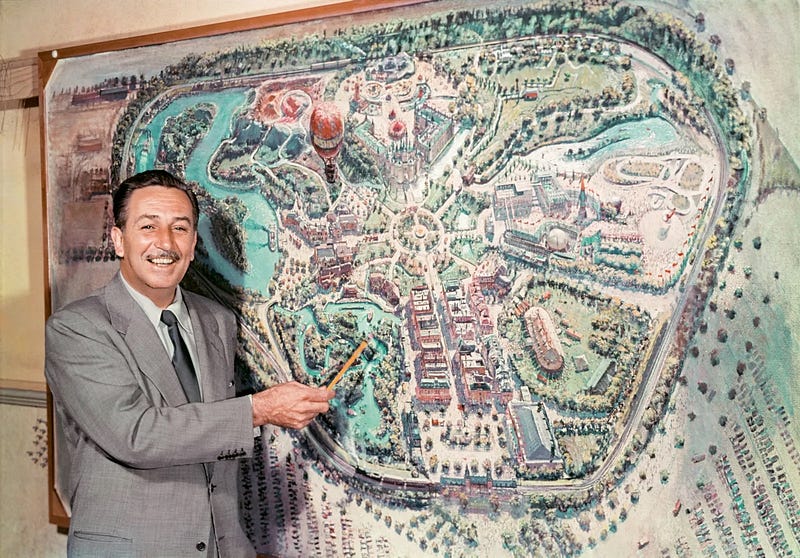
In his book Walt Disney’s Disneyland, Chris Nichols describes how Walt prevented his contractors from replacing wrought iron with plastic, and how Disney was not just an attraction-aggregator like a merry-go-round fair in your town.
If even a single design element feels out of place, the visitor will have a hard time suspending his disbelief (that he is in an experience, not the real world).
John Hench, Imagineer who architected Walt Disney World, EPCOT, and Tokyo Disneyland
The word Imagineer is quite closely associated with the Walt Disney Company.
As I watched the videos, my expectations took concrete form. I grew anxious: What more is in store for us tomorrow?
Today, the sheer level of immersion available in Disney attractions is unmatched. Be it Avatar, Guardians of the Galaxy, or Soarin — the visitor is transported to the destination in all dimensions. The experience is distinct from a usual 3D theatre, and that’s what makes millions of visitors flock to Disneyland every year.
Every immersive attraction is a result of a combination of superior graphics rendering, science of movements, and light+sound engineering. Against mere 4D movies or shockwaves-ridden dome-shaped space simulators of yesteryears, Disney has come quite far.
Building up to the moment are the surrounding areas with fantasy warm-ups (example: the Avatar labs) or performers wearing Micky outfits that provide a million selfie moments.
Wait — that selfie part is not immersion. It’s a distraction — right?
Today’s Disney parks have all the machinations to deliver immersion. Except that the immersion has somehow dodged them.
Why Disney must fix it:
Soon after our visit, Bog Igor, CEO, Disney was quoted as saying: Disney parks are too expensive.
In the same quote, he also mentioned:
Accessibility was important in the parks, and while I understand the importance of profitability, I believe Disney can be smarter about balancing these two things.
Disney’s admitting the price point is important, because the price is central to the Disney experience.
An average American doesn’t get more than 11 days of vacation a year. If a family decides to dedicate it fully to Disneyland at any place, counting the flight times, there is barely a week to enjoy all the attractions. At current park size, there is simply no way one can finish all the attractions in a day. A repeat visit is mandatory.
It’s by design. Disney deals also usually reflect the same. The intention is to make them visit more than once.
Longer queues, in conjunction with high price points, make Disney parks an unaffordable dream. When queues are longer, one is left with nothing but more walking and/or separating from family to justify the price paid.
Reason? There is simply too much rush to get into a handful of highly immersive rides. Longer queues are not only physically draining; they disrupt the enjoyment mindset to a point where one is no longer curious or thrilled by the actual experience of the ride — irrespective of age.
During our visit, we had to limit our ride visits for eating and hydration quite frequently, just because the kids were too drained.
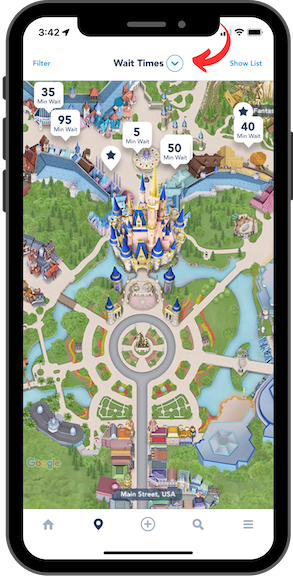
The Disney app provides queue status and live navigation. However, it’s not a solution to the core problem, while contributing its own problems. It enforces one crew member to always hold a smartphone to navigate, poll queue status, and evaluate the next best ride. Motivating the rest of the group towards his/her discovery, and leading them successfully to the next queue? Near to impossible.
Disney has some really lucrative AR patents to sell wrapped inside attractions. How about using some of that knowledge for a truly helpful visitor navigation experience? How cost-prohibitive it would be to provide free glasses to every visitor that shows the live status of surroundings + automatic recommendation of the ride with the smallest queue? How about making smart recommendations based on user’s previously entered ride preferences?
The signs of the great Disney stagnation:
When Walt Disney imagined EPCOT (Experimental Prototype Community Of Tomorrow), he had a Utopian city in mind. It failed to take a form but materialized in the form of the EPCOT theme park.
One of the most striking features of that city was the Monorail, which would transport people to work. Today, a rudimentary reminder of this concept still exists in the form of parking lot trams. With an increased number of visitors due to smartphone penetration, its structure and the delays don’t quite justify its place.
In the parks, we yearned to find benches in the shadows. We momentarily thought of bringing our elders. But we discarded the idea after seeing people dragging wheelchairs, diminishing the worth of their own park tickets. They looked more like modern-day peasants, not fun park visitors.
If Walt could imagine a high-tech city 50 years ago, we definitely deserve trans-attraction flying cars. The visitor volume, even at its present value, is perfect to deliver the advantage of the economies of scale. It is an innovation that is sure to bring a disproportionate experience upgrade, and the competitors will be forced to follow suit.
Conclusion:
As I visited Disney’s careers page, I found that they have a category named “Disney Parks, Experiences and Products”. Hiring under this category happens to elevate and sustain Disney park experiences. Even today, there must be hundreds of Disney designers whose hard work is being enjoyed by a million visitors every year.
It is not a question of how, or when Disney will decide to drop its status quo. It is a question of whether these UX Designers hold the courage to remind their cash-rich investors of a fundamental UX principle.
That design thinking begins with empathy.