
Can Coronavirus Cure What Ails America?
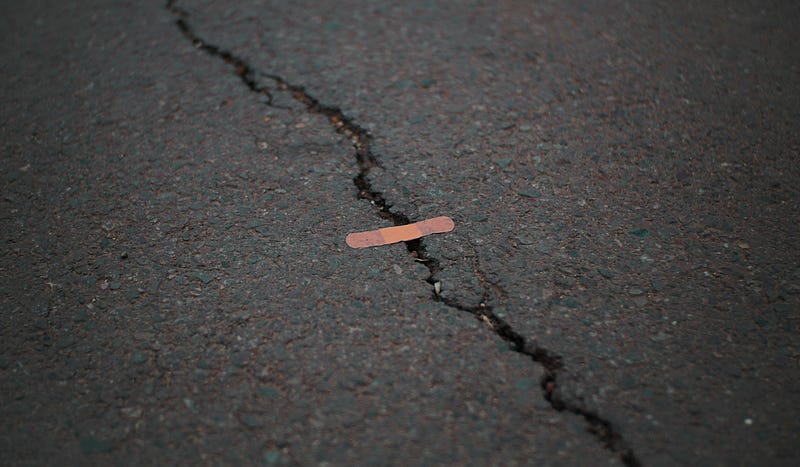
Stop the blame game. Put away the politics. Save the grandstanding for another day.
Americans do not need the 24-hour streaming, Tweeting, breaking news alert sensationalism. Death toll tickers and doomsday economic forecasts don’t do anyone any good. Pictures of mass graves may push papers, but whipping up general hysteria and panic does not inspire the calm and sober thinking that we need most today.
The United States of America sits at a crossroads. The Covid-19 pandemic offers us all the opportunity to move forward and unite in our shared humanity or, alternatively, to continue to regress as a society.
As we lose our mothers and our daughters, our sons and our fathers— we are collectively experiencing a great national trauma. This pandemic has opened up a psychological wound for many who have been forced to sit alone in agony at home, disconnected and hoping that their loved one will survive their hospital stay. If it hasn’t touched you in this way (and I hope it hasn’t), it’s a safe bet that you’ve been impacted by the systemic financial insecurity spread in its wake. As I sit in my apartment and listen to sirens wail through the empty streets of Manhattan, I’m constantly reminded of just how flimsy our notions of reality can be.
Last year before the spread of Covid-19 began, I struggled though several traumatic personal experiences that shook the foundations of my reality. During this period, my confidence in myself, my abilities and even my moral understanding of the world collapsed. After much self-reflection, personal discovery and therapy, I came to realize that my understanding of normalcy and the way things “should be” was fundamentally flawed. My expectations of normal, right and wrong, and even justice and injustice have minimal, if any, influence over what transpires in the outside world.
So, where are we today?
To put it mildly, we have a major communication problem. Our recent “normal” day-to-day life has been shaped by a growing current of incivility, defined by oppositional (us versus them) thinking and punctuated by systemic and sometimes dangerous misinformation.
The emotional stability of this country has been dancing on a razor’s edge for several years. Rates of suicide, anxiety, substance abuse and technology addiction have been steadily creeping upward (1,2,3). The great political rift between Americans, a divide that is consciously widened and exploited by the anger and fear-fueled House on the Hill, has left many of us struggling for words at what once were joyous holiday family gatherings.
While not my focus, American political discourse, if you can even call it that, has become toxic, caustic and empty. The value of factual information has seemingly unraveled, and truth has become subjective. Facts are cherry picked for the purpose of reinforcing existing beliefs, not to test their accuracy. Both sides of the debate are often merely shouting at each other, alternating between lashing out with belittling insults and defensively shutting down within the safety of those carefully curated facts and situational ethics (4).
Unfortunately, this incivility has been brewing for quite a while. The transition to a more digital life has enabled the ugliest elements of humanity to seep into our collective consciousness. Our moral framework may not have kept pace with the evolution of our communication technology.
It can be easy to sidestep moral reservations when you feel digitally anonymized.
Many even find joy and self-righteous pleasure by joining in what’s known as outrage porn, publicly shaming individuals for minor infractions that are selectively interpreted without consideration of the target’s intentions (5,6). Spreading a fire draws more engagement than putting it out — so little priority or patience is given to nuanced and respectful discussion on social media. To make matters worse, users often endorse news feed content purely to identify with a specific tribe/group without consideration of the validity or credibility of its source (7).
Facebook, Google and other purveyors of social and search could effectively be described as a Great Confirmation Bias Machine. After all, it has become child’s play to find facts that backup any side you want to support or to share professional quality content readymade to dehumanize the supporters of opposing points of view (7). Zoombombing private meetings — even the shameless invasion of deeply personal therapy and recovery groups — is merely the latest manifestation of the dangers of digital anonymity.
I do not blame this lack of civility, however, on technology or politicians. What we see today is ultimately the result of the collective weight of individual decisions that we all have made. We choose how we use technology, just as we elect politicians.
The Coronavirus Crossroads

Today, the Covid-19 pandemic offers us another choice: Continue to fuel derision and peddle polarization or put away the petty politics and re-embrace the meaning of our nation’s motto “E Pluribus Unum” (out of many, one).
The coronavirus crossroads is an opportunity for reflection and perspective taking. Traumatic experiences have the eerie ability to detach oneself from the reflexive flow of life in a way that enables us to slow down, reflect and possibly even reset our priorities. During this difficult period, I try to remember that I have the power to choose the pandemic story I want to write in my mind. We all can choose to see whatever we want to see.
If we look for the negatives and want to stew in political anger — wrapping ourselves up in rapid-fire news about politicians exploiting the loss of life and jobs as opportunities for political grandstanding — we can rile ourselves up beyond containment (which, mind you, often leads to unwelcome outbursts of anger and negative emotion upon those we love). If we choose to track the rate of death all throughout the day and focus on worst case scenarios related to our loved ones living thousands of miles away, we’ll probably end up anxious, frustrated and desperate. But if we instead are conscious and mindful of our feelings and emotions, control what we can and focus on the positives, we can write a different story in our minds.
I have chosen to be a conscious and discerning consumer of media. The seemingly never-ending, slow-motion car crash of Covid-19 media coverage began to stain my mind and led to depression, anxiety and catastrophic thinking. Don’t take the clickbait. Change the channel on the Rose Garden chest thumping. Take in only the news that you need and move on to something else.
If we consciously seek out the positives, we can craft a much more positive narrative in our minds. All you have to do is stick your head out your window anywhere in NYC around 7 pm, and you’ll hear cheering, clapping and an outpouring of support for all our frontline workers. Alongside the depressing news that makes us feel powerless, there are myriad stories of heartwarming human compassion and empathy — stories of those who have gone out of their way to sacrifice their time, talents, wealth and even wellbeing to help others in need.
In all our recent picking of sides — whether that be left, right or center of the aisle — many of us (myself included) have doubled down on what we think is right and self-righteously, obstinately closed our ears to those who don’t agree with our views. Every side has its own morality, and neither liberals, nor conservatives hold exclusive rights to truth and justice (4).
Whether someone agrees with you or not, we are all human beings, individuals who crave authentic connections and want to be heard and have our opinions validated by others. Acknowledging another point of view does not mean that you need to agree, takes little effort and offers the opportunity for productive discussion (8). We are all emotional creatures with physical vulnerabilities to a microscopic virus that could fell an entire nursing home with a single cough. It’s a scary time. But American society can withstand this trauma by drawing upon our reserves of empathy and generosity.
This is an opportunity to double down on our similarities, not our differences.
Outrage, arrogance, finger pointing and bully behavior are decidedly not what made this nation great. What can make it great today is selfless generosity, compassionate empathy and courageous collaboration.
Take a page out of the healthcare workers’ playbook and offer unconditional care and compassion. Don’t recoil from strangers in suspicion, but rather greet them with a smile as you pass by (yes, they’ll see it in your eyes even if you’re wearing a face mask). Doctors don’t care about who you voted for, what’s on your resume, in your wallet or on your credit report; they look for universal indicators of human health: temperature, blood pressure, heart rate. Nurses didn’t put on scrubs expecting standing ovations or television coverage. They chose their profession because they wanted to help their fellow human beings — though it might be a good idea to give them a medal for their heroic service on the front lines.
The Dangers of Negative Coping Habits

When we are struggling to cope with the loss of fellow human life, financial security and face-to-face human interactions, it can be tempting to turn inward and do anything we can to protect our ego from the pain.
Many try to drown it out with alcohol and other hedonic pleasures. I’ve followed that rabbit hole down to the bottom of the bottle on more than one occasion. It’s no more than a temporary maladaptive respite, one that only leaves you worse off. This dark hour — marked by isolation, painful loss, intense emotions and sensationalism — seems custom designed to breed addiction. Sadly, this month I lost a friend to the battle with the bottle; I can assure you that climbing out of that quicksand is no easy feat.
The same goes for complete isolation. You may be tempted to crawl into a cocoon on your couch and hibernate to Netflix for the next month. While that isolation may seem to shield you from all the negativity, it will invariably leave you lonely and more depressed. As compelling researcher/storyteller Brene Brown and leading social neuroscientist Matthew Lieberman would attest, it is actually our social connections that make us stronger, help us weather the hard times and retain our resilience in the face of tragedy. (3,9)
Importantly, take a moment and breathe. No matter where you are in the country, we are all facing difficult circumstances. Emotions will tend to swell and overwhelm us from time to time. That’s okay. Register them, pull the thread and find out where they are coming from. Consider their source, if they’re legitimate, sit with those feelings and use them to understand yourself more deeply. If they’re illogical catastrophizing, then try to neutralize them with objective reasoning and third-party perspectives.
Transforming Trauma into Growth

This pause in the day-to-day frenetic pace of life can feel disorienting, but it’s truly a tremendous opportunity. How many times have you told yourself that if you just had more time you would ____? Fill in the blank. Write that book. Organize your pictures. Create something amazing for the love of your life. Teach your child to play cards. Tend to your garden. Learn a new language. The possibilities are endless. Productive hobbies, side hustles and goal-bound activities can help to build a sense of fulfillment and control during these uncertain times.
It’s also an opportunity to reflect on your life, where you are today and assess if you’re on a path that will lead you to happiness and fulfillment. While this cold, hard look in the mirror is complicated and cannot be fully encapsulated here, it’s how I spent my last six months. If you haven’t had this experience, my story will hopefully spark some thought…
Over the summer, several extremely stressful personal experiences converged and led me to finally crumble under their collective pressure. I quit my job, hit the brakes on my life and truly reflected on where I was and where I wanted to be. After finally giving myself time to think, I realized that my definition of success and happiness had become warped, dictated by others and detached from what really mattered.
I’d become caught up in the day-to-day grind, guided as if on autopilot by cultural norms. Money, title, material possessions, peer comparisons and external validation became my yardsticks of success and happiness. For me, all those things provided nothing more than emptiness and an endless desire for more. The pursuit of “more” kept me feeling trapped in jobs with too little support, too many responsibilities and a gnawing feeling that who I was or what I delivered was never enough — even after sacrificing nights, weekends holidays and vacations. I have begrudgingly listened to many agency execs tout the generosity of their work/life balance policies while indirectly “exempting” the leaders of major accounts (like me) from these policies.
As I rose in the agency world, there always seemed to be just one more urgent project to throw on the pile, just one more last-minute new business pitch, one final emergency deliverable before the client signs that new scope of work. “Needed it yesterday” and “ASAP” became a standard refrain, but I never wanted to admit the role that I played in their regularity.
While most of my assignments were more parts command than question, many managers know which employees never say “no.”
It can be hard to erect sturdy boundaries when you’re angling for a promotion, seeking a bigger bonus or battling critiques from Machiavellians nipping at your heels. Though I clung to the victim card with politician-like conviction, truth be told, I enabled my work to cannibalize my life. During my agency career, I allowed myself to be pressured into unmanageable workloads, and then I turned to alcohol to quiet my ever-growing anxiety, depression and panic.
Upon further reflection (thanks therapy), I realized that I really craved authentic, human connection, not more possessions, status or notches on my CV. By overextending myself for more than a decade to polish the reputations of massive corporations, strain to meet someone else’s revenue projections, race to beat high-pressure deadlines, sacrifice personal time to attend to fire drills, walk a tightrope between increasing client expectations and the growing skepticism of harried reporters, and exceed my goals at any cost, I had hollowed myself out from the inside. I’d sidelined my own human needs and values in the service of “success.”
I now understand that I can build a path to happiness from within by accepting my imperfection as enough, taking off the elaborate masks I crafted to secure validation from others, owning and examining my feelings, and unapoligetically embracing my ethics. Under all the layers of professional and cultural expectations, I am in many ways still that kid on the playground confused and upset by children mistreating others. Social justice matters to me, and I view transparency, empathy and vulnerability as strength, not weakness.
I want to give my time and talents to people in real need, listen with an empathetic ear and use my missteps to help them manage their problems, anxieties and fears. So, I revised my definitions of success and fulfillment. I reset the North Star I use to guide my life, and I’m going back to school at 39 to become a social worker and therapist.
It’s like staring at a blank canvas, equal parts terrifying and invigorating — I have the freedom to pursue my passion and the responsibility to build from the ground up.
While traumatic experiences are inherently painful, can shatter our mental models of the world and shake us to our core, it is this disorientation that allows our map to be redrawn.
Perspective and Human Connection

The Covid-19 pandemic reminds each of us of our own humanity and what we truly value in life. It’s an opportunity to broaden our perspective, look beyond the party fault lines that divide us and switch off the burner on the melting pot called America. If we listen to each other, acknowledge (versus belittle) alternative perspectives and seek out common ground, we can come together as one nation. Our collective strength and compassion is required to outlast this virus, overcome our individual losses and rebound as a stronger, unified country.
To be sure, all is not well today, but that doesn’t mean that you have to focus on what’s going wrong.
Death and civil unrest make much stickier headlines than patient recovery and selfless generosity, but that doesn’t mean that there’s more bad than good.
We all have the power to craft the coronavirus story we want, and I choose a narrative of human compassion toward perfect strangers — true empathy with no strings attached.
It’s important not to forget that there is much to be grateful for. When you’re feeling overwhelmed, fearful, anxious, angry and caught in the downward spiral of worst case thinking, it always helps to take a step back and find some perspective. Think about what the Spanish Flu would have been like in 1918. If you think you’re bored and frustrated now, think about what it would be like without television, Wifi, smartphones and Seamless delivery. I’m trying to be thankful for what I have rather than focus on what I’ve lost or could lose.
While we may not have a vaccine for Covid 19 today, we do live in an age where healthcare experts from around the world can collaborate on ways to enhance the standard of care. While the federal-state “partnership” leaves much to be desired, we do have the ability to flex our healthcare system to shift resources and personnel to adjust in real time to overstretched capacity challenges and emerging patient needs. While we may be asked to put our lives and jobs on hold, dramatically limit our time outdoors and feel physically cut off from our loved ones, we have greater digital access to family, friends and even virtual experiences than ever before.
If you’re bored, if you’re stir crazy, if you’re anxious or fearful, why don’t you reach out and connect with a friend? Even if you don’t need sympathy, empathy or compassion, the human connection you can offer might be exactly what they need most.
Thanks for reading. Feel free to follow me for future stories or reach out and share your thoughts directly at [email protected].
###
Russell Weigandt is a former corporate public relations/marketing leader for Fortune 500 companies, holds a masters in journalism from Syracuse University and will begin pursuing his MSW at NYU this fall. He is an advocate for more effective mental health and substance abuse policies in America.
Sources
1. The Craving Mind, Judson Brewer
2. Enlightenment Now, Steven Pinker
3. Daring Greatly, Brene Brown
4. The Righteous Mind, Jonathan Haidt
5. So You’ve Been Publicly Shamed, Jon Ronson
6. The Coddling of the American Mind, Greg Lukianoff and Jonathan Haidt
7. Antisocial Media, Siva Vaidhyanathan
8. You’re Not Listening, Kate Murphy
9. Social: Why our Brains Are Wired to Connect, Matthew Lieberman


