
Can Apple Win Me Back?
They’re starting to listen to us again. But how much?
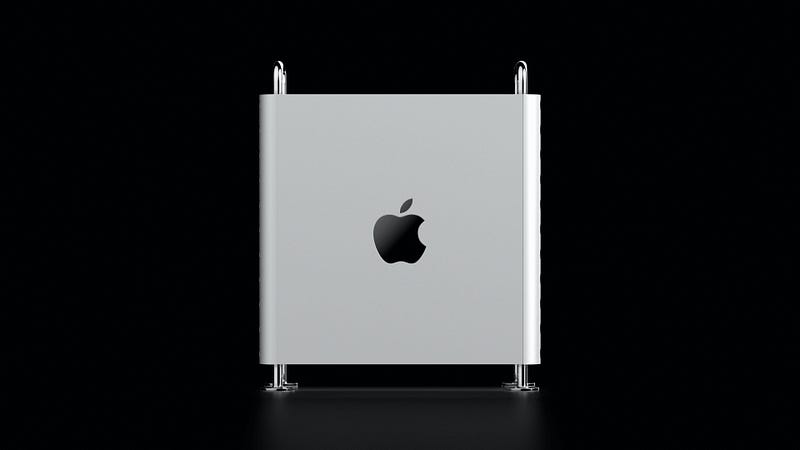
Back in 2007, I bought what remains to this day, my favorite laptop I’ve ever owned: An Apple MacBook Pro with a 15.4” screen, a 2.4GHz Core 2 Duo Intel CPU, 2GB of RAM, and a 256MB GeForce 8600M graphics card.
I loved that laptop. By today’s standards, those specs are weak. My iPhone has more storage than that laptop did. But it was my favorite.
When it finally died a few years later due to the Nvidia chip issue, I replaced it with a Windows laptop. Not because I had any special love for Windows but because of the price. It’s what I could afford at the time. In the years since, I’ve been primarily a Windows guy. While PC laptops certainly aren’t perfect, and they have their fair share of issues, that’s what I’m used to — for now.
Can Apple win me back? What they’re doing with Apple Silicon is very impressive. If they play their cards right, they have the opportunity. But for that to happen, I have a few requirements.
The state of my tech
I clearly don’t hate Apple products. I have an iPhone and an iPad Pro, and I use both daily for both business and personal work. While Android is a great OS that I have used and enjoyed, my choice (for now at least) is iOS. I just can’t escape how awesome the ecosystem is, and I appreciate that Apple tends to support their iPhones for a long time. Whereas Android phones tend to enjoy only a few years of support, it’s not uncommon to see an iPhone still getting major OS releases four, five or six years down the road.
I love my iPad Pro. As much as I would love some more competition from Android, right now the iPad is easily the best tablet on the market for home and professional use. I frequently switch between Illustrator, Affinity Designer, Procreate and the occasional Apple Arcade game.
But when it comes to laptops, I’m a PC guy. I’ve been working on a Dell XPS 17 since October 2021, and while I’ve had ups and downs with it, overall it’s been a great machine.
But it does have a few pain points that a Mac with the right qualifications could answer.
What are those qualifications?
I want to see Intel and AMD left in the dust
I have no special love or hate toward these two giants. It’s just that I’m a fan of competition. I’m excited that Apple has been giving them both a run for their money since the release of their M1 chip.
I want to see that continue. We know that Intel has plans to tackle Apple Silicon as best it can, and I imagine AMD does too. But what I want to see is simple, Apple: Be so good that it takes many years for Intel and AMD to catch up. I’m talking fast, cool-running, power-efficient, discreet-GPU-demolishing chips that leave no one questioning which chip maker is king.
Make the others work for their sales and work hard.
Competition is good for us all, and while I’m not (currently) a Mac guy, I love the idea of Apple taking the lead in this space for a while to shake Intel and AMD out of their complacency and make them work hard for their customers.
Make Nvidia nervous too, Apple
I love that the higher tier M1 series chips can offer performance comparable to some of the 3000 series Nvidia cards. Love it. But I want to see more.
I would love to see the mid-tier Apple Silicon chips taking on Nvidia’s discrete GPUs — not just the Max and Ultra.
Apple’s been doing a great job of taking on Intel and AMD. I would love to see more competition in the GPU space too. As someone who has a use for fast graphics cards for Blender and gaming, I want to see Apple continue to grasp for the top in this arena.
Is upgradable storage too much to ask for?
This is truly my one sticking point with Apple computers right now. Don’t get me wrong here. I love macOS. I love the ecosystem. AirDrop, Facetime, iMessage, iCloud… It’s awesome.
But soldered storage?
C’mon man.
I could kinda see that on something like a MacBook Air that’s designed to be a thin and light mid-tier device. But on a professional machine? I can’t get behind that.
As much as I have a love-hate relationship with my Dell laptop, at least I can easily upgrade or replace my RAM and storage. Laugh if you will, but there have been times when I’ve needed to do just that.
If I were to spill my coffee on my Dell XPS, that would be bad. Frustrating, day-ruining, bad. I like this laptop. But I could still pull out my storage drive and have my data safe.
On a Mac, I’d be out of luck. The storage is soldered to the board. If the board fails or is damaged, I cannot get to my data.
But here’s another thing to consider: while solid state drives tend to be pretty durable, they can and do fail. I’ve had it happen. Further, they have a limited program/erase cycle count. That is, data can only be written to the flash cells that make up that storage a limited number of times before the cells start to degrade and eventually become unreliable or fail altogether.
Now, the odds that a normal user will hit that limit during the expected usable lifespan of the machine are low, but not out of the question — especially if that person is constantly writing to the disk during heavy workflows like video editing.
So the tl;dr of that is simply this: I would love to be able to upgrade my storage if I need more space or replace my drive on my own if I wear it out or it fails and I need to get back up and running quickly — without waiting for Apple support.
Will Apple convince me to come back?
We’ll see. I was excited to hear that the Mac Studio has socketed storage. I thought, “Is Apple finally listening to professional users?” And… then my hopes were dashed when I heard that Apple is effectively blocking upgrades. Through software.
Nice. Way to be one of the good guys, Apple. /s
Maybe that’s just a bug that will be worked out. I hope.
But we’ll see. If Apple were to bring upgradable storage to at least a couple of its MacBook skus in a future release, I would be very interested and would likely pick one up. Since the transition to Apple silicon began, they have consistently trounced Intel and AMD in many workloads, and they know it. I just hope — as someone who truly wants to see competition and better products for everyone — that they don’t rest on their laurels and continue listening to pros.
They did, after all, bring back Magsafe and more ports on the 2021 MacBook Pros.
I can dream.


