
Can a Night Owl Become a Morning Person?
The short answer is yes, but we need to debunk some myths to figure out if they even should, then consider why and how

Being a night owl can be miserable, not just because sleeping late in the morning is out of sync with much of the working world or school start times, but because night owls get lots of flack from parents, significant others and bossy overlords who think them lazy, along with popular media articles warning of disastrous health consequences.
The accusations are a boatload of bunk, however, and for night owls who wish to change their sleep schedule — not all do, by the way — it is possible. Same goes for anyone who tends to stay up too late—anything past, say, 11 p.m.—and feels tired or unproductive during the day.
“We all have genetic tendencies toward being a morning person or being an evening person,” says Rafael Pelayo, MD, a sleep specialist at the Stanford Sleep Medicine Center and author of the book How to Sleep. “But your tendencies are not your destiny.”
What makes a night owl
Night owls aren’t any lazier than anyone. Whether a person is naturally inclined to be a night owl or a morning lark depends significantly on their chronotype, a point in time determined largely by genetics at which half of a night’s sleep is typically done and half is yet to come (assuming one is able to sleep when their body tells them to).
Chronotypes are linked to each person’s circadian rhythm, a body clock that generates melatonin and other signals that tell us when to get sleepy, then does the opposite when we’re supposed to be awake and alert.
Human chronotypes vary by up to 10 hours among adults. They tend to change as we age. Before 40, men on average have later chronotypes than women, and later in life the tendency reverses.
When children enter puberty, their overall body clocks, along with their chronotypes, shift later, explaining why they struggle to fall asleep on schedules set by adults. The result: about three-fourths of high school students and a third of younger kids are sleep-deprived much or most of the time.
Good reasons to change your sleep cycle
You might’ve heard that being a night owl is, by itself, a serious risk factor for poor health. Indeed, night owls are at higher risk of everything from diabetes to depression, along with heart attacks and, in general, premature death. But the risk is mostly related to the fact that night owls often cannot get enough sleep due to the daytime demands of their lives.
“We think the problem is really when the night owl tries to live in a morning-lark world,” says Kristen Knutson, PhD, an associate professor of neurology at Northwestern University Feinberg School of Medicine who has studied these risks.
Lack of sleep is among the most unhealthy behaviors you can experience, whether you are a night owl or not. The typical adult needs seven to eight hours, though some can get by on less. Kids and teens need a lot more shut-eye.
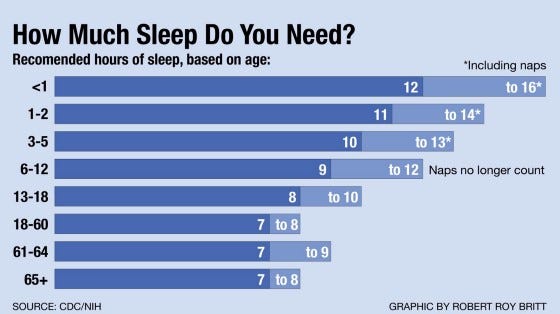
How to know if you’re getting enough sleep, and if it’s of sufficient quality: Anyone unable to get enough deep, restorative slumber will suffer daytime tiredness—you know, the extreme desire for afternoon coffee and donuts—irritability and inability to focus productively.
What you won’t know on a daily basis is that failing to get enough quality sleep, over time, significantly raises the risk of all the chronic diseases and conditions mentioned above. The risk of disease and early death becomes acute for those who sleep less than six hours a night on average, and even more dangerous for anyone getting fewer than five hours nightly, an October 2022 study found.
How to shift your sleep-wake cycle
If you struggle to get enough good, restorative sleep — signaled by routinely feeling tired during the hours when you’re supposed to be alert and active — science has shown it’s not only wise to shift your cycle, but quite possible.
But what time should you aim for? While there’s no perfect bedtime for everyone, research has found that falling asleep between 10 and 11 p.m. is linked to lower risk for heart disease over time, so something in that range, or close to it, would seem reasonable.
However, instead of picking a bedtime first, decide what’s the best time to wake up and set that as a firm goal, seven days a week, Pelayo recently suggested in an article in Stanford Magazine. Then, based on allowing adequate time for falling asleep and sleeping, back that up seven to nine hours to determine a bedtime. Again, aim to stick to it every night.
Don’t hit the snooze button, Pelayo advises. Just get out of bed when the alarm goes off.
In one study, 22 night owls, who when to bed around 2:30 a.m. on average and who typically woke up after 10 a.m., shifted their sleep cycle ahead by two hours by following a strict protocol similar to what Pelayo advises. As a bonus, they reported less stress and fewer signs of depression.
Here are other helpful tactics, among 20 I explain in detail in my book Make Sleep Your Superpower, that can be particularly useful for any night owl trying to shift their schedule:
- Get outside first thing in the morning and enjoy as much daylight as possible, then and throughout the day. Bright daylight — even on a cloudy day — is the №1 trigger for your body clock’s sleep-wake cycle.
- Get more physical activity. Any movement will do, but aim for at least 22 minutes daily of brisk walking or the equivalent, and avoid exercise just before bedtime.
- Unless you’re convinced naps work well for you, avoid them. The science on naps isn’t settled, but long ones during the afternoon can definitely hamper your ability to fall asleep at a reasonable hour at night.
- Wind down mentally and otherwise for a few hours before bedtime. Turn bright lights down or off. Stop checking email, social media, the news, and avoid any movies or media or other inputs that might cause the slightest stress. Seek feel-good movies, comedy, a good book, cooking with a loved one, or sex (yes, sex is good for sleep).
- Melatonin supplements, while not a silver bullet, can help during a period of transition if taken in proper dosages. Experts advise against relying on them over the long term, however. It’s also highly questionable whether melatonin should be given to children—there’s just not enough science to deem it safe and effective for young minds.
An important caution: Do not take sleeping pills, even over-the-counter types, without advice from a doctor, and even then, consider the risks. They don’t work as marketed and come with notable side effects, ranging from drowsiness to death (I have a whole chapter in my book about these risks).
Finally, let’s be real: If you’re a night owl and you have no desire to spread your nocturnal wings, you sleep long enough and well enough, you have plenty of energy for work and play, and don’t find your sleep-wake cycle conflicting with the rest of your life, then it makes perfect sense — like a wise old owl — to ignore all those annoyingly chipper morning larks who think they know what’s best for you.
Your support makes my health and wellness writing possible. You can sign up for emails when I publish on Medium, or join Medium to directly support me and gain full access to all Medium stories, or check out my book: Make Sleep Your Superpower: A Guide to Greater Health, Happiness & Productivity (paperback or Kindle version). — Rob


