
POLITICS
Campaign Finance Investigations Were So Different in the Nineties
Compared to today’s political environment, my encounter with the House Oversight Committee twenty-five years ago seems quaint
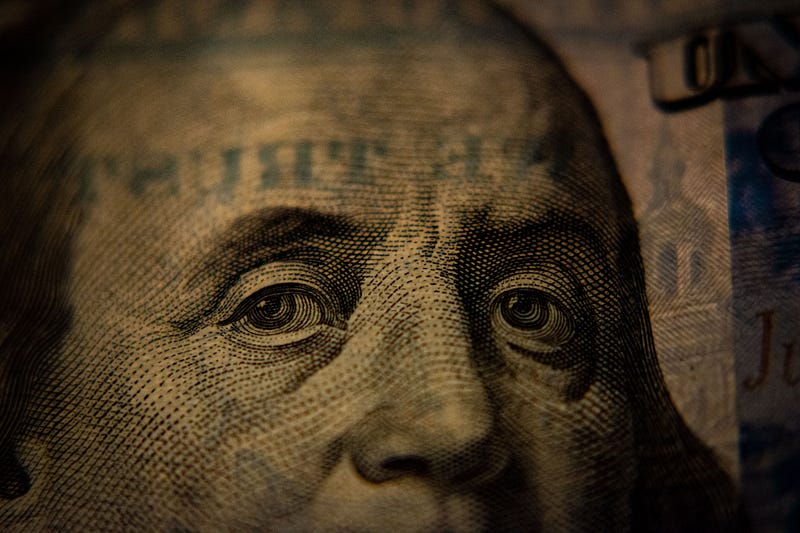
I read the other day that the total amount of money spent going into the midterm elections was somewhere in the neighborhood of $17 billion. That’s right, $17 BILLION. And that figure doesn’t include the amount spent on the Georgia runoff election. To put that number in perspective, President Biden has canceled the student debt of roughly 700,000 borrowers for about the same amount.
But the piles of money aren’t just coming from billionaire donors. According to OpenSecrets, donors giving $200 or less gave more than $747 million to congressional candidates — $138 million more than in 2018 and four times more than in 2014.
Here’s where it gets crazy: that obscene amount of cash only represents the disclosures required by federal law. The sad truth is we have no idea how much money is spent on elections in the United States, thanks to regulatory loopholes in federal election laws.
Ultra-rich donors have a myriad of legal loopholes that allow them to skirt Federal Election Commission (FEC) regulations, according to the Brennan Center for Justice:
The true extent of megadonor giving is unknown but certainly higher as gaping loopholes in federal law, and in many states’ laws, make unlimited, anonymous spending in politics — or “dark money” — easy.
Although dark money groups have reported less and less spending to the Federal Election Commission in recent years, that appears to be because they have shifted spending to forms that aren’t required to be reported. Analysis by OpenSecrets shows that four party-aligned dark money groups pumped almost $300 million into this election cycle by giving to sister super PACs or buying cleverly worded ads — without reporting their spending or their donors. There are hundreds more politically active groups pouring secret money into our elections.
The disclosure rules that are in place show how bad the problem of megadonor dominance has gotten — and which special interests politicians are beholden to.
We can all agree that political spending is out of control. But when has money not been in our politics? I’m reminded of when the specter of campaign finance briefly touched me decades ago.
How my startup investment company got sucked into a campaign finance investigation
The mid-nineties were the Bill Clinton era, and for a brief moment, Little Rock was the political center of the universe. We Arkansans were unprepared for the phalanx of journalists and celebrities who descended on us. It wasn’t unusual to see members of Clinton’s cabinet walking around downtown Little Rock. Dignitaries from around the world were all over the place.
While it was an exciting time to be in Little Rock, sometimes it wasn’t.
The media’s general perception of Arkansas was that we all were a bunch of uneducated country bumpkins. They seemed unfamiliar with the number of ultra-wealthy individuals in the state. They were shocked to learn that Walmart and Tyson Foods were Arkansas-based companies. They couldn’t fathom how my employer, Stephens, Inc., could be the largest investment firm outside New York.
To top it off, when they saw people driving around town in Porsches and Ferraris, they concluded something nefarious must be going on in Arkansas.
I’ve mentioned previously how, in the early nineties, I started a financial services business. While I ultimately formed a brokerage business, that’s not where I began. I first tried to export raw commodities, ultimately without much success.
That said, the company developed relationships with Arkansas-based Riceland Foods, the world’s largest miller and marketer of rice. That relationship allowed my company to export rice to Africa and China.
One of our potential clients was a company led by a guy named Charlie Trie, the Taiwanese owner of Fu Lin, a local Chinese restaurant. Everyone in the business community loved his restaurant. It was also one of Bill Clinton’s favorite places to eat.
Trie also had a side hustle, a company named Daihatsu International Trading. The company was set up to export products like blue jeans and rice to Asia. Since my company was trying to develop a rice export business, naturally, Trie was a good person for us to know.
Several times a week, we’d receive faxes from Daihatsu with a list of commodities the company was interested in purchasing. He even visited my office on the 35th floor of what was then known as the TCBY Tower. Ultimately, Trie was better at running his restaurant than doing commodities deals, so we never did business together.
One day, my receptionist told me I had a visitor. To my surprise, it was a federal agent from the FBI. He was there to serve me with a congressional subpoena.
Readers of a certain age may recall the numerous Republican investigations into the Clinton administration. One such probe surrounded a campaign finance controversy, commonly called Chinagate. One of the people caught up in that scandal was Charlie Trie. It turned out that, besides running Fu Lin and his export side hustle, Charlie Trie was a prolific fund-raiser for the Democratic Party.
But there was a problem: the funds that Trie routed to Democrats appeared to come from China, which is illegal.
Although my company never did any business with Trie or Daihatsu, their numerous faxes to my company got the attention of Dan Burton, a Republican congressman from Indiana. Burton was the House Government Reform and Oversight Committee chairman investigating the Chinagate scandal.
That was why the FBI agent showed up at my office that day.
Had this happened today, the committee would probably leak my name to the media in our current political environment. Then social media trolls would destroy my timeline on Twitter. My many skeletons would be the subject of conspiracy theories. Perhaps my lawyers would advise me to ignore the congressional subpoena and take my chances in the courts.
Fortunately for me, this incident occurred in the 1990s, so none of those things happened. As crazy as it sounds, I didn’t even hire an attorney.
My subpoena was for the production of documents and not to appear before the Oversight Committee in person. I picked up the phone and called the lawyers for the Oversight Committee. I told the person I spoke with that while I was happy to cooperate, all I had was a bunch of faxes regarding selling rice to Daihatsu International Trading.
After I mailed the committee everything I had, I never heard from them again. Through it all, I never considered ignoring their subpoena.
When the dust settled years later, Charlie Trie took a plea and received probation:
The deal with Trie came nearly 2 1/2 years after federal investigators first pursued him as a key figure in their probe of the 1996 Clinton-Gore campaign. While Justice Department officials hailed the arrangement as a sign of progress, critics of the campaign finance probe argued that so much time has passed that Trie’s testimony is unlikely to have a major impact.
As the conduit for more than $600,000 in contributions to the Democratic National Committee that had to be returned as coming from illegal or suspect sources, Trie has long been viewed as a potential font of information on whether Democratic Party or White House officials knowingly accepted improper funds and on alleged efforts by the government of China to influence the presidential election…
…The key allegation against Trie stemming from the 1996 campaign is that he used contributions to purchase access to high-level government officials — including 22 visits to the White House and a nomination to a federal commission on foreign trade — with the objective of advancing his private business interests. But it has never been clear what Trie may have sought or gained for himself or his business associates.
My how times have changed.
Today, thanks to Citizens United v Federal Election Commission, the Supreme Court’s ruling on campaign finance, Charlie Trie probably could’ve set up a dark money group and flooded Chinese cash into our political system to his heart’s content.
A few years after my encounter with the Oversight Committee, I closed my investment business and went to work on Wall Street. About six months after moving to New York, the FBI again showed up at my door with yet another subpoena. But that’s a story for another day.

If you enjoy and would like to support my writing, please consider signing up for my weekly-ish newsletter on Substack. You’ll receive early access to my posts, subscriber-only podcast, occasional Zoom events, and access to my subscriber-only chats.


