
Calmness in Chaos: The True Measure Of A Man — Dead Presidents and Lessons From History
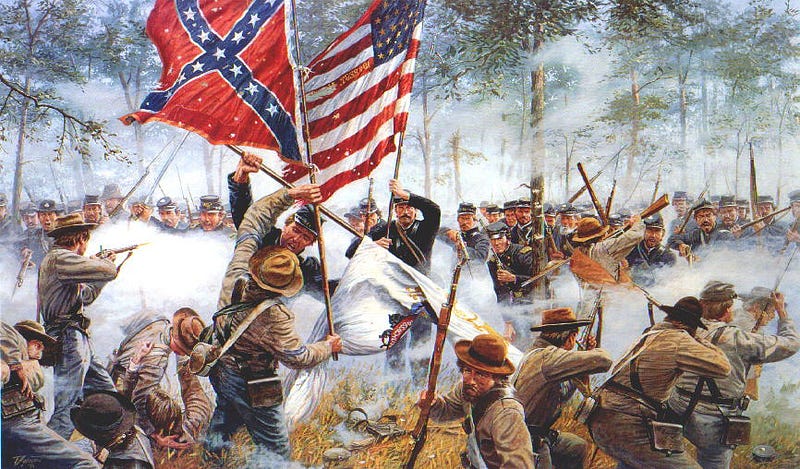
Ulysses S. Grant — commanding General of the Union army during the American Civil War — was the embodiment of calm in chaos.
Let me take you back. Back to Vicksburg, Mississippi.
1863.
Scorching heat.
The smell of battle is in the air. Grant plans to gain control of the strategically important Mississippi River. He plans to land his army at Port Gibson a few miles southeast of the river.
It’s an important battle — one that might decide the fate of the union. What is Grant’s state of mind? Is he timid? Fearful? Giddy with anticipation?
No.
He takes in the scene of the battle with unwavering serenity.
In the words of Captain James Bull:
“We could see the wreaths of smoke from the guns on either side; could hear their deafening roar, and see the shot of rebels strike — sometimes in the water, sending up fountains of spray, and sometimes striking the boats, but with what effect we could not discern.
We could also see our own shells bursting in the woods where their field pieces were and sometimes see our solid shot striking their breastworks.
During this time General Grant was steaming backwards and forwards in his little steam tug, sometimes getting in range of the rebel guns in his anxiety to see how the fight was progressing.
He looked as cool and unconcerned as though nothing was going on that could interest him, yet the quick eye could discern that it was not the calmness of unconcern, but of confidence.”
In the face of danger, calamity and uncertainty, General Grant displays tremendous poise. A confident calm, instilling a sense of certainty and awe in the people he’s leading.
One might go so far as to call his equanimity stoic in nature.
In the face of the gravest danger, and in the midst of the chaos that only a battlefield can provide, he remains calm and unwavering.
If General — and subsequently President — Grant, can keep his cool under these circumstances, then we too can learn to keep our cool, when the going gets tough. When we are faced with information coming at us from all sides, and the innumerable amounts of moving parts that characterizes modern society we must display the same calm as General Grant.
When we act from a disheveled state of mind, we make poor decisions. We make messes that we are going to have to clean up afterwards. If we practice staying calm — even when everything around us is chaos — we make better choices. We stay on course. And we separate ourselves from the herd, when we’re able to stay calm.
A century earlier, another fierce warrior learned how to tame his temper, and act with stoic calm in the midst of chaos.
George Washington honed his skills as a leader, strategist and military thinker in the French-Indian war.
Let me take you back again, this time more than 100 years before the battle of Vicksburg. Before the United States even existed as an independent nation.
This time, we’re in 1753.
We’re in the midst of conflict.
This is the lay of the land
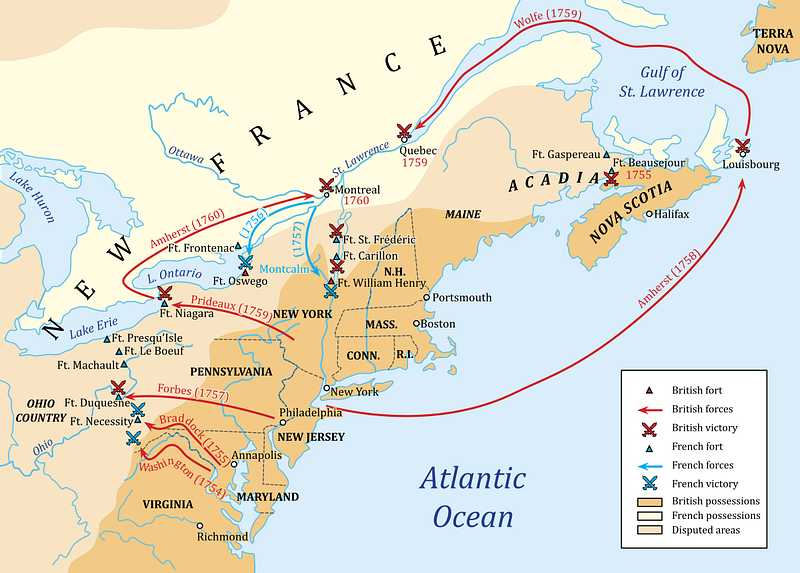
The French and British are both claiming the vast territory of the Ohio Valley in the bottom left hand corner of the map.
The French are taking aggressive action building forts on British territory. The British felt like the French were stepping on the toes. If you only need to know one thing about the British Empire in the mid-18th century, it is that they are not to be fucked with.
Virginian Governor Robert Dinwiddie (which sounds a lot like dim-witted, but I guess that’s besides the point) has permission to engage the French, and re-claim British territory. This means he is to obliterate them, like the unruly European upstart they are.
First however — in true British fashion — a letter is to be delivered, to inform them of their indiscretion. Diplomacy first, all-out violence second.
21 year old George Washington volunteers to deliver the letter, despite the fact that he has 0 military experience, speaks no French and has very limited diplomatic experience. What he has is confidence, knowledge of frontier travel and an eagerness to get in with the British Army.
Fall 1753.
Washington sets out from Williamsburg. He is accompanied by an interpreter, four woodman and fellow surveyor Christopher Gist.
Fast forward to the end of November. Washington meets with Indian chiefs in Logstown, Virginia and reminds them that they fight on the side of the British. The chiefs join the party and escort Washington and company to meet with the aptly named French commander Jacques Le Gardeur.
Washington delivers the letter Le Gardeur on December 12th. Two days later he gets a message back. The French refuse to vacate.
Washington is sent packing along with his comrades. On top of that the French bribe the Indians to desert Washington, leaving them to fend for themselves in the dead of Ohio Winter.
Let’s pause here to appreciate the fact that at this point, most people would have panicked.
Panicking would have meant certain death, and luckily for Washington he managed to keep his cool. He simply decided to turn around and go back home. That is easier said than done however, in the dead of Ohio winter, with any number of dangers looming in the distance.
Back to our story.
To get from Ohio to Virginia, means crossing the Monongahela River. Towards the end of December 1753, the Monongahela is frozen in enough places that the expedition is delayed.
This means that the message of the French’s treachery might not reach the Dinwiddie in time. Instead of waiting, Washington decides to break away from his party along with Christopher Gist.
Less than 24 hours into breaking away, Washington and Gist are fired upon by Indians sympathetic to the French. Miraculously, they both manage to escape — in no small part due to their ability to keep calm in the face of danger.
Hours later, the two men make it to Allegheny River. Cold, hungry and disillusioned, they face their biggest challenge yet. Crossing the river itself.
They expect to find it frozen, and easily crossable. Instead, they find a freely flowing river at icy temperatures — impossible to cross.
Not unlike the Allegheny below.
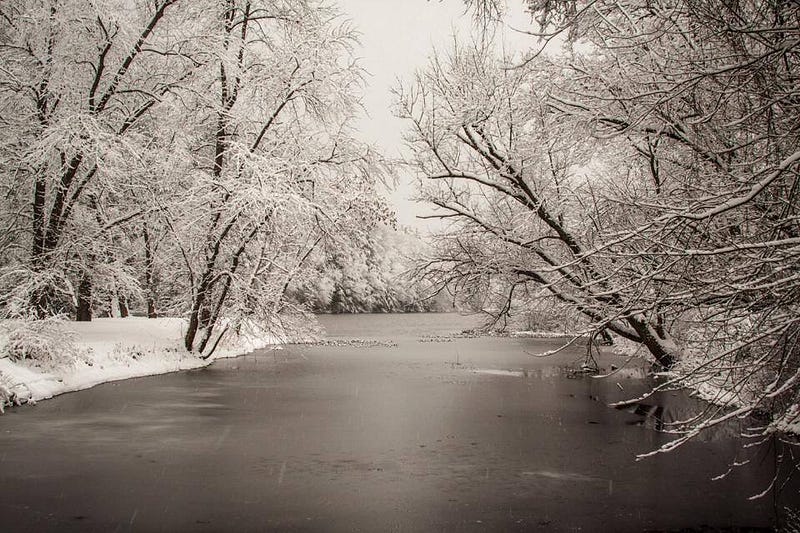
Let’s take another timeout here to appreciate the remarkable mental fortitude of these Gist and Washington.
Two guys, alone in a massive forest, being shot at by Indians, chances of survival are minimal. Again, for most people panic would ensue.
In the words of George Washington’s descendant and biographer Austin Washington:
Yet George, who would be calm even when the bullets were whistling around him in battle — he was shortly to declare that he found the sound “charming” — remained temperate. He coolly assessed the situation, rather than letting his emotions get the better of him. A lesser man might have panicked, might have scrambled back to try to rejoin his party. George’s presence of mind — his ability to retain a cool head in a heated circumstance, to restrain his emotions — continued to stand him in good stead.
I’m not sure how you feel, but I’m not sure I’d find the sound of bullets whistling past my ears especially charming. Washington’s equanimity however, is impressive. Especially in light of the fact that he is severely travel-worn, tired and hungry at this point.
Let’s return to our story, to see how the two men managed themselves in this situation.
Early morning.
December 29th.
Rushing water with large chunks of ice. Current strong enough to carry away the strongest of bears. Let alone a human.
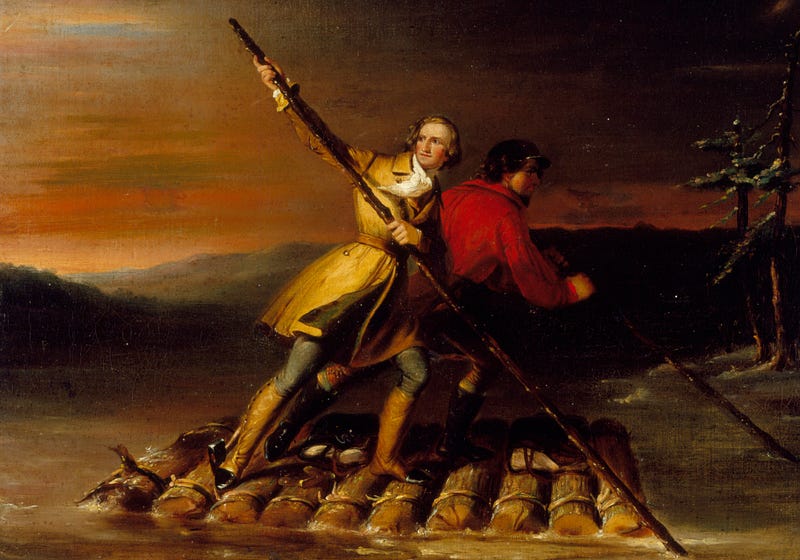
Washington and Gist set out to build a raft, using only a hatchet — The most 18th century MacGyver shit I ever saw —and by working through the day, they manage to pull it off.
They manage to build a raft that is strong enough to withstand the rushing current, and so they set out to cross the river.
Check out this cool rendition of the situation.
After crossing the river, they make it back to deliver the message to Dinwiddie.
And the rest — as they say — is history.
This was the first show of military brilliance, from George Washington, but far from his last.
We all knew what happened during the War of Independence from England. How Washington would show mastery of military strategy time and time again. But more importantly, he refused to be rattled.
No matter what obstacles he faced, and no matter how dire the circumstances, he would stay calm, think things through, and be the sturdy tree that people could cling to in the midst of chaos.
This is the true measure of a man (or woman). To be able to watch life unfold all around you. To witness fortunes change, rivers freeze, men and horses dying and still keep your wits about you. Still do what is required in the situation. This is intense self-mastery.
This is what is required for greatness.
Practice calmness in chaos and watch your fortune change before your eyes.