A Treatise on the Term “Heroes”
What it’s like from the front line of a different kind of war.
I have a lot of respect for those on the “front lines,” people who are right now putting their health at risk: the grocery store clerks, delivery people, and most especially our medical people. The list is endless.
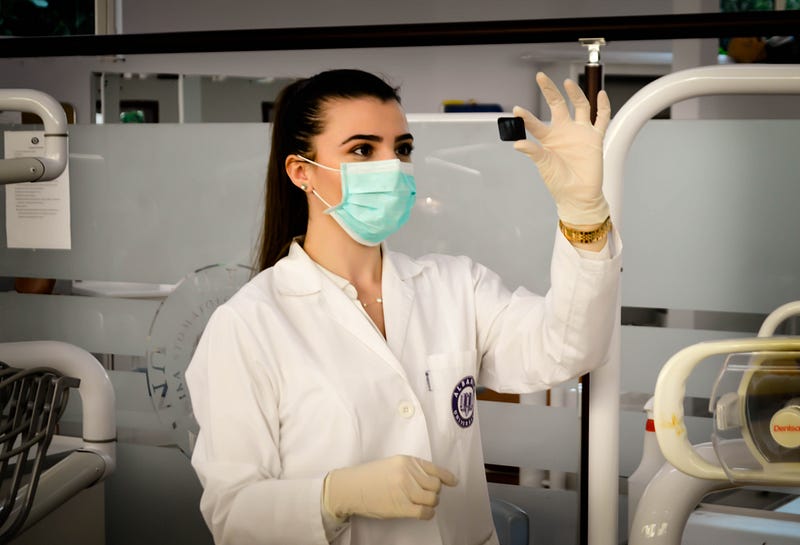
Our “front line of defense:” ALL the medical folks.
Oh, we love our war language. Love it. Suck it up. Makes us feel so invincible.
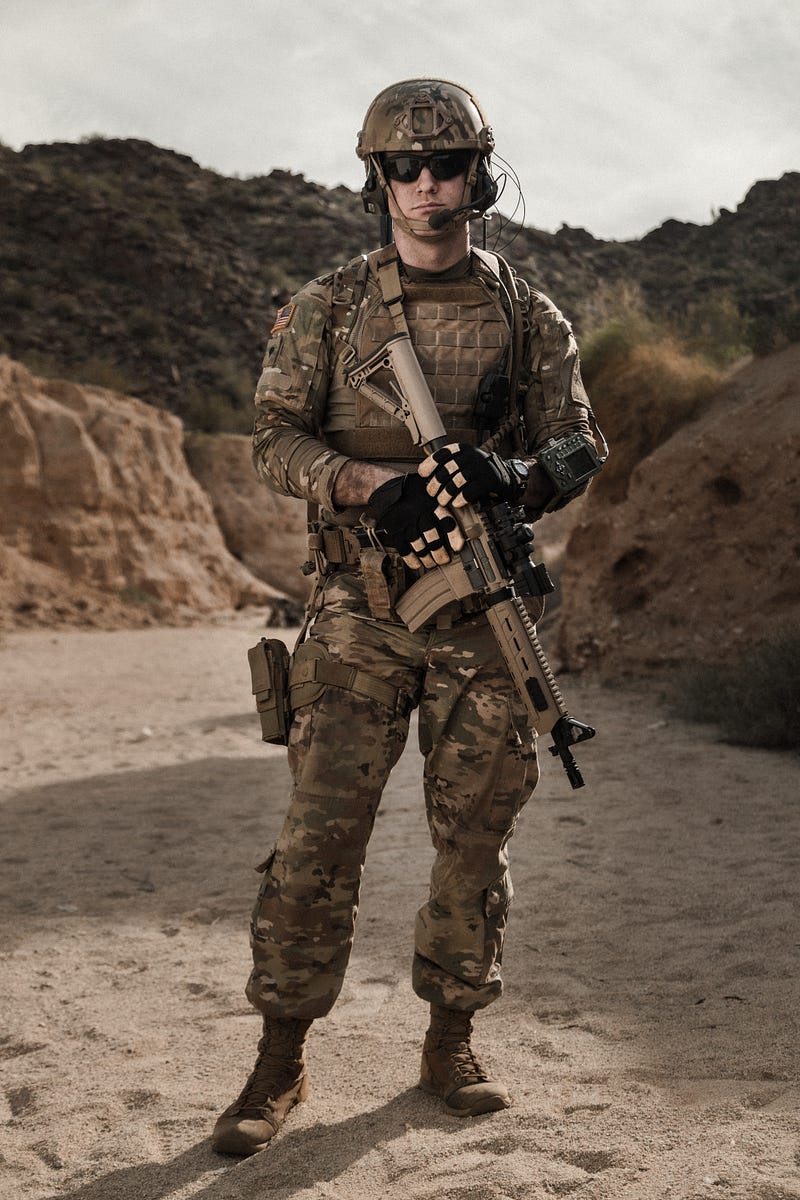
I’m writing this as a disabled Vietnam Era veteran. A soldier. A female soldier who paid some pretty shitty prices to step up and serve my country. I never saw combat — my combat was a completely different kind. Other female soldiers can relate. When I left the service I got spat on. I never told anyone I served until nearly twenty years later. Now I’m a hero? Please.
I follow The Atlantic, and caught this the other day from a writer who also works for Trader Joe’s:
I get precisely what she means. I get precisely how it feels.
I mean to make a critical analogy that underscores her points:
Folks, this is what it’s like to be a veteran, and most especially a disabled one.
Because what the writer outlines in her article pretty much speaks to those of us who made a whole other kind of commitment and have been doing so since the beginning of this country. We put on a uniform for America.
We CHOSE to put ourselves in harm’s way. We CHOSE to take the chance to come home in a flag-draped coffin.
We CHOSE to possibly come home with our bodies and minds in pieces.
The American public LOVES to call us heroes but in truth does not want to know, doesn’t want to deal with us, doesn’t want to have to face the truth of what we willingly gave up for them to publish conspiracy theories and put others at risk.
The author is right. Calling them heroes, calling the garbage workers and the working poor heroic during this dangerous time frankly doesn’t mean shit. Not really. Because what those heroes need, just like those bottom of the barrel workers at Amazon and the makeshift MASH unit workers need, is a lot more than hollow words. Words don’t pay the mortgage or the food or the medical. Grandiose praise as she puts it, does not cash the checks they have to write for daily expenses. Grandiose praise does not create decent, affordable housing.
Affordable housing. America’s new oxymoron.
Words are worthless, if all you do is call people heroes and expect them to shove out their chests and feel good for two minutes and then go back to a cardboard box under a bridge. Even those on active duty struggle along on food stamps in far too many cases.
Words are worthless if you have to stand behind your cash register while some dimwit without a mask casually coughs in your general direction. Or climbs on your bus, coughs indiscriminately, and a few days later, you the driver are dead. In service to people who not only don’t see you, but frankly can’t be bothered to give a damn.
That’s precisely what it feels like to be cannon fodder in any kind of war (tagging you, Marley K.)
It’s been both my experience and my long observation over the more than forty years of dealing with the VA that America, in large part, really does think of its military like a bunch of plastic GI Joes and Jills. Disposable toys. When those soldiers come home broken, we don’t wanna play with them any more.
One of the reasons that there are so many veterans working at the VA is because they do understand. The system might not support us, but other veterans absolutely, positively understand. A civilian cannot. Will never. That’s not a slam. The word G.I. means Government Issue. You are ours to do with as we like. Just like so many of the working poor. Until you realize just how much your world and life are at the mercy of someone else, it’s very hard to understand. Any nurse or doctor who was told they couldn’t wear a mask understands what it’s like to be cannon fodder right now.
The deep discomfort the above author is feeling is a daily fact for those of us who gave up our freedoms to fight for our country. Our lives were and continue to be forfeit, including after we come home, with a VA system that is woefully unprepared to deal with the realities of post-service trauma, ranging from rapes to permanent disabilities. Or both.
We are, in our tattered glory, our wounded dignity, a bit of an embarrassment to the American public, which on one hand is happy to holler HERO twice a year or get all teary-eyed at an NFL game. There, aging men are rolled out, probably have no clue where they are or why, and are applauded. How about the rest of the year, folks? Because on the other hand, real respect takes the kind of commitment back to the veterans that we gave to country. Not an expensive Public Relations flyover, the cost of which ($36,000)might well have been vastly better spent on veteran services.
The US Military has become arm candy for the NFL.
Or the other way around. I’m not sure who owns whom any more.
We love war. We LOVE the imagery, the pomp and circumstances, the idea of fucking with people to show the world who has the bigger dick. During the 2016 election year, we vets and active duty listened with horror to Trump and all the other Republican candidates- all without any military experience whatsoever- talk about bombing the shit out of entire populations. They don’t know what the fuck they’re talking about. Still don’t.
But it sure sounds good, doesn’t it? All those HEROES AND SHEROES kicking ass and getting it done.
Then they come home all fucked up. How terribly inconvenient that we might have to face the cost of all that rah rah.
We sure fuck up those men and women who had the balls to swear an oath, and the temerity to live through it and ask that they might receive the care they need to survive a culture that really does not want to look at the price of freedom. Doesn’t want to pay it.
We did. I did.
So yes. Karleigh Frisbie Brogan makes excellent points. I agree with her entirely. I agree that demanding that front line employees sacrifice their health so that you and I can get our Cheetos and our donuts is a lot to ask. She’s right that all that heroic language lands as pure bullshit. She has an entire army of veterans, kindly pardon the pun, who relate directly to her world and the price she and others just like her are likely to pay so that the rest of America can watch Netflix and pop a beer.
Heroes. How is America going to feel about all those heroes and sheroes that I saw this morning at 6 am during old folks hours, packing and stacking and hauling and checking out, when they get sick and some die? For they will. When the breadwinner, or one of them, is disabled after time on a respirator ( if they’re lucky) and now they can’t pay the rent on a crummy one-bedroom in the crappy part of town? When there is a terrible reckoning for so many who can’t pay rent or their mortgage or basic medical costs or their car payment to get to work when things inevitably tick up again?
Absolutely. I can relate. Her article spoke right to my soul. I am not arguing for more attention to veterans right now. I am arguing how the use of the term heroes is convenient, how it can suffice in lieu of proper gear, respect, treatment, wages and a great deal more. How words, while important, are rhetoric. When America as it is, its stratifications and inequities ripped back like a blanket off a dumpster, now gets a chance to seriously look at who gets to be cannon fodder in all the wars we so love to fight.
Yeah. We’ve been hearing hero for as long as any of us has ever worn the uniform. As long as we have battled the VA for proper care. As long as entitled little white bitches bark at us for feeling “entitled” that we get a military discount to shave pennies off our living expenses.
Don’t get me started.
Friend of mine reported the other day, a veteran whose father is on oxygen, who lives in a camper with his nearly 90-yo wife, was booted off a California military base. That was along with thousands of other retirees, some of them generals, without warning, without cause. Many have nowhere to go, campgrounds won’t take them in. They are now having to park on the street and pour their shit into the sewer. Some are one step away from homeless.
Nobody wants them.
Our heroes. NO justification. Many had been there for years. The rates were affordable on their pensions. They were up-to-date on their payments. Could easily get to the on-post services. My friend’s parents have daily caretakers. She had connections. Her folks are okay, for now. The others are on their own.
Heroes.
They are heroes only as long as it is convenient, as it serves the needs of the military, and an American public which quite frankly largely cannot deal with the truth. Front line workers are heroes as long as we need something from them. Then they fade into obscurity again, kinda like veterans. And that’s my point.
It is a long and storied habit of this country to put down, shove away, spit on, abuse and ignore the front-line soldiers in all our wars: the real ones, and the fake ones that the media and the government love to manufacture for its own purposes: the war on drugs, the war on crime (both of those have been as successful as Afghanistan), the war on terror, and now, the war on COVID.
We want our soldiers, whether they wear scrubs, camo gear or a butcher’s apron to do the hard work. Too many of us just don’t want to have to look them in the eye.