avatarJonathan Garner

Free AI web copilot to create summaries, insights and extended knowledge, download it at here

1849

Abstract

ssion’. In other words, is two consecutive quarters of negative GDP growth a good definition of a recession? Whether it is or not, obviously, a lot of people ARE defining a recession as that. And, again, <b>two consecutive quarters of negative GDP growth is a bad thing, regardless of what you call it</b>. Thus, one can’t escape reality (and the conceptual debate) by trying to change the terms/language. That’s because there’s a distinction between concepts and language. Terms matter, but to use that as an excuse to then (also) ignore the actual substance of the argument/debate is obviously <i>fallacious</i></p><figure id="4d84"><img src="https://cdn-images-1.readmedium.com/v2/resize:fit:800/1*0TzIigUcmWsFp1Dkhh2p2Q.png"><figcaption>Source: FRED — <a href="https://fred.stlouisfed.org/series/GDPC1#">https://fred.stlouisfed.org/series/GDPC1#</a>. The x-axis is the year, while the y-axis is the amount of money (billions of dollars — adjusted for inflation).</figcaption></figure><figure id="70c6"><img src="https://cdn-images-1.readmedium.com/v2/resize:fit:800/1*Cmm_eSIz1Ooa6EIWVr0NNQ.png"><figcaption>Source:Source: FRED — <a href="https://fred.stlouisfed.org/series/GDPC1#">https://fred.stlouisfed.org/series/GDPC1#</a></figcaption></figure><p id="57f6">I think, for starters, the conventional definition of a technical recession (as two consecutive quarters of negative GDP) is a good definition. I don’t know if it’s perfect, but it’s far from clear why it should matter whether it is perfect. Certainly, one can dream up counter-examples to this definition of recession, but you can do that with a lot of terms (so I don't know if anyone should be particularly bothered by that fact). For example, isn’t it counter-intuitive to claim that a situation with two consecutive quarters of <i>SLIGHTLY</i> negative GDP would qualify as a

Options

“recession”? Perhaps. But perhaps, instead, the intuition is arising from failing to make a distinction between bad and ‘mild’ recessions.</p><p id="3dd7">The conclusion is that this semantic debate around the term ‘recession’ — insofar as it is <i>being debated in political circles</i> — is <i>largely</i> a (fallacious) smokescreen.² On the other side of that smokescreen is the reality of an economy that is slowing by a substantial degree.³</p><p id="9eaa"><b>Notes</b> ¹It would also be fallacious to dismiss this entire post (or my main point) by claiming that I’m ‘motivated’ by ‘conservatism’ (or ‘liberalism’). For one, I’m not. And secondly, even if I were, that doesn’t mean that my point is incorrect.</p><p id="24d9">²People can sense they’re being (so-called) “lied” to even if they don’t exactly know why or how.</p><p id="1082">³I’m not claiming there isn’t any other evidence that we are in an economic slump. For example, <a href="https://fred.stlouisfed.org/series/T10Y2Y">an</a> inversion of ‘the’ yield curve.</p><p id="df5f"><b>Check out our new platform </b>👉<b> <a href="https://thecapital.io/">https://thecapital.io/</a></b></p><p id="4aa5"><a href="https://twitter.com/thecapital_io">https://twitter.com/thecapital_io</a></p> <figure id="7514"> <div> <div> <img class="ratio" src="http://placehold.it/16x9"> <iframe class="" src="https://cdn.embedly.com/widgets/media.html?src=https%3A%2F%2Fupscri.be%2Ff%2F3c1144%3Fas_embed%3Dtrue&amp;dntp=1&amp;display_name=Upscribe&amp;url=https%3A%2F%2Fupscri.be%2F3c1144&amp;key=d04bfffea46d4aeda930ec88cc64b87c&amp;type=text%2Fhtml&amp;schema=upscri" allowfullscreen="" frameborder="0" height="400" width="800"> </div> </div> </figure></iframe></div></div></figure></article></body>

Call It Whatever You Want, We ARE In A “Recession”

Photo by Ray Gao on Unsplash

Politics has seemed to have gotten involved in the recent debate about whether we are in a “recession.” In other words, there’s now a semantic debate about whether the downturn we are in is really a “recession.”

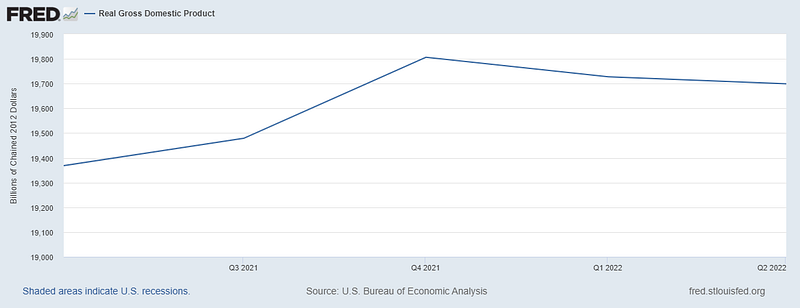
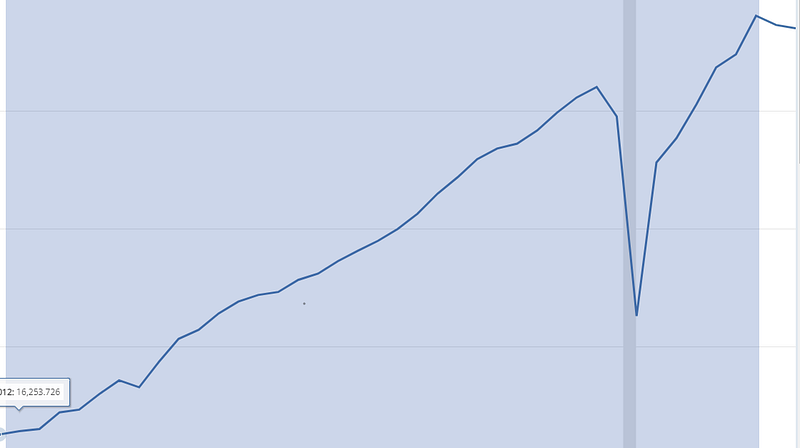
The background is that, recently, it was announced that we have just had two consecutive quarters of negative GDP growth in the U.S. And on top of that, a commonly used definition of a recession is just that — two consecutive quarters of negative GDP growth. The semantic debate is about whether that’s a good definition of the term “recession”, or (even) whether it’s “the” definition at all for a recession (as if terms only have one definition or meaning…but why would someone think a thing like that?).

But even if the current downturn isn’t a “recession”, why does that matter? Is a slumping economy not a bad thing? Obviously, a slowing economy (and a deeply slowing economy) is bad.

Before we had two consecutive quarters of negative GDP growth — confirmed not too long ago — there was (and still is) a genuine debate about whether that’s a good/helpful definition of the term ‘recession’. In other words, is two consecutive quarters of negative GDP growth a good definition of a recession? Whether it is or not, obviously, a lot of people ARE defining a recession as that. And, again, two consecutive quarters of negative GDP growth is a bad thing, regardless of what you call it. Thus, one can’t escape reality (and the conceptual debate) by trying to change the terms/language. That’s because there’s a distinction between concepts and language. Terms matter, but to use that as an excuse to then (also) ignore the actual substance of the argument/debate is obviously fallacious

Source: FRED — https://fred.stlouisfed.org/series/GDPC1#. The x-axis is the year, while the y-axis is the amount of money (billions of dollars — adjusted for inflation).
Source:Source: FRED — https://fred.stlouisfed.org/series/GDPC1#

I think, for starters, the conventional definition of a technical recession (as two consecutive quarters of negative GDP) is a good definition. I don’t know if it’s perfect, but it’s far from clear why it should matter whether it is perfect. Certainly, one can dream up counter-examples to this definition of recession, but you can do that with a lot of terms (so I don't know if anyone should be particularly bothered by that fact). For example, isn’t it counter-intuitive to claim that a situation with two consecutive quarters of SLIGHTLY negative GDP would qualify as a “recession”? Perhaps. But perhaps, instead, the intuition is arising from failing to make a distinction between bad and ‘mild’ recessions.

The conclusion is that this semantic debate around the term ‘recession’ — insofar as it is being debated in political circles — is largely a (fallacious) smokescreen.² On the other side of that smokescreen is the reality of an economy that is slowing by a substantial degree.³

Notes ¹It would also be fallacious to dismiss this entire post (or my main point) by claiming that I’m ‘motivated’ by ‘conservatism’ (or ‘liberalism’). For one, I’m not. And secondly, even if I were, that doesn’t mean that my point is incorrect.

²People can sense they’re being (so-called) “lied” to even if they don’t exactly know why or how.

³I’m not claiming there isn’t any other evidence that we are in an economic slump. For example, an inversion of ‘the’ yield curve.

Check out our new platform 👉 https://thecapital.io/

https://twitter.com/thecapital_io

Recession
Economy
Economics
Money
Finance
Recommended from ReadMedium