
A Field Guide to Feelings
Cabin Fever
How compulsion feels from the inside.
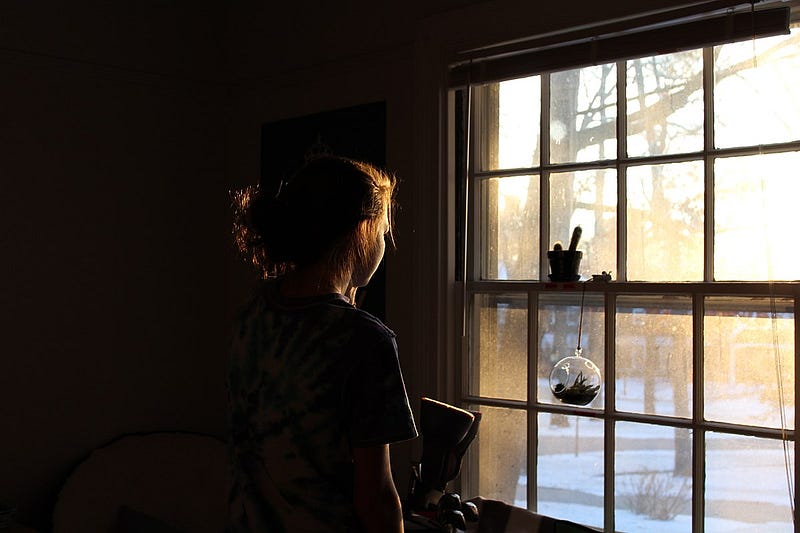
I used to live in a cabin, so I should be an expert on cabin fever.
At age nineteen, I emigrated to western New York to live on a remote piece of land, a quarter mile from the nearest neighbor and built that cabin. They didn’t plow my dirt road, so I’d be snowed in for weeks at a time, which was just as well, for the rattletrap vehicle I drove was broken down as often as it was operable. A trip to town was as special as a vacation in Paris. It took years before I realized and could admit that I really didn’t like living in the country, and would much rather be in the city, or at least as much of a city as Rochester, NY, where I am now, can claim to be.
Currently, with every non-essential business closed, due to the pandemic, I might as well still be living in my cabin in the woods. My cabin fever is back, but not nearly as bad as before. I have skills now and can confront the problem at the source before it gets out of hand.
In case you aren’t familiar with the term, cabin fever is that irritability and restlessness you might feel when you’ve been cooped up for too long. It’s otherwise referred to as stir-crazy. Frontiersmen called in prairie madness. The Inuits came down with piblokto when they were in their igloos too long. It’s a little like claustrophobia. You feel trapped and gotta get out. It’s closely related to and may be synonymous with being bored. If you want to see what it can do to people, watch The Shining.
Cabin fever involves an obsessive-compulsive process. You see this process also in craving, addiction, compulsive shopping, compulsive eating, compulsive gambling, compulsive sexual behavior, compulsive checking, counting, washing, repeating, talking, and lying; not to mention trichotillomania and hoarding. With all these, the spotlight is on the compulsion. The obsession is backstage, directing the play.
Obsession is a mental event. Really, what we are talking about here are obsessive fears, persistent, intrusive intimations of disaster. Compulsion is an action done in response to those fears, something that’s believed will make the fears go away. The compulsive lock checker began with an obsessive fear of a break in. The possibility of being burglarized is so horrifying that he’s driven into a compulsion to check the locks. In full-blown OCD, it’s not enough just to check the locks once, he must do so an insane number of times. The point of all that compulsive behavior is to deal with and silence the obsessive fears.
Having a compulsion ain’t fun, but having obsessive fears is worse. Having a compulsion is like having a guy with a gun to your head, ordering you to check those locks. Having an obsession is like believing there’s a guy with a gun to your head, when no one’s there, and he won’t leave.
Watch what happens in the candy aisle where a two-year old is having a tantrum because he wants a Milky Way bar. We hear him and we see him writhing around on the floor, but what we don’t see are the fears. The kid is afraid he’ll starve to death without that candy bar, or his parents don’t love him, or don’t listen to what he says. That candy bar is just the thing that’ll make it all better. It’ll make all those fears go away. It’s given a power and significance well beyond its capacity. The parent, for her part, has fears of being embarrassed, others judging her, or not being able to get through the day without killing her kid. She might give him the candy bar to quiet him down. Problem solved until the next time they go shopping; except what is never addressed, dealt with, or even acknowledged are the underlying fears.
The guy with cabin fever is not much different from the two-year-old, he simply must leave the cabin. If you ask him why, he’ll say he’ll go crazy if he doesn’t. The compulsion to leave the cabin has so completely taken the spotlight from the underlying fears, that he may not even know why he must leave.
The truth is, he has no reason to leave, any more than I have a reason to leave my home now. If I left my home in the middle of a pandemic, where would I go? Everything is closed. There are no restaurants, movie theaters, or sporting events to attend. I have a treadmill if I need exercise. If I want nature, I can look out my window. Will I go crazy if I don’t leave? Only if I believe I’ll go crazy, otherwise craziness has no claim on me. There is never a reason to leave the cabin when you have cabin fever. Irrationality is the point of it.
The thing to do when you have cabin fever is look inside your mind and find the obsessive fear that’s behind the compulsion to leave. What else do you have to do?
In my case, now, I’m afraid to lose my freedom. It’s not that I need to leave the house, so much as, I’m being told not to, therefore, I want to do it all the more. Cabin fever is an oppositional, forbidden fruit kind of thing. It says, you’re not the boss of me, I can do what I want. It all comes down to my being obsessed with not losing my agency. I’m mad at the government for closing things down, even though I would do the same, and I’m mad at the world for having a virus in the first place. I want to go outside and shake my fists to the heavens.
If that’s true, a compulsion seems a strange way to protest losing my freedom, for compulsion has got to be the very opposite of freedom. Perhaps cabin fever says you’re not the boss of me, I’m the boss of me, and I’m going to boss myself around more than you ever could. It’s an assertion of the self against all the limitations placed by society and nature. It’s a primal howl by a puny, vulnerable creature against a cold, uncaring universe; a futile, but courageous rebellion against God.
Having said all that, I’m suddenly not cabin feverish anymore. I don’t have that compulsion to go out. I could go out if I wanted to and defy the forces of nature that have driven me indoors, but I choose not to. That’s how I’m really free, by exercising choice, apart from my compulsion and the unstoppable force of nature it represents.
If you have cabin fever, I suggest you look within and find the fear that’s behind the compulsion. You might discover you’re as afraid of losing your freedom as I am. Maybe your fear is different. Maybe you’re afraid of losing your temper with the person you are stuck in the cabin with, or you’re afraid they will lose their temper on you. Maybe you miss people and are afraid they’ll forget all about you. Maybe it’s some other thing. You’ll know you’ve identified the right fear by what happens once you address it. When you face your fear, your obsessions are no longer needed. When you adjust to life in the cabin, cabin fever goes away.
Keith R Wilson is a mental health counselor in private practice and the author of three self-help books and two novels.


