
What Russian Propaganda Won’t Tell You: Persecution of the Crimean Tatars
Crimean Tatars are Indigenous people of the Crimean peninsula
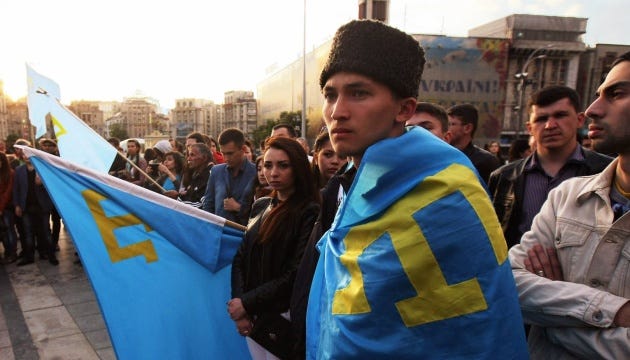
Within my mother’s side of the family, it’s believed that we have hutsul ancestors from the Carpathian Mountains, and Crimean Tatar ancestors from the Crimean Peninsula. The prior can be easily traced to the origins of my grandmother, coming from a mountain village, enchanted with legends about magical molfars and sounds of wooden trembitas. The latter, however, is unclear.
Aside from doing DNA tests that may not provide clear answers, it’s hard to follow your origins when you’re Ukrainian. People have been victims of deportations and genocides committed both by the Russian Empire and Soviet Russia for centuries. These murderous politics were aimed at ethnic minorities and even whole countries within the structure of Russian imperialism. Most of these deadly consequences have been hidden, with history being rewritten in the style of the Orwellian “unperson.”
Since Ukraine gained independence in 1991, history has been rewritten again — but this time, in the Ukrainian language. We’ve finally gotten to know the truth about our Executed Renaissance of the ’30s, persecuted and killed dissidents of the 1960–80s, the ideology of elimination of any cultural identity within the Soviet Union, and the endless persecution of the Crimean Tatars.
In 2016, Ukrainian Crimean Tatar singer Jamala won the Eurovision contest with the song “1944.” It might not have had much value to the viewers of this entertaining (and sometimes even grotesque) show, but it was a strong statement from the Ukrainian perspective. After Russia occupied Crimea in 2014, the events of the 1944 genocide committed by Soviet Russia against Crimean Tatars became more than just an echo of history — it signaled a repetition.
The events of 1944 are typically called “deportation,” despite how 8,000 Crimean Tatars were killed during the first few days and the tens of thousands who died subsequently. They were massively deported on the false accusation of having collectively collaborated with the Nazis. It was called a “De-Tatarisation of Crimea,” and Russians were invited to live on the peninsula instead of the deported and murdered Crimean Tatars.
“In exile, the Crimean Tatars were confined to controlled settlements that were under curfew in the evenings. The deportees were used for cheap labor in harvesting cotton, and as laborers for road construction, in factories and mining. Researchers estimate that 22 to 40% of Crimean Tatars died during the first five years of exile due to illness and starvation.” — says the Ukrainian Institute of America.
Ukraine officially recognizes this act as genocide, but the world seems reluctant to speak out about this long-term oppression of Crimean Tatars by Russia’s changing rulers.
Modern Russia uses similar strategies as the Soviet regime. Killing or prosecuting a conditional enemy was a heroic act, fabricating this enemy and using a propaganda machine to convince the population. The U.S. was the “big enemy” while elites, cultural groups, and ethnicities were the smaller enemies. The difference is that in modern Russia, people had access to information and didn’t use it for reasons we will probably spend decades arguing about.
Since the invasion of Crimea in 2014, the persecution of its Indigenous population has renewed. There are currently 125 political prisoners in Crimea, 80% of whom are Crimean Tatars. To the question about political prisoners and the current state of events in Crimea, Tamila Tasheva replied:
“There are such narratives that it is very important that Ukraine does not return Crimea back. Because if Crimea returns to Ukraine (this is a narrative spread by the Russian Federation), then Crimean Tatars, I quote: “will cut the Russians.” This is a very well-known narrative, which has been spread for a long time during Ukrainian independence, for 30 years, and especially very active during the last 8 years. That is why, yes, Crimean Tatars have been persecuted for all these 8 years.”
About 10% of Crimean Tatars have moved from the peninsula since the annexation, often to Kherson, a city in southern Ukraine, or to Kyiv. Despite being persecuted by the Russian Federation, Crimean Tatars keep fighting for the de-occupation of Crimea. One of these rallies happened on March 6 (you can hear the Ukrainian anthem on the video).
As well as Ukrainians, Crimean Tatars have been fighting against Russian oppression for centuries and keep fighting now. The question is whether the Western world, known for its support of freedoms and democracies, will finally recognize that the long-suffering inhabitants of Crimea deserve a right to be heard. A right without a pretext of Russian propaganda, false accusations, and lack of security for the future of their land and people.


