
Beta-Basils: A guide to hobby consumer indoor gardening devices
FYI — this post you’re reading is an offshoot of another post — see here:
https://readmedium.com/personal-indoor-farming-fall-2016-1b781038693d#.7ol10emla
The benefit of starting a business in the consumer indoor farming product category with small, inexpensive, hobby-sized device is that people are quicker to purchase at this price point especially if they aren’t very fimiliar with gardening and plant growth. This means you can demonstrate larger demand quicker, and, in the best case scenarios, use that scale to learn from customers with statistically significant numbers. This approach also limits the scope of technology (read: complication) you can allow to creep into your product development cycle, which can be healthy for early stage companies who don’t really know what to build yet.
The challenge with this approach is that you’re building small, cheap units with little ongoing utility after initial movelty. People simply don’t keep using them, which means the whole premise of long-term engaged customers purchasing renewables is challenged. That also means lost opportunity for customers to become advocates. Companies starting with this type of offering can (and should) iterate to larger, more long-term engaging products. So far, I’ve seen a few abandoned attempts but haven’t seen any of these companies make that transition from hobby, novelty-based devices to productive, utility-based units successfully.
Aerogarden (not startup)
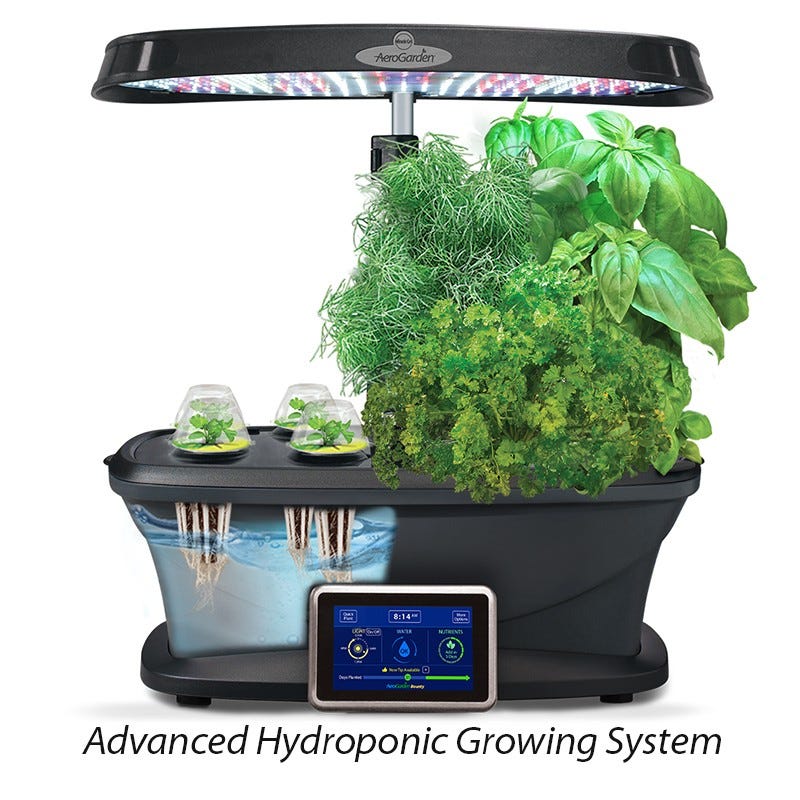
Aerogarden represents the incumbent in this space, and was bought by Scott’s MiracleGrow in ~2012. I believe they were up to ~$30M in revenue at some point around 2008 with their small, hydroponic indoor grow systems and they’ve been around since 2006. They sold to Miracle Grow at a low point in revenue which probably didn’t result in a great return to initial shareholders — my guess.
I’m not impressed with their product/tech R&D. I saw a slide from them a few years back showing their roadmap for their mobile app development and it struck me that they just simply don’t have the DNA of a forward-thinking, consumer-focused startup at this point. That’s tough to hire for or acquire.
Why have they not developed a mobile app that facilitates ongoing use and recurring spend on seed pods? Why have they not developed larger units capable of growing more? Why have they not built or supported (potentially off-brand) automated cannabis devices?
As the CEO of a company in this category, I worry little about Aerogarden growing or grabbing newly-minted market share from our younger, developing companies.
Click and Grow has been growing steadily and many, many consumers have used their devices — that gives this team good insight into what people want. They probably sell a few million dollars per year of ~$60, 3-plant site small growing devices.
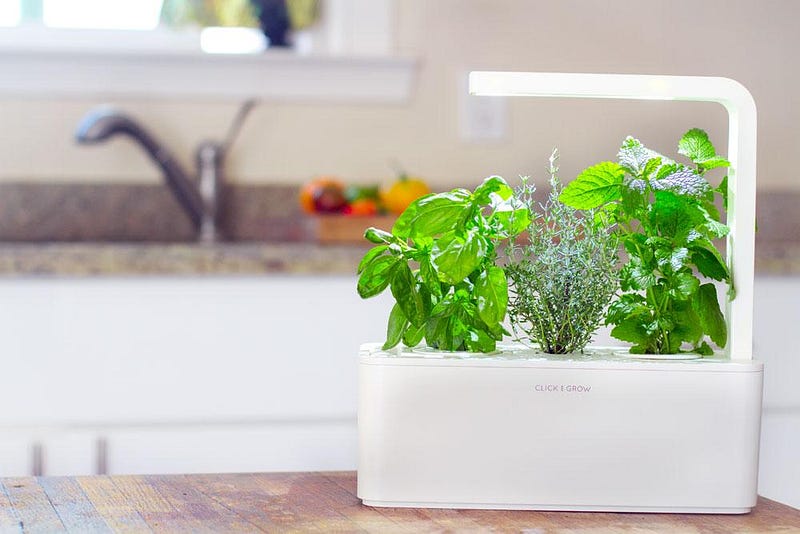
Click and Grow markets the product as extremely easy to use (‘inspired by NASA technology, etc…). I wonder if those types of customers (who are buying something because it’s easy and inexpensive) are inherently not the best suited for long term engagement once the reality of reordering/planting seed pods/harvesting hits them.
Click and Grow has shared an image of their next ‘big step’ as a company, and it looks like this:
Click and Grow did test a ~$500 unit concept on their site with the simulated launch of a mini-fridge/end-table sized design last year. I’m very curious as to the interest that stemmed. This all gets me curious — what’s in that box!?
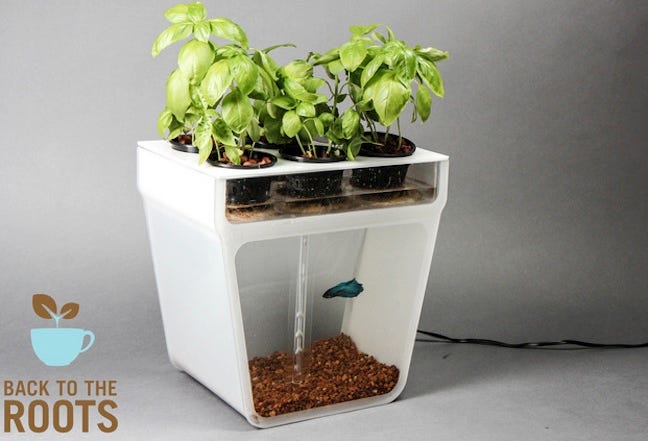
The ‘Water Garden’ is a neat educational tool that sells really well as a toy and gift. It is pretty widely distributed through many different retail channels.
Founders Alex & Nikhil are not solely pursuing tech-enabled consumer indoor farming products, and I think that’s smart. They’re focusing on their cereal and other consumables business, and are raising capital and signing distribution deals for that. The Water Garden is a great product for developing awareness for all other category companies (especially ones harnessing aquaponics — the combination of fish & plants), but Back To The Roots won’t rely on it for most of their business growth. They’re not going to be that winner-take-all company, but they are a player in the category.
As a side note, it was interesting to see the initial challenges with the pump failing/underperforming in thousands of units they had already shipped. That served as a cautionary tale; When you start producing consumer indoor farming products at any decent scale, they better have been tested over long periods of time, because you’re dealing with plant growth, pumps, moving parts, slime and algae buildup, chemistry, and home environmental factors.
At Grove, it’s really nice that we can send a new self-replaceable pump to our several hundred customers. If we had 10,000+ customers who had pump problems, that’s a much bigger, more expensive problem. That’s one benefit of focusing early on fewer, higher-paying customers. While production isn’t at mass scale means simple, avoidable problems aren’t at scale either…
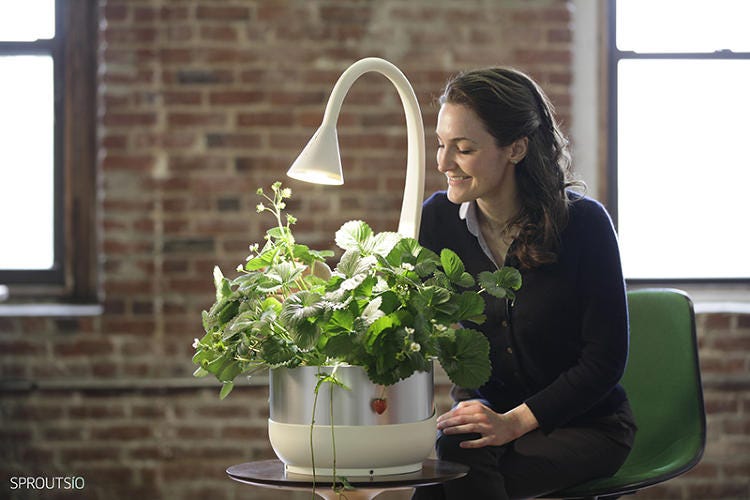
Since Jennifer Brutin left MIT to start SproutsIO about 3 years ago, I’ve seen many different prototypes — they’ve iterated quite a few times. Their current unit is beautiful IMO and following a ‘smart pot’ look and feel. Jennifer and SproutsIO launched a Kickstarter that raised >$100k in September 2016.
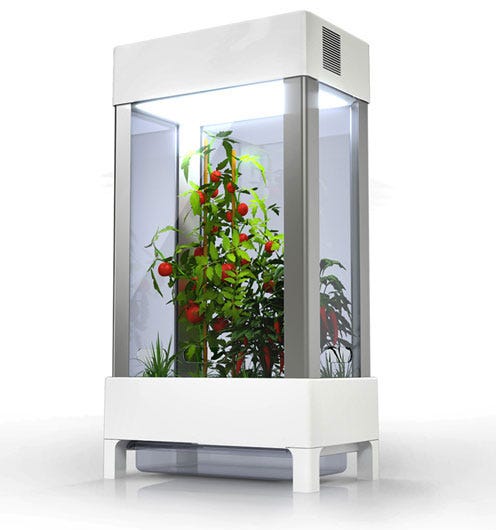
A mini-fridge sized ~$400 growing unit. Javier and Zach have an expansive vision of selling their plug and play product (seen to left), but also distributing the embedded technology components to DIYers, and also using their technology to create some type of SaaS offering to help commercial indoor growing companies.
They’ve pre-sold a bunch (I don’t know how many) of Niwa 1’s, and may decide to focus their efforts on delivering that product.
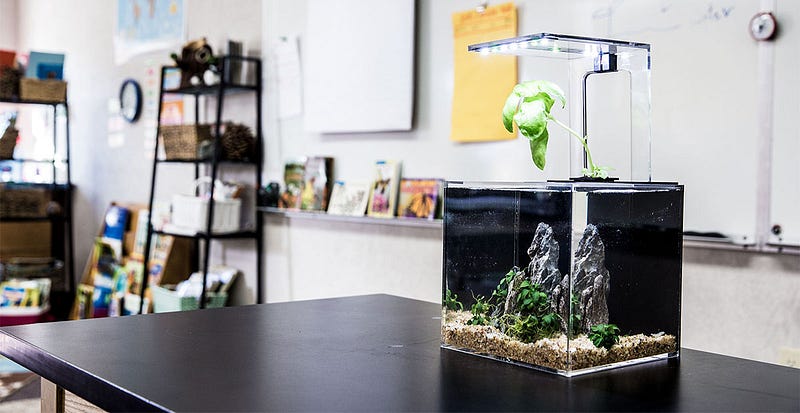
A relatively bootstrapped business with a sharp founder, Kevin Liang. Ecoqube is appealing to a different type of hands-on user who cares more about connecting with nature than growing quantity of herbs or lettuce.
I’ve been impressed with Kevin’s iteration over the past few years with limited capital, and his awareness of what he’s offering to his customers. It’s not about food production — and Ecoqube gets that messaging right. This is one example (and there are few in this category) where the value proposed in marketing actually matches the reality of the value created for customers.
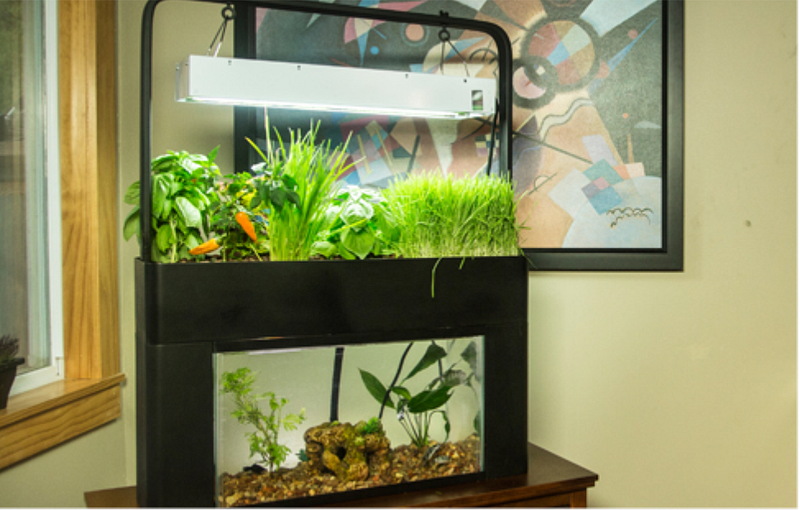
Aquasprouts started on Kickstarter and they’re shipping plastic aquairum converters for $170 (not including the ~$30 tank).
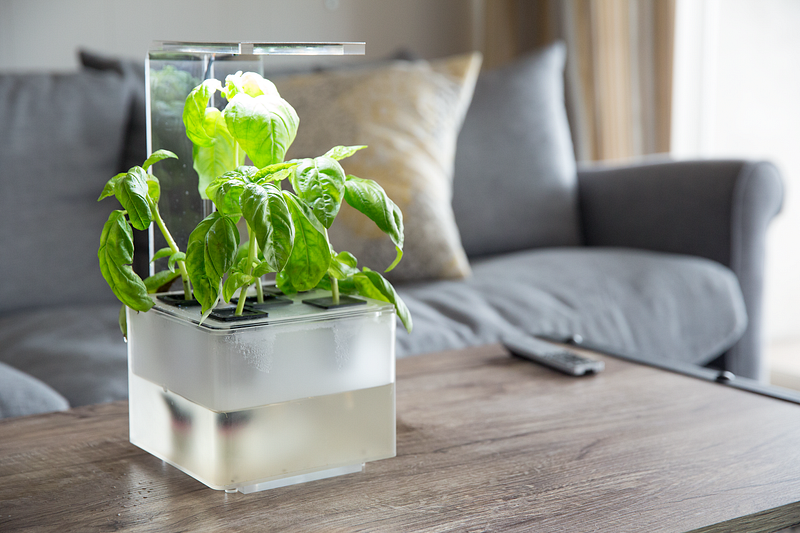
Just launched on Kickstarter in early September and have blown past $60k!


