The Clarketech Myth
Is it holding us back?

How would a plane or an automobile look to a Neanderthal, whose kind had not even invented the wheel? In 1962, British writer Arthur Clarke wrote in Profiles of the Future, “Any sufficiently advanced technology is indistinguishable from magic.”
This quote inspired the term Clarketech, a qualifier for technology so powerful and miraculous that it would allow a civilization to achieve prodigies beyond imagination.
Whenever we discuss alien civilizations capable of reaching Earth, or future spacefaring utopian societies, we assume that some degree of Clarketech is necessary.
Dyson Megastructures
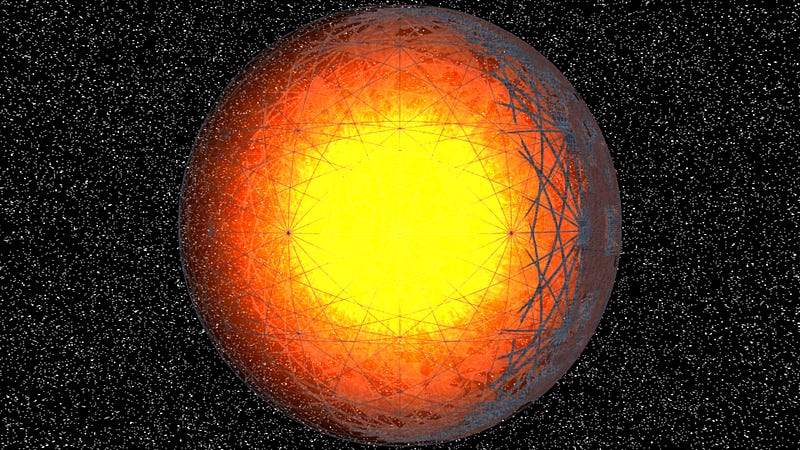
There are good reasons for alien hunters to be enthralled with Dyson spheres. Physicist Freeman Dyson proposed that a super-advanced alien civilization would disassemble all planets in their solar system to build a spherical shell around their sun. This will allow them to capture the unimaginable amount of energy produced by their star, and the interior of the sphere will provide billions of times their planet’s surface to grow.
One could argue that just the capability to disassemble a planet is Clarketech. How does a civilization beat the gravity well to bring that amount of raw materials to space? Nevertheless, the two greatest challenges are gravity and materials.
The sphere will be a thin shell a few meters thick incapable of generating gravity, everything inside will fall into the star. Spinning the structure will simulate gravity, but its pull will go down from normal at the equator to zero at the poles — leaving most of the sphere with substandard gravity.
A Ring World — a ribbon rather than a sphere around a star — has been proposed to overcome this challenge. It rotates to produce normal gravity, captures a decent amount of solar energy, and provides millions of times a planetary surface.

The materials challenge is equally daunting, for there isn’t a material strong enough to build either of these megastructures. Spinning to simulate gravity compounds the problem by requiring an even stronger material. However, one can argue that a Clarketech civilization will be able to conquer these obstacles.
The non-Clarketech solution
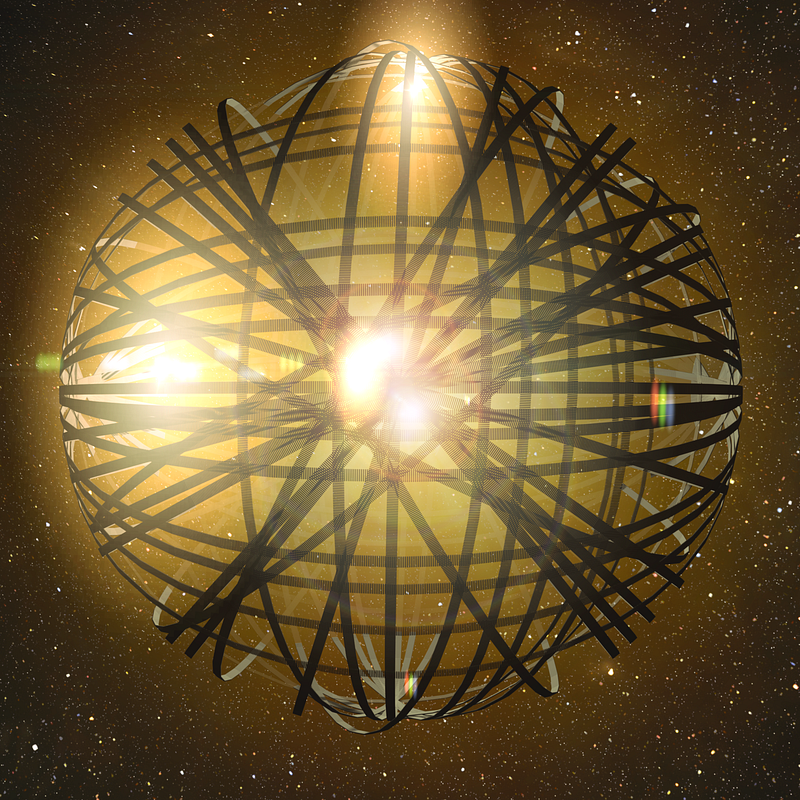
A Dyson swarm gets around these limitations by replacing a single megastructure with billions of island-sized rotating habitats. This simple tweak will allow a non-Clarketech civilization like ours to reap the benefits of a Dyson sphere — energy and real estate.
While a sphere or a ring is an all-or-nothing commitment — either must be fully completed to become operational — a swarm is a far simpler pay-as-you-go solution. New rotating habitats are built as resources become available, and population growth fuels the demand.
“A growing civilization that has depleted its planetary resources and has a desperate need of room to grow will have no other option than to build rotating habitats around their sun to avoid choking to death! And once they’ve harnessed their home star, spreading across the galaxy will only require persistence and a pinch of cosmic time!” — Excerpt From my novel K3+
Can we actually build a Dyson swarm?
According to American physicist Gerard O’Neill, our civilization first acquired the technology to build rotating habitats in space half a century ago. We also know that our solar system contains more than enough resources to construct billions of these island-sized colonies, enough to form a swarm around the sun.
It’s a millennium-long project, but humanity is no stranger to such lengthy endeavors. The Great Wall of China was built in 2,000 years, Stonehenge in 1,600 years, and Petra in the Jordan Desert took 850 years. Although a sheer challenge of scale, we possess more technology and resources than these great civilizations predating us.
And when the space around the sun is exhausted, there are plenty of stars that we can travel to and build Dyson swarms around them as well. Our next door neighbor, Alpha Centauri, is a triple star.
With virtually unlimited energy from the sun, we can use laser arrays in space to accelerate starships to a fraction of light-speed. This will allow us to reach neighboring stars within decades.

Rotating habitats also make great starships. The infrastructure necessary to comfortably house millions of people is already in place. The lower gravity section along the rotation axis provides vast amounts of room, ideal for storing components and materials necessary to kickstart the construction of new colonies.
It can be speculated that this action-at-a-distance could be used to send instant messages across vast distances.
A paradoxical implication
It would take an alien civilization at our technological level only a million years to colonize the entire Milky Way, physicist Enrico Fermi reasoned back in the 1950s.
We are capable of building a Dyson swarm around the sun and, within a second of cosmic time, do the same with all stars in our galaxy. Therefore an alien civilization predating us by a million years or more would have done it already. Because a Dyson swarm captures all visible light emanating from a star, our night sky would be devoid of them.

Our current telescopes allow us to detect such a civilization up to a billion light-years away. The alien expansion wave will appear like a dark cloud expanding away from their home star. Nevertheless, all we see in our cosmic backyard is raw wilderness.
Babies develop inside artificial wombs, eliminating infant mortality and the trauma of birth. Free from errors, the DNA of their parents is combined by an artificial intelligence.
The only Clarketech we need
The ultimate limitation of any Dyson megastructure is the speed of light. Talking to the neighbors next door is no problem, but messaging someone on the opposite side of the sun could take close to an hour — in the case of a Dyson swarm.
“For two habitats located at the maximum distance from each other — a straight line on opposite sides of the sun — the signal would need to be relayed through a third habitat, placed in line of sight with the other two, increasing the delay to a whopping forty-eight minutes. Federico constantly wondered how they would keep a unified civilization without Faster Than Light communication.” — Excerpt From my novel K3+
Nothing in the universe can travel faster than light. Or can it? Quantum entanglement allows particles to influence one another regardless of distance. Changing the state of a particle will instantly change the state of the entangled ones. Einstein hated this phenomenon and called it “spooky action at a distance.” After nearly a century the inner workings of this oddity are not understood.

It’s easy to speculate that this action-at-a-distance could enable sending instant messages across vast distances, but there is a massive obstacle. Entanglement overcomes locality but not causality, which prevents it from being used for FTL communication. However, it’s not beyond the realm of possibility that science will find a way to meet this challenge — in the next few centuries.
This seemingly lesser achievement — let’s face it, Hollywood makes FTL travel appear far more exciting — barely deserving of the Clarketech qualifier, will be sufficient to open the door to a fully interconnected trans-galactic empire.
A utopia without Clarketech
Imagine living forever in a body that never gets physiologically older than the early twenties. Genetic enhancements allow everyone to execute extraordinary physical and intellectual feats. Nanobots inside our bodies ensure nothing less than perfect health.
Widespread use of neural interfaces enables people to interact without being in the same room and, thanks to FTL communication, they can do so across Dyson swarms throughout colonized space.
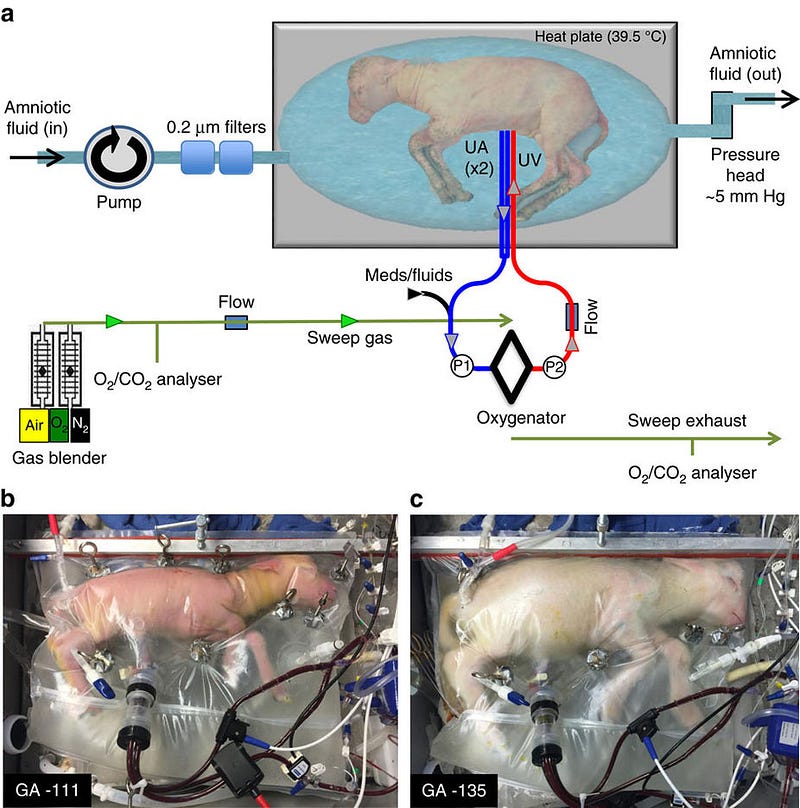
Babies develop inside artificial wombs making the term “infant mortality” obsolete and eliminating the trauma of birth. Free from errors, the DNA of their parents is combined by an artificial intelligence. Same-sex couples can procreate with the same ease as their straight counterparts.
The gestation period is extended, allowing children to be born with fewer vulnerabilities. Neural interfaces implanted while in the womb enable them to communicate with their parents and start learning early.

Plenty of food is cultivated in-vitro and on vertical farms with aeroponic irrigation. Every single animal product (including the most amazing steaks) is grown from enhanced DNA patterns without raising and sacrificing living beings.
Except for FTL communication, the technologies to achieve such a nirvana already exist. Although they’re still in their infancy, most of them will mature within decades.
The myth holding us back
Clarketech is a distraction preventing us from seeing the utopia we could build without it. We are already capable of putting a down payment on a Dyson swarm to free ourselves from our home planet. The stars are within reach of our technology and understanding of the laws of physics.
Human biases, greed, aggression, and instant gratification are also in the way. We must open our eyes to move beyond the short-term profit system that is choking our civilization, increasing inequality, destroying our environment, and condemning us to die on Earth.
Bold actions and unconventional thinking are necessary, but a bright future awaits us in space when we are ready to take the next step. Our imagination is the limit.
What does the future of humanity hold?
My new dystopian novel K3+ is the story of Earth’s demise and humanity’s rise to become an intergalactic empire. A roadmap for colonizing space and save humanity, the science-grounded story interweaves cutting-edge technologies and spellbinding fiction.