
I Was Racially Profiled While Covering a BLM Protest in Idaho
I’m Asian American, and I want to give people the benefit of the doubt. But at what cost?
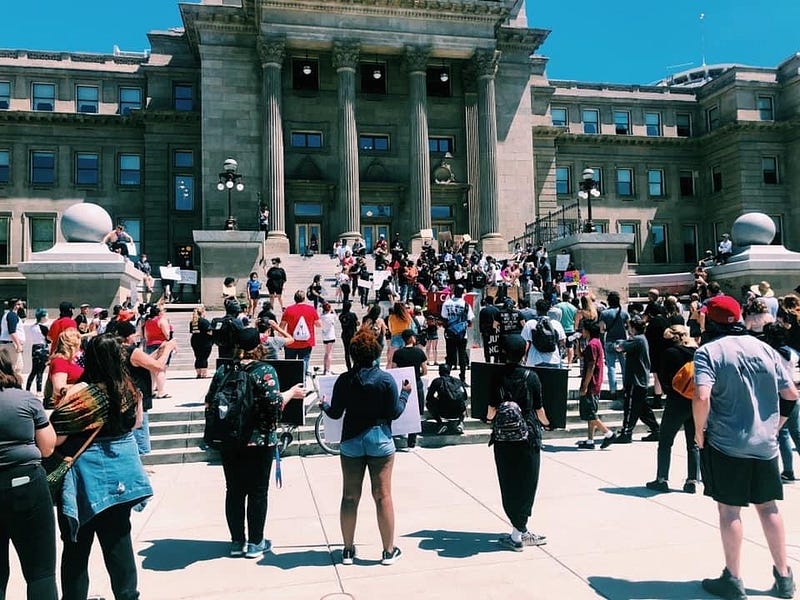
My photographer and I were called in to work three hours earlier than usual to cover a Black Lives Matter protest at the Idaho State Capitol. Just a week ago, we covered another Black Lives Matter protest at the same place.
A group of protesters were on the top of the steps, chanting and holding signs. As we got closer to them to take photos and videos, many started to point at us and talk among themselves.
“Leave them alone,” one female protester said, defending us. “They’re just doing their jobs, let them.”
We had planned to go live, but then the group started gathering toward us. They chanted “f*ck the media” at my photographer and me, shouting at us saying that we should leave. The majority of the protestors were white, but there were also a few Hispanic and Black protestors in the crowd. The woman that just told his friends to “leave us alone” started saying that all “the media does is twist the stories.” How could she go from defending us one second, to shouting at us the next? She was a white woman and most of the people she came with were white. We ended up just shooting some quick videos and pictures for the website instead of doing a live hit for the newscast.
It seemed contradictory that the majority of the people protesting for Black Lives Matter were white, outwardly fighting for “equality,” but wouldn’t make me feel welcome as an Asian American reporter. It’s ironic that many white people were fighting for Black lives, yet they resisted me, a person of color.
I wanted to show that these protesters and I wanted the same thing — to fight against racial inequity. Instead, I said nothing. I knew that justifying myself would be unproductive and seem defensive. But, I still lay awake at night wondering if I should have said something anyway.
I wondered if protestors became more aggressive because I am part of the media, or because I’m Asian. Would my white coworker have experienced the same thing if he covered this event? Thoughts like these cloud my head constantly.
It seemed contradictory that the majority of the people protesting for Black Lives Matter were white, outwardly fighting for “equality,” but wouldn’t make me feel welcome as an Asian American reporter.
I’ve concluded that I’ll never truly know, because my two identities are intertwined. According to Voice of America, Asian Americans reporting the news — including South Asians and Pacific Islanders — make up less than 3% of the broadcast media workforce. It reminds me of a recent situation that happened between another Asian American female reporter and President Donald Trump at a news conference back in May.
CBS network reporter Weijia Jiang asked President Donald Trump why he made the U.S. Covid-19 testing progress seem like a global competition against other countries. Trump replied by saying the question was “nasty” and told her to “ask China.” The reporter followed up by asking “Sir, why are you saying that to me specifically? That I should ask China?” She was the only Asian American reporter in the room and the only one that received such a targeted response.
Of course, I want to believe that people can see me as a reporter and not have my race play into it. But, the reality is that there are few other people that look like me in television news. I’d be lying to myself if I said it was possible to separate my racial and professional identity.
In addition to Covid-19 coverage, covering back-to-back protests has been the reality for every television reporter in the United States since June. Whether it was the wrongful arrest of a CNN team in Minneapolis or arrest of two news photographers in Las Vegas, reporters have been facing assault and arrest while reporting on the widespread protests and unrest.
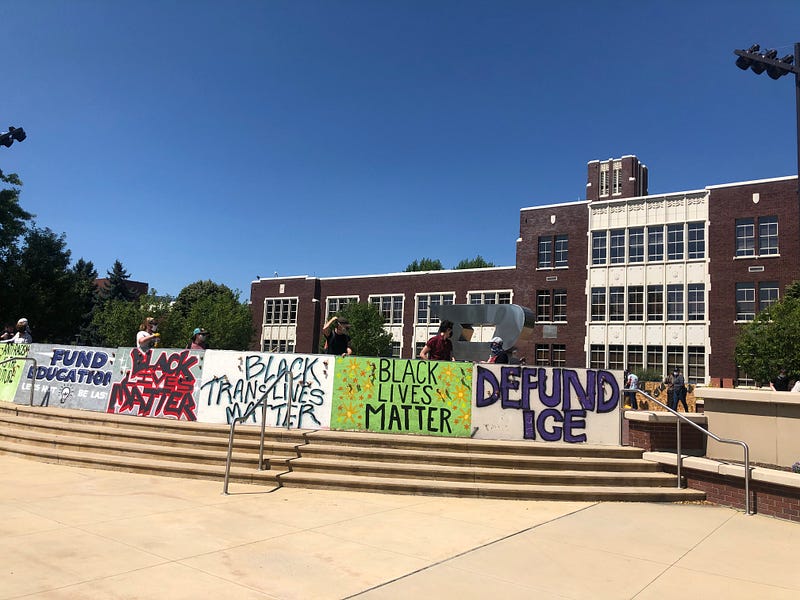
As a reporter covering Boise, Idaho, I cover a variety of stories and have had my fair share of interesting experiences out in the field, but I never expected to be thrown into such a tornado of news in 2020.
I had another uncomfortable experience while reporting on the protests when a white man asked me if I spoke English. I was totally taken aback. As someone who grew up in Los Angeles, a city with a large Asian American population, I’ve rarely experienced these types of comments. Because there aren’t many Asians in Idaho, I decided to give him the benefit of the doubt. I told him yes, much to his surprise, and then he proceeded to ask if I could say a few sentences in Chinese to him.
Although I’m fluent in Chinese, I didn’t want to do what he said and feed into the stereotype further, so I lied and said I didn’t know Chinese. He kept pushing saying, “I know you know it, just say a few words.” I walked away.
I told my white male boss about what happened, and while he was empathetic and understanding, there was nothing he could have done about it. Many of my friends who are minority reporters in other cities sympathized and shared their experiences with me as well. As an Asian American woman, I have experienced verbal hate toward the media and insensitive comments toward my race by predominantly white residents while reporting out in the field. I am the only on-air employee that is a person of color in my station and the only Chinese reporter in my market.
This, coupled with the Covid-19 pandemic, a time where racial tensions are on the rise and people are more insensitive to those who started the “Chinese Virus,” I feel even more scared and nervous to do my job on a daily basis. I try to talk myself out of feeling this way, but I know this is the reality for many people like me.
It just shows how important it is to have representation for people like me in the media.
This is not the first time I’ve faced microaggressions or even blatant expressions of discrimination — and I know it won’t be my last. However, it just makes me even more motivated. It fuels my passion to continue to cover more historically important events, represent my people to a community where I only make up 3% of the population, and share my personal experiences (as well as listen to the experiences of others).


