
5 Lessons I Learned After Publishing 550+ Articles Online
I didn’t expect these to be true.

When I started to write online 4+ years ago, I didn’t expect my words to have a significant impact on anyone’s life. In fact, I didn’t expect much at all. I was just curious and gave it a try.
550+ articles later, my writing has turned into a thriving online business that helps me generate multiple six-figure profits per year, millions of readers have read my articles online, I’ve built an email list with over 40,000 subscribers, and I’m making money by doing what I love and only working around 25 hours per week.
I know these types of posts often sound braggy, but my intention is the opposite: I just want to show you what’s possible if you stick to your dreams for a while.
I’m the child of an immigrant family with parents and grandparents who always had to work hard. There was no “working smart” when they came to a new country without even speaking the language.
When I was born, my parents, grandparents, uncle, and I lived in a tiny apartment. I started working at my first job when I was 15 years old. I worked as a waitress, in a call center, and as a private tutor.
I’ve always been ambitious and knew my life would be a lot easier than my family’s, but I never thought I’d be able to live a life full of freedom at the age of 24.
And this isn’t even about money — not at all. It’s about having time and opportunities.
I’ve been lucky to hear about the possibility of writing on Medium back in 2018 and gave it a try without knowing what to expect.
550+ articles later, I can say it was the best decision I’ve ever made.
Here’s what my journey has taught me so far:
It’s not just about “giving more value”
One of the most common tips for succeeding as a writer or content creator is to “give value.”
Everyone tells you that you need to create “valuable content” to serve your audience.
And that’s not wrong — you do need to create value if you want readers to spend time reading your work, but there’s something else nobody seems to be talking about: It’s not just about the value.
It’s also about the emotional bond you create.
Of course, I try to give as much value as possible in each of my articles, but I don’t believe that’s why my work sticks out.
My stories resonate with millions of readers per year because they make them feel a certain way.
I don’t just pack more and more research, data, and facts into my stories. Instead, I ask myself: How do I want my reader to feel after reading this story?
Of course, this isn’t possible and meaningful for all niches (e.g., tech), but it does make lots of sense for most writing.
You could bombard your readers with the most valuable articles ever and still fail to build a loyal audience because you fail to spark emotions and create a genuine connection.
The first 5–10 comments on my articles are mainly from the same few readers who instantly read and comment on anything I publish.
These readers don’t just click on my stories for value.
They click because my stories resonate with them on a deeper level. They feel connected and know they’re part of my journey, so they want to stay up to date on what I’m writing.
In a nutshell:
Creating value matters (a lot), but it’s just half of the battle. The other half is about making your readers feel a certain way and creating connections by sparking emotions.
More exposure = more headache
When I first started to see good results with my writing (lots of readers, an increase in income, hundreds of positive comments), I wanted more.
I wanted more readers, more exposure, and more praise.
Little did I know that more exposure would inevitably also lead to more hate and weirdness.
In the past two years, I’ve received all sorts of messages that made me feel uncomfortable— from marriage proposals to murder threats.
I must admit that most of these messages leave me cold now because I’ve already seen so many of them, but they can still be annoying.
In a nutshell:
I don’t want to discourage you here, but I want to show you the whole truth: There’s not a single writer or content creator with a significant audience who’s only receiving positive comments and messages.
The more people you reach, the more haters you’ll attract, it’s just a natural part of the process and you’ll need to learn how to deal with it.
“You don’t start out writing good stuff. You start out writing crap and thinking it’s good stuff, and then gradually, you get better at it.” — Octavia E. Butler
The first few articles I’ve published online are among the worst pieces of writing I’ve ever seen. And I’m not even talking about the first 3–5. I’m talking about the first 100.
Yet, I enjoyed the process and kept going because I thought my work was worthy.
After almost two years, I realized I was still writing passionately but barely making any money, so I asked myself what I could change.
I started to analyze thousands of articles by hundreds of writers and realized there were significant differences between their writing and my writing.
Yet, surprisingly, there weren’t too many differences between all those viral pieces of content, no matter who the author was.
So I figured there’s a reason why these guys do what they do, and I started to do the same.
And *boom* I suddenly went from making a few bucks per month to making a full-time income through my writing:
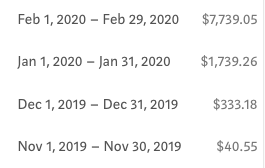
In a nutshell:
Don’t expect much to happen after publishing your first few articles online.
If you’re brand new to writing, your work will likely suck, and even if it doesn’t, it always takes some time to build an audience and understand the dynamics of a new platform. Just hang in there and think of your writing journey as a marathon instead of a sprint.
Simplicity wins
I never claimed to be a great writer or to have extraordinary ideas.
Most of my articles are incredibly simple: The topic is simple, and the writing simple. And that’s my greatest strength.
I don’t write to impress anyone. I write to educate and spark inspiration — that’s why I’m not afraid of using simple language in the first place.
Plus, I’m not a native speaker, so I wouldn’t even be able to write complicated sentences and use sophisticated words or sentence structures.
I grew up speaking German and Turkish and studied English, French, Spanish, and Latin at school. I might have a natural talent for languages, but I certainly couldn’t compete with a native speaker, so I don’t even try to.
Instead, I found my own voice and studied the principles of simple yet effective writing in order to communicate my message in the best way possible.
In a nutshell:
Success in online writing isn’t about crazy ideas or big words. It’s about not confusing your readers and providing a great reader experience.
This isn’t just about the writing, by the way. It’s also about how your articles look like, i.e., how they’re formatted, which images you use, etc.
“You can always edit a bad page. You can’t edit a blank page.” — Jodi Picoult
I said it before, but I’ll repeat it: I’m not an exceptional writer. I just learned what readers on the internet like to read and have spent years studying the craft.
And the most important skill I learned is editing.
I don’t write good articles.
I write average articles (and I do that relatively quickly), but I spend loads of time editing so my stories are engaging and appealing.
I’ve lost lots of time publishing articles that weren’t engaging or interesting at all, but all the practice helped me learn and grow.
I don’t say you need to publish lots of bad articles before you can start to write good ones, but I can promise that learning how to edit a piece is at least as important as writing it in the first place.
Here’s what my editing process usually looks like:
- First, I write the entire article. In the best case, I do that in one go.
- Once I’m done writing, I edit the piece using Grammarly to catch typos and obvious mistakes.
- After the first editing round, I ignore the piece for at least 12–24 hours and forget about it.
- When I come back to it later, I have a fresh perspective, and it’s easier to catch mistakes and simplify the writing. So what I do now is carefully read and edit the entire piece again.
- Next, I run it through Grammarly once again.
- And lastly, I use the Hemingway App for a final editing round.
This might sound like a lengthy process, but to me, it’s invaluable.
I can easily write a 1,500-word post in an hour, but I’ll take at least 30–60 more minutes to properly edit it.
In a nutshell:
An inefficient yet effective way to become a better writer is writing and editing a lot.
Always ask yourself how you could make your story a little bit better and more interesting for your readers.
Want to learn more about starting and scaling your own writing business and building a loyal audience? Join my free 5-Day Email Course and let me teach you some of the most valuable lessons I learned.


