
BYD’s Blade Battery Has Changed The EV Game
It is so good that Tesla will soon use it over their own 4680 battery.
You may have never heard of BYD, but this Warren Buffett-backed EV manufacturer is dominating the EV market in China and outselling every other brand. Now, BYD wants to expand its reach to the rest of the world. One way they are doing this is by selling their astonishing Blade Battery to other manufacturers (including Toyota and Tesla) and, in the process, changing the EV landscape forever with their unparalleled battery. So what is so special about this battery? And what kind of sea change is it expected to set in motion over the coming years?
BYD’s Blade Battery was launched way back in 2020. It uses two technologies: LFP (or LiFePO4) chemistry and a blade cell design, which make it incredibly energy dense, extremely safe, remarkably long-lived, and astonishingly cheap.
Let’s start with energy density. LFP batteries have been around for a while now, and they have some brilliant advantages over regular lithium-ion batteries, as they tend to be safer and far cheaper. But this comes at a cost, as they are also far less energy dense. This has meant that many EVs can’t switch to using LFP packs, as they simply don’t have enough space to install a large enough LFP battery.
Take the Model 3 SR and Model 3 LR. The SR uses a 50 kWh LFP pack, and the LR uses a 64% bigger 82 kWh lithium-ion pack, but their batteries are roughly the same size and weight.
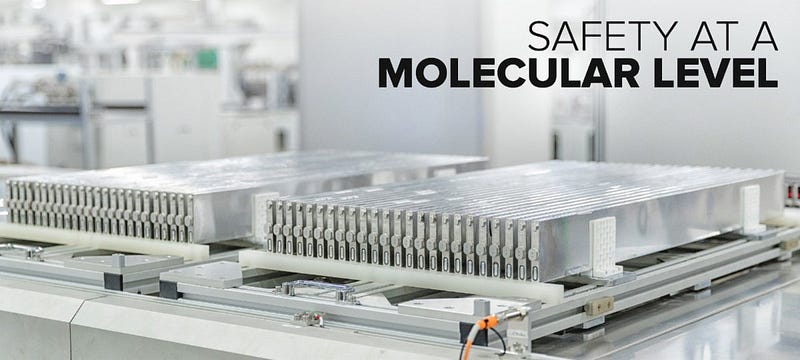
However, BYD has managed to dramatically increase the energy density of their overall battery pack by making each cell a giant blade and packing them as a rack (which is a very space-efficient way to design a battery). As such, the Blade Battery Pack is 50% more energy dense than an equivalent cylindrical LFP pack. This puts it on par with the energy densities of cylindrical lithium-ion battery packs.
Therefore, manufacturers can use the BYD Blade Battery and still get the same range as they would from a lithium-ion pack.
This blade design also allows for very effective battery cooling and has an 800-volt architecture. Both of these enable the Blade Battery to charge from 10% to 80% in just 30 minutes, which is faster than most LFP packs and on par with the best lithium-ion packs currently available.
But, as I mentioned earlier, LFP packs are safer than lithium-ion packs. This is because they have far less flammable material within them and don’t outgas (leading to a dangerous buildup of pressure in the cell) anywhere near as much. BYD has enhanced these properties in the Blade Battery and, in the process, has made it possibly one of the safest batteries currently available. Blade Battery cells can survive unscathed up to 500 degrees Celsius, can be fully punctured by a nail without catching fire, exploding, or overheating, and can even endure being run over by a 46-ton truck with no ill effect. This puts it leagues ahead of any other battery in terms of safety.
The Blade Battery isn’t just more robust, though; it is also far more long-lived than lithium-ion batteries. BYD claims the pack has a life span of 3,000+ charge cycles, or the equivalent of driving an EV 745,000 miles without needing to replace the battery. For some comparison, a Tesla battery typically needs replacing after about 200,000 to 300,000 miles. BYD’s claims have been backed up, as the upcoming Toyota bZ3, which uses the Blade Battery, is rated for only 10% battery degradation after 10 years of regular operation, whereas the Tesla Model 3 is rated to have 30% degradation after 8 years of normal operation (read more here).
Such a long lifespan will increase the residual value of an EV and make ownership far more appealing. This, combined with the toughness of the Blade Battery, will allow the second-hand market for Blade Battery cars to thrive and help those with smaller budgets switch to EVs. In other words, thanks to the Blade Battery, everyone, even second-hand buyers on a low budget, could soon afford an EV that is actually worth owning.
Finally, price. This is one of the most significant talking points for EVs, as the cost of a battery pack has soared over the past few years. But the Blade Battery currently costs $136 per kWh. This may sound like a lot, but it is the same as Panasonic’s NCA lithium-ion batteries and far cheaper than the $142 LG lithium-ion batteries used by the Tesla Model 3 Long Range. However, BYD is yet to fully optimise production, and they estimate that the cost could be as low as $55.40 per kWh if they can.
That is as cheap a price as Tesla’s own 4680 is aiming for, but unlike the 4680, the Blade Battery production is already scaled and fully operational (read more about 4680 issues here). This puts BYD well ahead of Tesla, meaning their battery will likely reach this low price long before the 4680 does. For that reason, cars equipped with the Blade Battery could be either insanely profitable or massively undercut the competition, including Tesla.
It is no surprise that Tesla has jumped on the Blade Battery bandwagon. Reports show that Tesla will use the Blade Battery in Model Ys made in their Berlin factory, and there are rumours that their upcoming small and ultra-affordable Model 2 will also use it. These cars were originally going to use the 4680, which Tesla has spent vast sums of money on to extend its technological and financial lead in the EV market, so this represents a massive U-turn for Tesla.
It seems Musk has recognised that there is a good chance the Blade Battery is ahead of theirs, and they can’t risk not using it and falling behind.
So that’s how the Blade Battery is set to revolutionise the EV world. It will make them far cheaper, much longer-lasting, and brilliantly safe. If BYD can get the price closer to their predictions, then they could become the battery provider to go to, allowing them to dominate markets outside of China and dash Tesla’s 4680 plans. Keep an eye on BYD, as they may just cause a revolution in the next few years.