
BYD, Defeat Tesla
The Unlikely King of Electric Vehicles
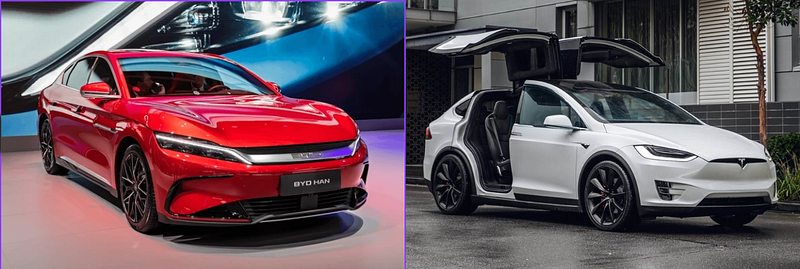

BYD, often referred to as the “biggest car brand you’ve never heard of,” has quietly surpassed Tesla to become the world’s largest seller of electric vehicles (EVs). This unexpected rise results from a combination of strategic planning by BYD and extensive support from the Chinese government. In this, we’ll delve into the three key factors that have propelled BYD to the forefront of the rapidly growing EV market.
Government Support:
A Driving Force Behind BYD’s Success The pivotal role played by the Chinese government in BYD’s ascent cannot be overstated. Unprecedented levels of support, including approximately $30 billion in tax exemptions since 2010, have been instrumental in boosting the EV industry. Beijing employs a carrot-and-stick approach, setting mandatory EV output targets while offering incentives such as cheaper loans, land, and R&D subsidies. BYD has reaped substantial benefits from this strategy, positioning itself as a dominant force in its home market.
Affordability Sets BYD Apart
While Tesla has captured attention with its high-performance, high-priced electric cars, BYD has taken a different route, focusing on affordability. With a range of ten popular models priced lower than Tesla’s entry-level Model 3, BYD appeals to a broader consumer base. Starting at just $10,000, BYD’s cost-effective approach, driven by its success in the taxi and bus markets, has allowed it to outsell Tesla and cater to diverse customer segments.
Vertical Integration: A Recipe for Cost Efficiency
BYD’s secret weapon in keeping prices low lies in its commitment to vertical integration. Unlike traditional automakers that source most components externally, BYD manufactures 75% of the parts in its flagship model, the Seal. This includes a significant advantage — BYD is the only automaker producing all its batteries in-house. This vertical integration proved particularly advantageous during the pandemic, providing BYD with resilience in supply chain disruptions. BYD’s expertise in battery technology, using lithium-iron-phosphate, reduces costs and offers a compact and efficient solution. Founder Wang Chuanfu’s background as a chemist and engineer emphasizes BYD’s commitment to technological innovation, positioning the company for long-term success.
Global Expansion: BYD’s Next Frontier
Recognizing the potential of the global EV market, BYD embarked on a journey to expand beyond its domestic stronghold in 2021. The company introduced more passenger vehicles in markets such as the Middle East, Southeast Asia, and Europe. While challenges like regulatory uncertainties and limited brand awareness exist, BYD’s commitment to local production and strategic market evaluations indicate a determined effort to overcome these hurdles.
However, the tension between Beijing and Washington has led BYD to tread cautiously in entering the US market. Despite being a latecomer to the global stage, BYD has rapidly become one of the top-selling EV brands in several markets, showcasing its potential to compete on a global scale.
BYD’s remarkable journey to becoming the world’s largest EV seller is a testament to the company’s strategic foresight and unwavering support from the Chinese government. As BYD continues its global expansion, overcoming challenges in regulatory landscapes and brand recognition, the electric vehicle market is witnessing a formidable contender in shaping the future of transportation. Watch out, Tesla — BYD is here to stay.