avatarMelissa Rock

Free AI web copilot to create summaries, insights and extended knowledge, download it at here

3567

Abstract

ull-body buzz that being in Duluth gives me. It reminds me of Seattle, in a way.</p><p id="8888">As we made our way into the city — Lake Superior and the iconic lift bridge to our right, hills dotted with houses and the Lincoln Tower to our left — I became aware of the brief time we had here. We’d be driving home on Sunday.</p><p id="5121">We picked a brewery (<i>Ursa Minor</i>) for their fire-lined patio, ordered drinks and ate fire-grilled pizza, then finished off at a cidery (<i>Wild State</i>) before making our way to the hotel for the night.</p><p id="2b99">We woke up early, made a run to <i>Amity Coffee</i>, and headed an hour north on Highway 61 to Tofte, a small town on the north shore of Lake Superior. We turned left down a dusty red dirt road, drove 20 more minutes, and made it to the outfitters.</p><figure id="452e"><img src="https://cdn-images-1.readmedium.com/v2/resize:fit:800/1*h7tpWFQLq11j2zVBZNi1-A.jpeg"><figcaption></figcaption></figure><figure id="c62e"><img src="https://cdn-images-1.readmedium.com/v2/resize:fit:800/1*3jF3CZIqDHUqieUkSr3xqA.jpeg"><figcaption>L: Fireplace at Ursa Minor, R: carrying canoes from outfitters to the lake. Photos by <a href="undefined">Melissa Rach</a></figcaption></figure><p id="4295">At <i>Sawbill Outfitters </i>we rented canoes, paddles, and life jackets, watched the mandatory “leave no trace” four-minute video, then loaded our mounds of gear into canoes and were on our way.</p><p id="f9db">It took upwards of an hour to paddle to our campsite. We paddled through Sawbill and Alton lakes with one short portage between the two.</p><p id="7a45">I was thankful my friends knew what they were doing because the campsites are not clearly marked. It was unclear to me which sites were occupied from the viewpoint of our canoe. There are maps to show you the way but I sat back and let my friends tell me what to do.</p><p id="7188">After waiting over an hour for folks to vacate a campsite, we claimed it and set up camp — hanging hammocks, popping tents, and inflating mattresses and pillows. It was 65 degrees Fahrenheit and somehow the water was near lukewarm— my partner and I put on our bathing suits and swam to a rock to sunbathe.</p><p id="19a8">Swimming, for me, was the best part of BWCAW. The water is clear, the beaches are strewn with agates, and our campsite was located on a rock near a sand beach. There’s no one around — you can make this your shower.</p><figure id="b17c"><img src="https://cdn-images-1.readmedium.com/v2/resize:fit:800/1*EDCVXqolWM6Rktu6MTWpsg.jpeg"><figcaption>Photo of <a href="undefined">Melissa Rach</a></figcaption></figure><p id="9a8d">Then — we did whatever we felt like. Read in our hammock, went for walks in the woods, took the canoe for a spin on nearby lakes, fished, played cards, sat by the fire.</p><p id="0883">Until it rained.</p><p id="3225">Rain poured steadily the majority of the only full day we were there — which made peeing in the woods, cooking our food over the fire, and chilling in the hammocks impossible.</p><p id="f1fb">We were secluded to our tents for a good eight hours. We passed the hours with books, cards, naps, and someone made us Ramen with the Jetboil at one point.</p><p id="f3f3">Thank the convenience store gods for the Ramen we snagged on the drive up.</p><figure id="881b"><img src="https://cdn-images-1.readmedium.com/v2/resize:fit:800/1*pm_7FVpHP5nQMQ28aUW59A.jpeg"><figcaption></figcaption></figure><figure id="9548"><img src="https://cdn-images-1.readmedium.com/v2/resize:fit:800/1*U-axjjmNiro2n0YLlTOaHg.jpeg"><fig

Options

caption></figcaption></figure><figure id="c1c1"><img src="https://cdn-images-1.readmedium.com/v2/resize:fit:800/1*ZiPKfBhNQuW8a9t-LmMOBg.jpeg"><figcaption></figcaption></figure><figure id="e451"><img src="https://cdn-images-1.readmedium.com/v2/resize:fit:800/1*Wz9OPlfq4_uibFpeltcy-A.jpeg"><figcaption>Top Left to Bottom Right: View in the rain, H canoeing, view from the tent, and my friend Evelyn with her dog Harley. Photos property of <a href="undefined">Melissa Rach</a></figcaption></figure><p id="51d6">Sitting in a tent during a rainstorm seems like it could be cozy, right? Blankets, stockings and sweats, reading and writing…</p><p id="e8c2">Wrong. Every time we left the tent to go to the bathroom we got wet and dirty, we couldn’t warm ourselves by the fire, and everything that needed to be dry was in the tent so we were constantly checking for wetness and moving the items inside the perimeter of the tent. There were random leaks in the roof of our tents too. Oy!</p><p id="529c">As you may have noticed, I’m not a camper.</p><p id="5c46">I liked sleeping in tents as a kid (I think?) but as an adult, claustrophobia reigns supreme. My sleeping bag and the tent itself, then add a rainstorm, and I am transported to playground plastic tubes and snow tunnels, ever-so-slightly caving in on me.</p><p id="25c1">Finally, God forbid, around 8 p.m., the rain let up and we made a fire. Somehow the wet wood came through for us. The next day we laid out everything to dry, went for a swim, and packed up the gear.</p><p id="d2ac">We went in September so there were essentially no bugs or black flies. Our mosquito netting went unused. We lit a fire or used Bill’s Jetboil to cook most of our meals and hung our food in the trees each night. I was thankful to be with people who a) knew the drill and b) initiated all the stuff we needed to do.</p><p id="98f1">I loved my time in BWCAW. Nevertheless, I was ready for home.</p><p id="ef05">My first take on the Boundary Waters is this:</p><ul><li>You can <b>create your own adventure.</b> Do you want to camp? There are campsites you can reach without portaging. Or you can portage the entire time and set up campsites daily. You can choose not to tent at all, by renting a cabin at the outfitters and using the canoes only for day trips.</li><li>The lake water is the <b>cleanest water </b>I have witnessed yet.</li><li>Other than whoever you’re traveling with — <b>you are alone</b>. We heard no one the entire time. I actually had a difficult time sleeping at night in silence (besides the random noises of wind or animal).</li><li>Go with people who possess<b> proper supplies</b> (or borrow/buy your own). I can’t see myself investing in a Jetboil, inflatable mattress pads and pillows, “bear-proof” bags, and the like — I just don’t camp that often. If I do go again, I’ll invest in a good pack to carry my supplies though.</li></ul><p id="e3de">Don’t get me wrong, I am fascinated with the Boundary Waters and it gave me faith in the power of the wilderness. I’ll go again, I need to put all of this new knowledge to use, aye?</p><p id="5335">The BWCAW is not for the faint of heart — there’s work involved. Which gives you a sense of accomplishment. We had some adversity, we bonded with our friends, and we distanced ourselves from the ease of our everyday life — if only for a few days.</p><figure id="2f7f"><img src="https://cdn-images-1.readmedium.com/v2/resize:fit:800/1*-9cdHXDEHbHpYXYUcXe13A.jpeg"><figcaption>Photo of <a href="undefined">Melissa Rach</a></figcaption></figure></article></body>

TRAVEL & PHOTOGRAPHY

Boundary Waters Canoe Area Wilderness

A land, untouched
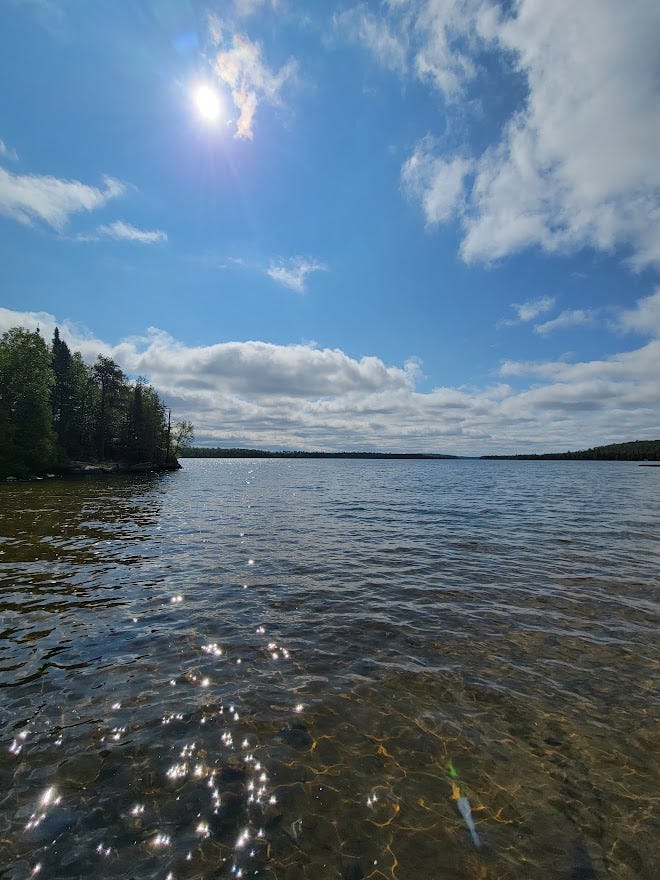
Photo property of Melissa Rach

You can picture what human extinction looks like in the Boundary Waters.

Imagine floating in the clearest water you’ve ever experienced with no other humans in sight. Just your party of four, a furry friend, and an unseen population of lake and woodland creatures.

I have never witnessed a location so completely untouched by humans.

You can drink straight from the lakes, chipmunks are hopping in and out of cooking pans by the fire, your only way of getting places is by canoe or your own accord.

The Boundary Waters Canoe Area Wilderness (or BWCAW) consists of 1,090,000 acres of land straddling the border between Minnesota (the U.S.) and Canada — where lies 1175 lakes, more than 2000 campsites, and 1200 canoe routes.

When you live in Minnesota or Wisconsin, you hear of people going to the Boundary Waters. Actually, we met people from all over the U.S. at the canoe outfitters — so apparently others outside of the Midwest have heard of BWCAW too.

What do I hear when people tell me they’re going to the Boundary Waters?

— I hear wet portages (carrying your canoe and supplies from lake to lake through an already-established path), maybe a mile long, with a canoe on your shoulders.

— I hear carrying packs on your back loaded with your tent, sleeping bag, food, and supplies.

— I hear using a pulley system to keep your food away from bears.

— I hear black flies, ticks, and mosquitos — mosquito nets and bug spray with Deet are required with no shower option to wash off.

Now, somehow, I’ve done it — I’ve canoed and camped in the BWCAW. And I can tell you some of my list above is true, but you can curate your own experience. As I read on a magnet at the canoe outfitters:

How do YOU BWCAW?

My friends Evelyn and Bill have asked my partner H and I to join them camping in the Boundary Waters for the second summer. After saying no previously, we ran out of excuses. We don’t have gear, not even a tent or sleeping bag.

Nevertheless, we consented. I knew we’d figure it out.

The U.S. Department of Agriculture (USDA) issues a limited amount of permits yearly. They seem to be doing a decent job at regulating the area — despite the 2000 other campsites, we neither saw nor heard one person while camping.

Maybe one or two canoes float in the distance. But this place takes “leave no trace” to another level.
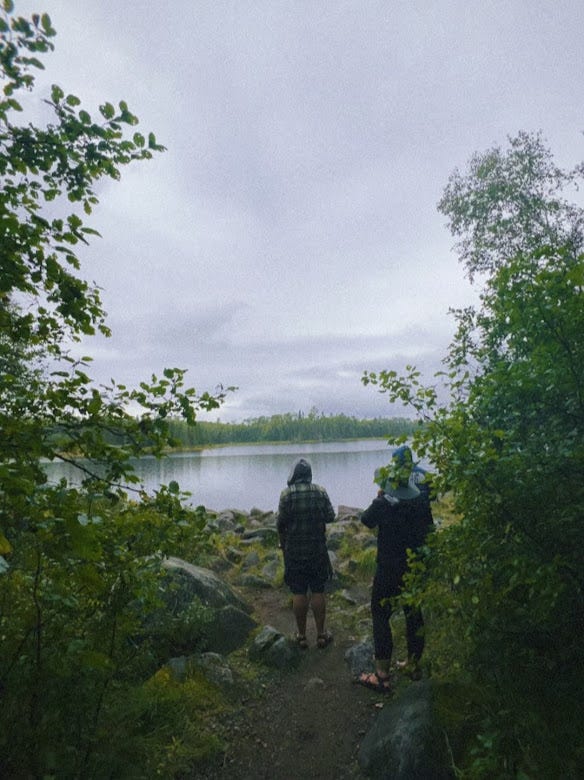
Photo of Melissa Rach and friends in the BWCAW, picturing a world without humans.

The most time-consuming part is getting there.

We traveled 2.5 hours north of the Twin Cities Metro to Duluth on a Thursday night. I love the full-body buzz that being in Duluth gives me. It reminds me of Seattle, in a way.

As we made our way into the city — Lake Superior and the iconic lift bridge to our right, hills dotted with houses and the Lincoln Tower to our left — I became aware of the brief time we had here. We’d be driving home on Sunday.

We picked a brewery (Ursa Minor) for their fire-lined patio, ordered drinks and ate fire-grilled pizza, then finished off at a cidery (Wild State) before making our way to the hotel for the night.

We woke up early, made a run to Amity Coffee, and headed an hour north on Highway 61 to Tofte, a small town on the north shore of Lake Superior. We turned left down a dusty red dirt road, drove 20 more minutes, and made it to the outfitters.
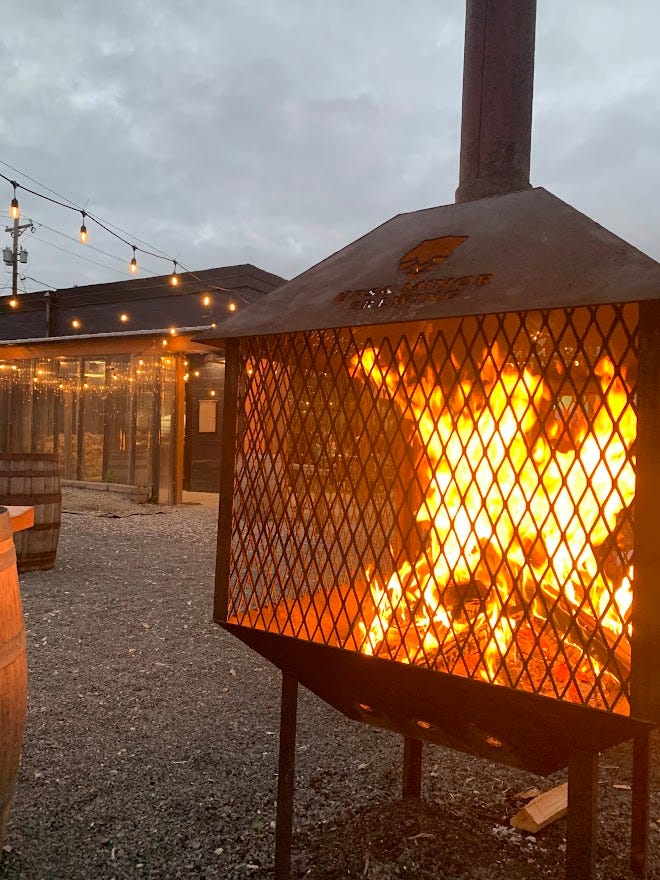
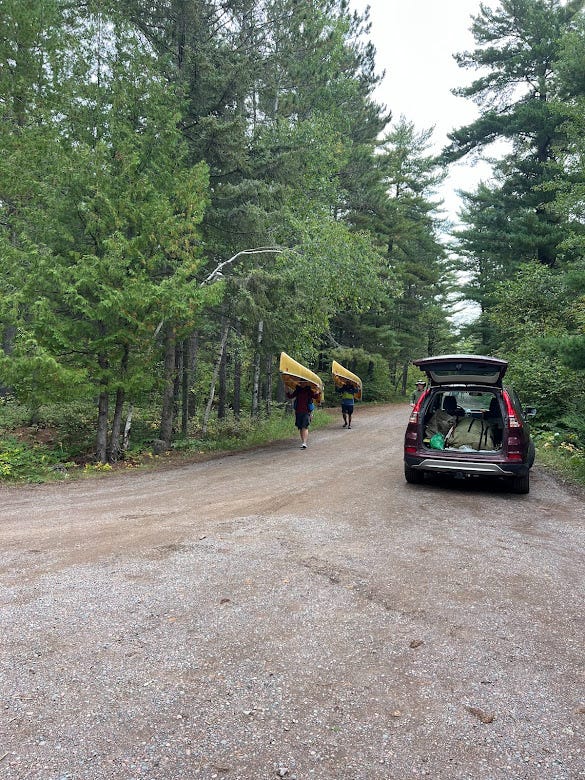
L: Fireplace at Ursa Minor, R: carrying canoes from outfitters to the lake. Photos by Melissa Rach

At Sawbill Outfitters we rented canoes, paddles, and life jackets, watched the mandatory “leave no trace” four-minute video, then loaded our mounds of gear into canoes and were on our way.

It took upwards of an hour to paddle to our campsite. We paddled through Sawbill and Alton lakes with one short portage between the two.

I was thankful my friends knew what they were doing because the campsites are not clearly marked. It was unclear to me which sites were occupied from the viewpoint of our canoe. There are maps to show you the way but I sat back and let my friends tell me what to do.

After waiting over an hour for folks to vacate a campsite, we claimed it and set up camp — hanging hammocks, popping tents, and inflating mattresses and pillows. It was 65 degrees Fahrenheit and somehow the water was near lukewarm— my partner and I put on our bathing suits and swam to a rock to sunbathe.

Swimming, for me, was the best part of BWCAW. The water is clear, the beaches are strewn with agates, and our campsite was located on a rock near a sand beach. There’s no one around — you can make this your shower.
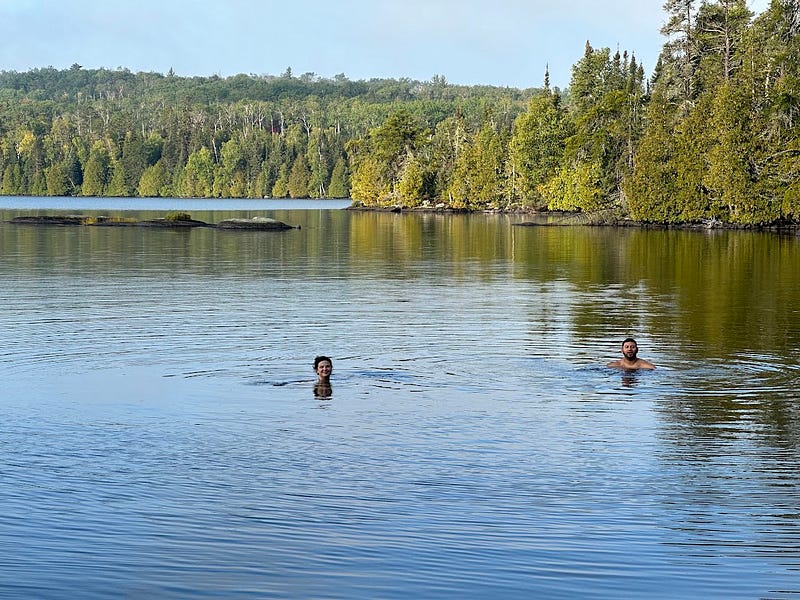
Photo of Melissa Rach

Then — we did whatever we felt like. Read in our hammock, went for walks in the woods, took the canoe for a spin on nearby lakes, fished, played cards, sat by the fire.

Until it rained.

Rain poured steadily the majority of the only full day we were there — which made peeing in the woods, cooking our food over the fire, and chilling in the hammocks impossible.

We were secluded to our tents for a good eight hours. We passed the hours with books, cards, naps, and someone made us Ramen with the Jetboil at one point.

Thank the convenience store gods for the Ramen we snagged on the drive up.
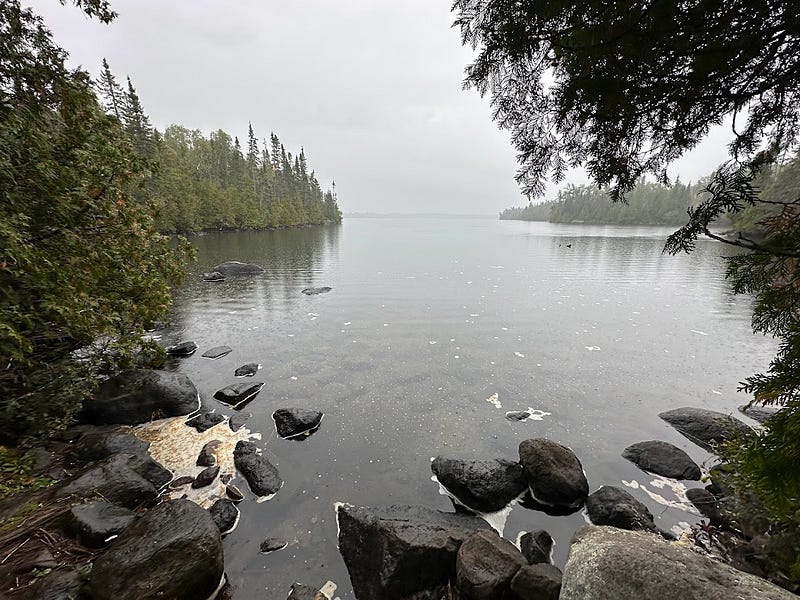
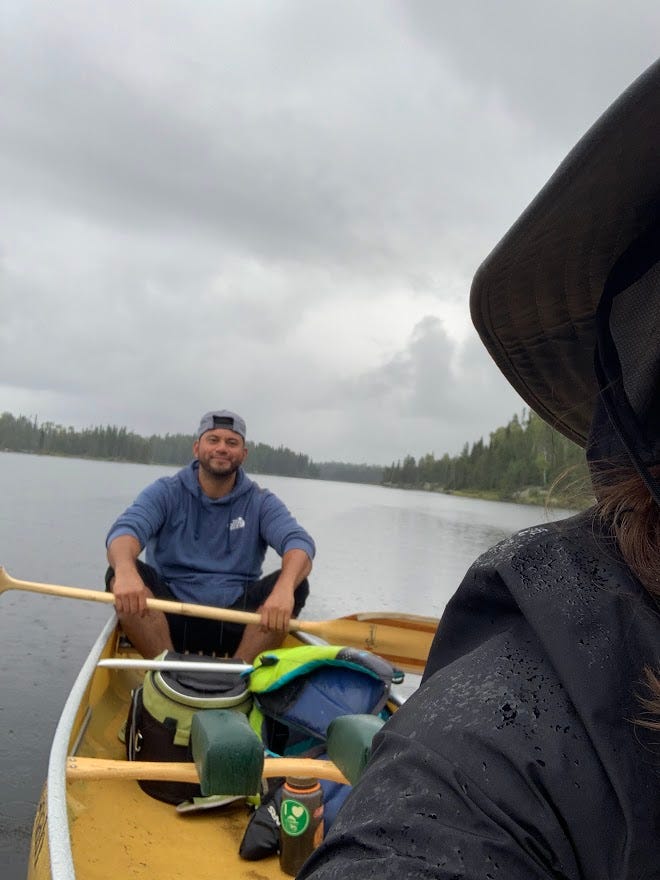
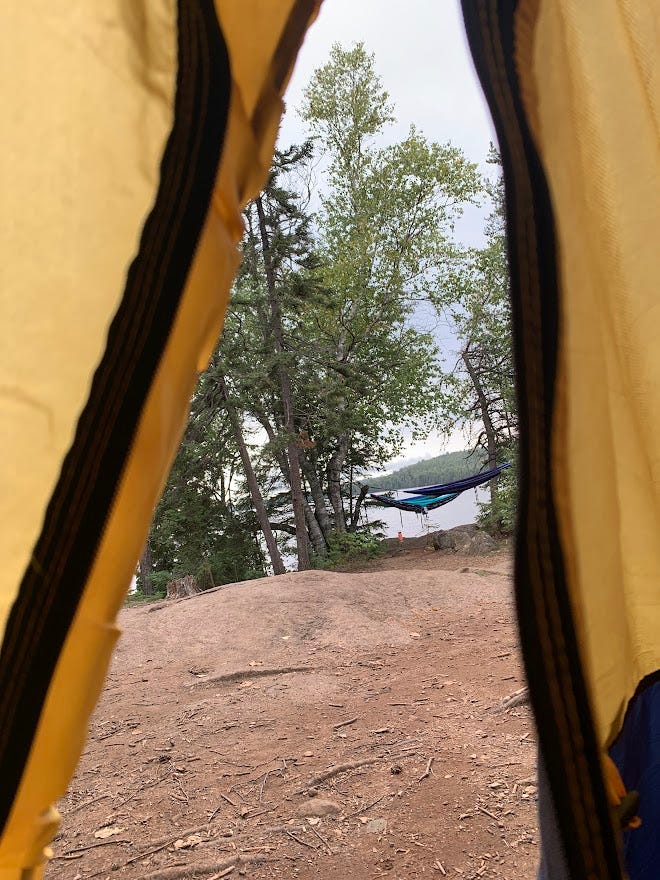
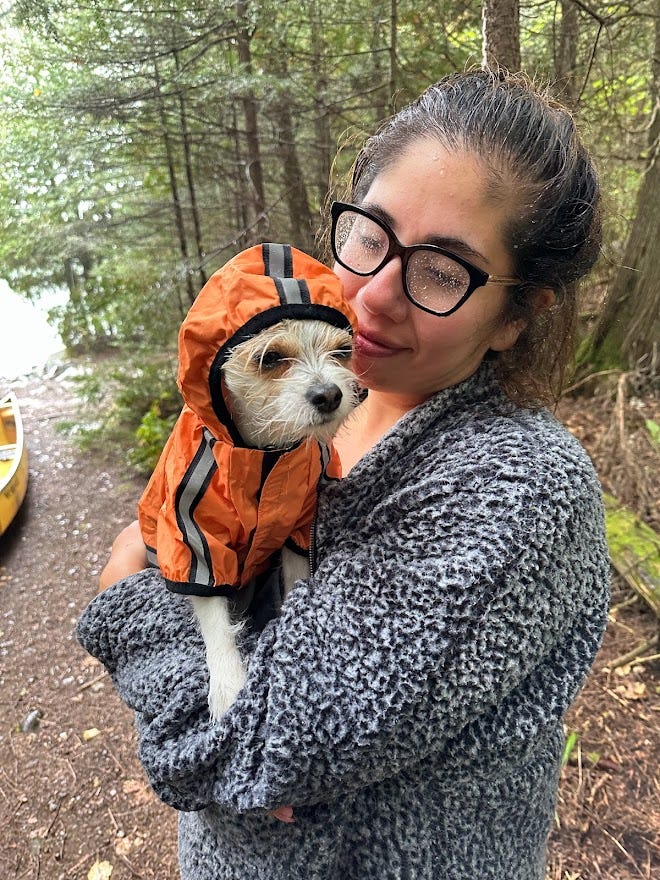
Top Left to Bottom Right: View in the rain, H canoeing, view from the tent, and my friend Evelyn with her dog Harley. Photos property of Melissa Rach

Sitting in a tent during a rainstorm seems like it could be cozy, right? Blankets, stockings and sweats, reading and writing…

Wrong. Every time we left the tent to go to the bathroom we got wet and dirty, we couldn’t warm ourselves by the fire, and everything that needed to be dry was in the tent so we were constantly checking for wetness and moving the items inside the perimeter of the tent. There were random leaks in the roof of our tents too. Oy!

As you may have noticed, I’m not a camper.

I liked sleeping in tents as a kid (I think?) but as an adult, claustrophobia reigns supreme. My sleeping bag and the tent itself, then add a rainstorm, and I am transported to playground plastic tubes and snow tunnels, ever-so-slightly caving in on me.

Finally, God forbid, around 8 p.m., the rain let up and we made a fire. Somehow the wet wood came through for us. The next day we laid out everything to dry, went for a swim, and packed up the gear.

We went in September so there were essentially no bugs or black flies. Our mosquito netting went unused. We lit a fire or used Bill’s Jetboil to cook most of our meals and hung our food in the trees each night. I was thankful to be with people who a) knew the drill and b) initiated all the stuff we needed to do.

I loved my time in BWCAW. Nevertheless, I was ready for home.

My first take on the Boundary Waters is this:

  • You can create your own adventure. Do you want to camp? There are campsites you can reach without portaging. Or you can portage the entire time and set up campsites daily. You can choose not to tent at all, by renting a cabin at the outfitters and using the canoes only for day trips.
  • The lake water is the cleanest water I have witnessed yet.
  • Other than whoever you’re traveling with — you are alone. We heard no one the entire time. I actually had a difficult time sleeping at night in silence (besides the random noises of wind or animal).
  • Go with people who possess proper supplies (or borrow/buy your own). I can’t see myself investing in a Jetboil, inflatable mattress pads and pillows, “bear-proof” bags, and the like — I just don’t camp that often. If I do go again, I’ll invest in a good pack to carry my supplies though.

Don’t get me wrong, I am fascinated with the Boundary Waters and it gave me faith in the power of the wilderness. I’ll go again, I need to put all of this new knowledge to use, aye?

The BWCAW is not for the faint of heart — there’s work involved. Which gives you a sense of accomplishment. We had some adversity, we bonded with our friends, and we distanced ourselves from the ease of our everyday life — if only for a few days.
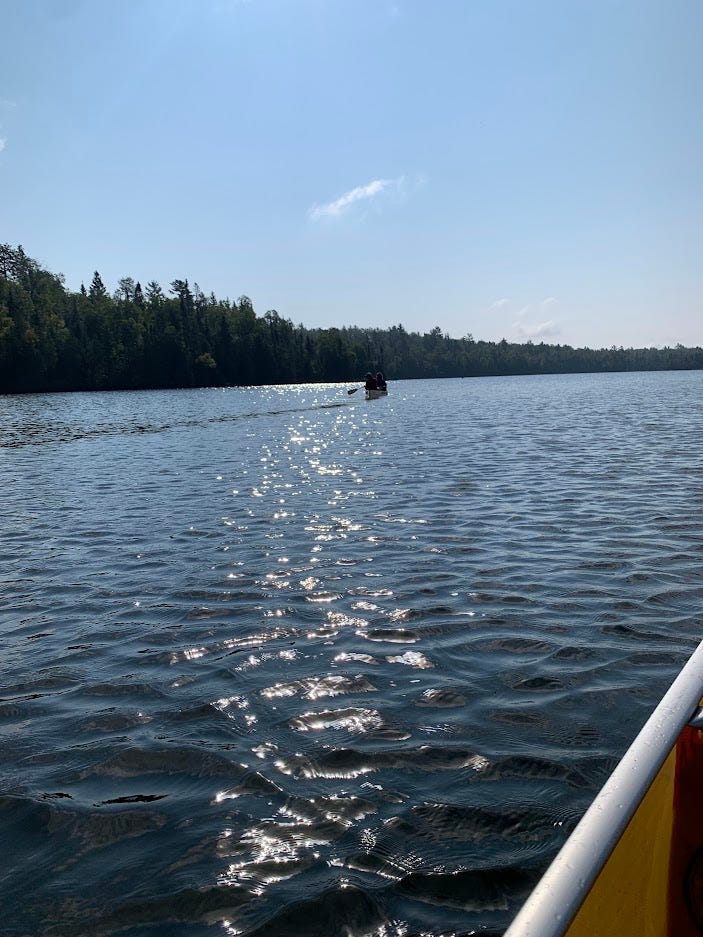
Photo of Melissa Rach
Globetrotter
Boundary Waters
Minnesota
Travel Photography
Wilderness
Recommended from ReadMedium