
Buying Organic Food Doesn’t Have to Cost Your Whole Paycheck
How to save money on organic groceries
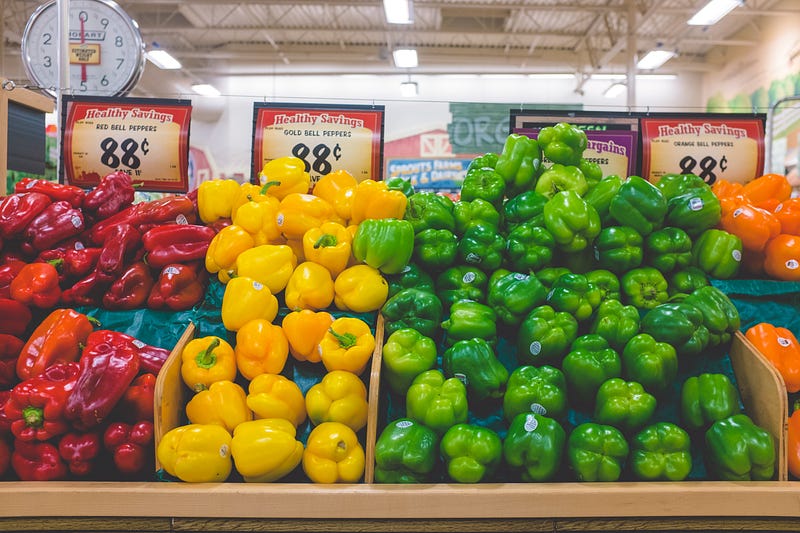
More consumers are buying organic food than ever. The organic grocery market hit $50.1 billion in 2019 according to the Organic Trade Association,
But organic food is still more expensive than conventional food — around 7.5% more according to Nielsen research.
Fortunately, you don’t have to blow your whole paycheck just to eat organic anymore. There are lots of easy ways to save money on organic groceries. Here are my favorites:
Focus on organic foods with the lowest mark-ups
Nielsen found a wide variety in the mark-ups of various organic foods. Organic milk, for example, costs an average of 88% more than regular milk, and organic eggs cost an average of 86% more. Yet organic baby food only costs an average of 3% more.
The reason is likely because the standards and requirements for producing organic milk and eggs are stricter than standards for growing organic vegetables. Other reasons include supply and demand and seasonality.
You can’t do much about supply and demand, but you can choose substitutes for the organic foods with the highest mark-ups. For example, organic soy milk and organic almond milk have lower mark-ups than organic cow’s milk.
If no substitutions will do, buy these foods at the places with the lowest mark-ups (more on that in a moment).
You can also choose to shop seasonally. Buying organic strawberries in May is far cheaper than buying them in December. Seasonal Food Guide has a cool search feature that lets you search for which fruits and vegetables are in season when in your state.
Think outside your local supermarket
While grocery chains like Kroger, Harris Teeter and Shop-Rite have a wide variety of organic foods (and are adding more options all the time), they may not offer the cheapest prices.
For better deals, try shopping at Costco. A 2015 analysis by The Seattle Times found that Costco had the largest organic food sales of any retailer, including Whole Foods.
That data is a bit old and other retailers may have caught up, but Costco still offers a large assortment of organic products at bargain prices.
Right behind Costco is Wal-Mart. I never thought I’d be recommending Wal-Mart as a place to buy organic groceries, but the mega-chain has made it a priority to increase its selection of organic food as a way of targeting millennials.
Try Trader Joe’s and its step-sibling, Aldi’s
Trader Joe’s is also a great option. But if you’re a fan of the quirky, natural foods chain, you know that variety isn’t its strong suit. It seems like as soon as I find a Trader Joe’s product I love, the store stops carrying it.
This can be both frustrating and exciting. On the one hand, there’s always something new to discover at Trader Joe’s. On the other hand, it always seems like I have to discover something new in order to replace items the store no longer carries.
Another problem with Trader Joe’s: It isn’t for brand loyalists. The chain saves money by private labeling most of its products. Many of these products are great quality, but you have to be willing to experiment.
Doing so can yield great rewards, though. My family loves the Trader Joe’s cauliflower gnocchi (can’t find anything like it anywhere), and the organic and grass-fed cheeses are top-quality and much less expensive than similar cheeses at Safeway.
I tend to think of Trader Joe’s as a specialty add-on store. I don’t shop there more than once a month, because I can’t get everything on my list there. But it’s a worthwhile visit for occasional shopping and great deals on organic foods.
Another great option: Aldi. The German supermarket chain is sort of a step-sibling to Trader Joe’s. It isn’t owned by the same parent company (it’s a long story involving brothers who split the business to go their separate ways). But the stores tend to operate in a similar fashion.
Like Trader Joe’s, Aldi has a limited selection of mostly private label products and offers a no-frills shopping experience. And like Trader Joe’s, Aldi has a large selection of organic groceries. And when I did a recent comparison shop of a basket of groceries, Aldi was the winner, offering the lowest prices.
Go generic
Aldi and Trader Joe’s aren’t the only ones in the private label organic grocery game. Just about every major supermarket chain has a line of generic organic foods. Safeway has O Organics. Harris Teeter has Harris Teeter Organics. Stop & Shop has Nature’s Promise, and Albertson’s has Wild Harvest.
Be careful, though. Not all generic store brands are organic.
For example, Whole Foods has a 365 Everyday Value store brand that includes both organic and conventional food. The same is true of Costco’s Kirkland brand and Target’s Simply Balanced generic brand. Be sure to look for the word “organic” in the label to make sure you’re getting the real deal.
Take advantage of store card and credit card cash-back programs
If you know you can pay off your credit card balance every month, consider using a cash back credit card like the Citi Double Cash card to pay for your groceries. This card offers 2% cash back on all purchases — not just supermarkets — and has no annual fee.
If you shop at Costco frequently, the Costco Anywhere Visa card might make sense. It offers 2% cash back on Costco purchases as well as 4% cash back on gas and 3% cash back on restaurants, all with no annual fee.
And the Amazon Prime Rewards Visa card offers an even more generous deal: 5% cash back at Whole Foods and Amazon if you’re a Prime member.
If you don’t feel comfortable paying for your groceries with a credit card, sign up for Target’s RedCard. This discount card comes in two flavors: credit or debit card, with no annual fee. You get a 5% discount on all Target purchases, including organic groceries, and free shipping on most purchases on Target.com.
Use Basket to comparison shop
I want to be the kind of person who uses coupons and shops sales, but that takes time, and it never seems worth it.
Still, I know there are savings to be had. There’s a big variation in organic grocery prices, including generics and produce. I just couldn’t figure out a way to take advantage of it — until now. Basket is an app that lets you put together a basket of groceries and select local stores for comparison shopping.
It’s a bit time-consuming to set up, and you have to make substitutions, as one store may have a brand that another store doesn’t carry. But if you take the time to do it, it’s worth it.
Like this story and want more? Sign up for my newsletter now!
You may also be interested in: