avatarCate Vegas

Free AI web copilot to create summaries, insights and extended knowledge, download it at here

2524

Abstract

d it hurts you when you perceive you’re getting a good deal when in fact you’ll have three shirts taking up space that will barely be worn. <b>You’ve just bought something you don’t need.</b> You may have even struggled to find a print you liked enough for the free shirt; but hey, it’s free, right?</p><h2 id="45a2">Needs can be met in many ways</h2><p id="204d">If you read <a href="https://bit.ly/2WK9K4V">Lessons from a Beauty Audit</a> or watched <a href="https://bit.ly/2Kdxh8C">My Favorite SoCon Things</a> on my YouTube channel, you’re familiar with my own struggles with having too much <i>stuff</i>. A lot of it was my being convinced that I needed something when really I didn’t. Let’s look at some examples.</p><p id="105e">In the food scenario, hunger can be satisfied in an infinite number of ways. A $3 grocery store salad kit will satisfy your hunger just as well as a Michelin Star restaurant meal will. However, it can be argued that many more needs are met by dining at a Michelin Star restaurant and the enjoyment of the experience will be infinitely greater.</p><figure id="ab7e"><img src="https://cdn-images-1.readmedium.com/v2/resize:fit:800/1*NYoLC6insoL1hhuKMYlLMg.jpeg"><figcaption>Fancy meals do meet needs/ Photo by <a href="https://unsplash.com/@jaywennington?utm_source=unsplash&amp;utm_medium=referral&amp;utm_content=creditCopyText">Jay Wennington</a> on <a href="https://unsplash.com/s/photos/fancy-restaurant?utm_source=unsplash&amp;utm_medium=referral&amp;utm_content=creditCopyText">Unsplash</a></figcaption></figure><p id="31ec">Most people don’t have time to go Michelin every day nor could they afford to so, and thus a salad does the trick. Either way, price doesn’t factor into whether the basic hunger need is met and the extra money affords many other needs to be met; salad or souffle, you’re buying something you <i>do </i>need.</p><h2 id="aa2b">Determining whether you need to buy it</h2><p id="abd1">With regards to your hunger, consider this: <b>What if you ate a sandwich in the car on the way to the Michelin restaurant?</b> In that case, you no longer need to go to the restaurant, because the need is met and your enjoyment of the evening will be rapidly diminished. In economics, they call this <i>marginal value</i>, and in this instance, it will be close to zero when you get to your expensive meal if you’re no longer hungry. The restaurant experience is no longer something you need.</p><p id="f373">With our shirt example, it’s the same idea. The shirt you need give

Options

s you tremendous value because you want to look nice for my date and make a good impression, and of course, be allowed into the venue. <b>By the tenets of socially conscious consumption, the first shirt is the only one you need, </b>and therefore the only one you should buy. Although you maybe liked the second shirt, you didn’t need it, and the marginal value of it is outweighed by the cost. <i>In economics terms, it’s a waste</i>. The third shirt you didn’t particularly like, want, or need, but it was free. However, it takes up space, it won’t be worn, and purchasing it actually took away from someone else for whom it would have met a need.</p><figure id="bff9"><img src="https://cdn-images-1.readmedium.com/v2/resize:fit:800/1*9u22AFBC58P-YMYiNF7fxQ.jpeg"><figcaption>Getting the most from a date night shirt purchase/ Photo by <a href="https://unsplash.com/@seteales?utm_source=unsplash&amp;utm_medium=referral&amp;utm_content=creditCopyText">Allef Vinicius</a> on <a href="https://unsplash.com/s/photos/man-on-a-date?utm_source=unsplash&amp;utm_medium=referral&amp;utm_content=creditCopyText">Unsplash</a></figcaption></figure><h2 id="6d05">How is this socially conscious?</h2><p id="0a3c">Buying things you don’t need consumes resources unnecessarily. Being socially conscious isn’t just about recycling, it’s about becoming more aware of the social impact you make with each purchase.</p><p id="5f28">Think about resources that were consumed to create the product and time it took to make, transport, and sell it to you. This time is wasted if you don’t need, use, and/ or enjoy the purchase. <b>By purchasing only what you need, you are actually honoring the environment, the workers, and yourself.</b></p><h2 id="b656">So what’s the bottom line on buying what you need?</h2><blockquote id="397a"><p>Buy enough to meet your needs, and no more.</p></blockquote><p id="d3c0">Buy one fancy date shirt, one pair of running shoes, one tube of mascara, etc. <b>Use what you buy.</b> Consider even small purchases beforehand so you can get what you really want, that way you minimize the chance of not actually liking your purchase. And try to avoid the Impulse Buy — no matter how nice the Instagram ads are for it.</p><p id="f468">You’ll start to find when you are mindful of your purchases, you get more enjoyment and fulfillment from each one. You’ll find your home and life are less congested with ‘stuff’ that consumes your attention. And you’ll be able to focus on actually being happier.</p></article></body>

Buy Less Stuff: One of the 3 Tenets of Socially Conscious Shopping

In The Socially Conscious Triad, I outlined the three ways to be more socially conscious when making consumer decisions. This article expands upon Decision #1: Shop Socially Conscious. Just how do you shop socially consciously?

  • Buy less stuff
  • Buy with your values
  • Complete the cycle

Buy Less Stuff by Buying Only What You Need

This doesn’t necessarily mean that you should only be buying what is essential for survival. What it does mean is, buy only what you need.
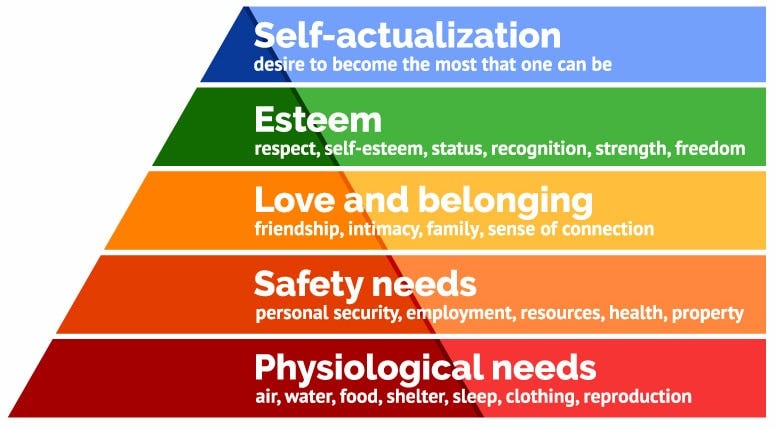
Maslow’s Hierarchy of Needs/ Photo via yolanda squatpump on Flickr

A need can be anywhere in Maslow’s Hierarchy of Needs, in fact. Running shoes, meditation cushions, and yoga mats aren’t Basic needs or essential for survival — they’re Psychological needs. They help you challenge your potential, de-stress, and stay healthy. Musical instruments, paints, gardens, or even makeup are all relaxing forms of artistic expression at the Self-Fulfillment level.

So where do you buy less if anything can meet a need?

We actually tend to buy a lot of ‘stuff’ we don’t need. Think first in terms of food: You need food, but if you buy too much it will rot in your refrigerator or if you eat the extra, your body will waste the extra energy.

Now consider this scenario: You’re at a boutique to buy a shirt for a date. The salesperson mentions a promotion that if you buy two shirts, you get a third shirt free! You only need the one shirt, and you won’t wear it often, but receiving the third shirt free is enticing, especially when there’s another print you like.

That kind of marketing is all too common: The upsell. And it hurts you when you perceive you’re getting a good deal when in fact you’ll have three shirts taking up space that will barely be worn. You’ve just bought something you don’t need. You may have even struggled to find a print you liked enough for the free shirt; but hey, it’s free, right?

Needs can be met in many ways

If you read Lessons from a Beauty Audit or watched My Favorite SoCon Things on my YouTube channel, you’re familiar with my own struggles with having too much stuff. A lot of it was my being convinced that I needed something when really I didn’t. Let’s look at some examples.

In the food scenario, hunger can be satisfied in an infinite number of ways. A $3 grocery store salad kit will satisfy your hunger just as well as a Michelin Star restaurant meal will. However, it can be argued that many more needs are met by dining at a Michelin Star restaurant and the enjoyment of the experience will be infinitely greater.

Fancy meals do meet needs/ Photo by Jay Wennington on Unsplash

Most people don’t have time to go Michelin every day nor could they afford to so, and thus a salad does the trick. Either way, price doesn’t factor into whether the basic hunger need is met and the extra money affords many other needs to be met; salad or souffle, you’re buying something you do need.

Determining whether you need to buy it

With regards to your hunger, consider this: What if you ate a sandwich in the car on the way to the Michelin restaurant? In that case, you no longer need to go to the restaurant, because the need is met and your enjoyment of the evening will be rapidly diminished. In economics, they call this marginal value, and in this instance, it will be close to zero when you get to your expensive meal if you’re no longer hungry. The restaurant experience is no longer something you need.

With our shirt example, it’s the same idea. The shirt you need gives you tremendous value because you want to look nice for my date and make a good impression, and of course, be allowed into the venue. By the tenets of socially conscious consumption, the first shirt is the only one you need, and therefore the only one you should buy. Although you maybe liked the second shirt, you didn’t need it, and the marginal value of it is outweighed by the cost. In economics terms, it’s a waste. The third shirt you didn’t particularly like, want, or need, but it was free. However, it takes up space, it won’t be worn, and purchasing it actually took away from someone else for whom it would have met a need.

Getting the most from a date night shirt purchase/ Photo by Allef Vinicius on Unsplash

How is this socially conscious?

Buying things you don’t need consumes resources unnecessarily. Being socially conscious isn’t just about recycling, it’s about becoming more aware of the social impact you make with each purchase.

Think about resources that were consumed to create the product and time it took to make, transport, and sell it to you. This time is wasted if you don’t need, use, and/ or enjoy the purchase. By purchasing only what you need, you are actually honoring the environment, the workers, and yourself.

So what’s the bottom line on buying what you need?

Buy enough to meet your needs, and no more.

Buy one fancy date shirt, one pair of running shoes, one tube of mascara, etc. Use what you buy. Consider even small purchases beforehand so you can get what you really want, that way you minimize the chance of not actually liking your purchase. And try to avoid the Impulse Buy — no matter how nice the Instagram ads are for it.

You’ll start to find when you are mindful of your purchases, you get more enjoyment and fulfillment from each one. You’ll find your home and life are less congested with ‘stuff’ that consumes your attention. And you’ll be able to focus on actually being happier.

Socially Conscious
Socially Responsible
Minimalism
Minimalist
Maslow
Recommended from ReadMedium