avatarWilhelm Schultz

Free AI web copilot to create summaries, insights and extended knowledge, download it at here

4481

Abstract

actually taught in school textbooks and diagrams such as the one below are abundant on any image search, which clearly gives the impression the electron is spinning.</p><figure id="fb87"><img src="https://cdn-images-1.readmedium.com/v2/resize:fit:800/0*VFfYWNXMKa2vDOW8"><figcaption>Source: <a href="https://chem.libretexts.org/Bookshelves/General_Chemistry/Map%3A_General_Chemistry_(Petrucci_et_al.)/08%3A_Electrons_in_Atoms/8.09%3A_Electron_Spin%3A_A_Fourth_Quantum_Number">https://chem.libretexts.org/Bookshelves/General_Chemistry/Map%3A_General_Chemistry_(Petrucci_et_al.)/08%3A_Electrons_in_Atoms/8.09%3A_Electron_Spin%3A_A_Fourth_Quantum_Number</a></figcaption></figure><p id="fe55">Now, I knew that the electron was not spinning. This is because, given its size, if it were to be rotating to produce the amount of angular momentum it has, it would have to move one million times faster than the speed of light. However, my misunderstanding of spin was that the electron spin created the magnetic field and I completely ignored angular momentum (I omitted this because there is no physical rotation).</p><p id="81a4">Essentially, electrons are not the same as bar magnets, which was the assumption I had made.</p><p id="3b4c">So how did the Stern-Gerlach experiment resolve my folly? Well, lets see what happens if we were to pass bar magnets through the apparatus and then compare this to what happens when electrons are used instead.</p><p id="b7b6">When the bar magnet enters the field it could be in one of three orientations; south pole pointing up, north pole pointing up or at an angle.</p><figure id="8aa3"><img src="https://cdn-images-1.readmedium.com/v2/resize:fit:800/1*Oc8ooLs6eICxz6IIhFDLWg.png"><figcaption></figcaption></figure><p id="bfed">What would happen in each case?</p><ol><li>The bar magnet is pushed downwards by the stronger field of the south pole.</li><li>The magnet moves upwards as the north pole of the bar magnet is attracted to the stronger south pole.</li><li>The bar magnet twists to align the north pole with the stronger south pole.</li></ol><p id="5fe1">As a consequence, once emerged from the magnets, we would see a distribution of positions recorded by the detector. The first two orientations would hit the top and bottom of the detector while the magnets that twist would fill the space in between, determined by how fast they travel through the apparatus and how much twisting occurs.</p><p id="03ad"><b>This does not happen for particles with spin! </b>And this was the remarkable result of the Stern-Gerlach experiment. When electrons pass through the apparatus they emerge either at the top or bottom of the detector. There is no distribution of positions. The question now is why does this happen?</p><h1 id="a6f3">Larmor Precession!</h1><p id="4f33">Surprisingly, although spin is a quantum property, Larmor precession is described by classical mechanics and this is the key to the Stern-Gerlach experiment. When electrons enter the magnetic field they have intrinsic angular momentum. A vector pointing up or down depending on the direction of their “spin”.</p><p id="f4a0" type="7">The magnetic field wants to twist the electron, just like it twisted the bar magnet, to align the electron’s magnetic field with its own. However, the electron does not rotate, but instead precesses.</p><figure id="d77c"><img src="https://cdn-images-1.readmedium.com/v2/resize:fit:800/1*p-sAnhMUfxqyTj0y5YimXw.png"><figcaption>In both cases the magnetic field wants to twist the electron and bar magnet to align their magnetic fields. The electron will resist this rotation and precess as a consequence of its intrinsic angular momentum.</figcaption></figure><p id="9538">To understand what this means we need to introduce torque. Torque is a vector quantity so it has a direction as well as magnitude and is the result of a force that causes rotation. It is defined for a point particle as the cross product of the distance vector and the force.</p><p id="ee40"><b>In the example below, the force wants to rotate the particle anticlockwise. The torque generated is directed out of the page towards us, at right angles to both r and F.</b></p><figure id="a15a"><img src="https://cdn-images-1.readmedium.com/v2/resize:fit:800/1*MVlABOFkhN2kV9JGFqn1yg.png"><figcaption>Torque is the cross product of the radius from the axis of rotation and the force applied. In this example, torque is directed out of the page at right angles to both F and r.<

Options

/figcaption></figure><p id="9328">When a force causes an object to rotate a torque is produced. This is where the intrinsic angular momentum of the electron comes into play. Torque changes the direction of angular momentum according to the formula below:</p><figure id="6e81"><img src="https://cdn-images-1.readmedium.com/v2/resize:fit:800/1*BGObicPvGg9DNnVtIQ7nTA.png"><figcaption>The new value of angular momentum is equal to the old value plus torque multiplied by time.</figcaption></figure><p id="0450" type="7">So, although the field wants to twist the electron, the torque produced changes the angular momentum such that it will describe a circle. This is called precession. A classic example of precession is displayed by a gyroscope.</p><figure id="ddad"><img src="https://cdn-images-1.readmedium.com/v2/resize:fit:800/1*VC8tUWq6Pl3YcvMbciK7fw.png"><figcaption></figcaption></figure><p id="6021">In the image above, the force wants to rotate the particle with angular momentum, L, clockwise. <b>However, as the torque produced is directed into the page, it moves the angular momentum vector such that it describes a circular path, rather than rotating in the direction of the force. </b>It is difficult to display in two dimensions but when tracing out the circular path the arrow head of the angular momentum will always be pointing downwards.</p><figure id="da9e"><img src="https://cdn-images-1.readmedium.com/v2/resize:fit:800/1*tmaF9AbhkHjfKBmkyHbgHQ.png"><figcaption></figcaption></figure><p id="e6a8">The intrinsic angular momentum of the electron traces out a circular path caused by the torque produced by the magnetic force trying to rotate the electron. This is Larmor precession. At each instant, the change in angular momentum changes the direction of the torque which in turn changes the direction of the angular momentum.</p><p id="3699">Although difficult to depict in static two dimensional images, this was the breakthrough moment for me. Yes, electrons have a similar magnetic field to that of a bar magnet but the fundamental difference between the two is that electrons possess an intrinsic angular momentum. They are not physically spinning but we know they have something analogous to angular momentum because the Stern-Gerlach apparatus causes them to precess.</p><p id="9851">Bar magnets would pass through the magnetic field and produce a distribution of positions at the detector. Electrons on the other hand cannot rotate and create the same distribution because they precess. They are either oriented with angular momentum pointing up or down; hence the term “spin up” and “spin down”. The angular momentum vector cannot change orientation from pointing up or down. The torque causes the angular momentum vector to trace out a circle while remaining pointing either up or down.</p><p id="aa82">This was a real revelation for me and I began to feel as though, to some extent, I understood quantum spin. Of course, the fine detail and intricacies of the Stern-Gerlach experiment have been somewhat ignored. For example, silver atoms were used, not electrons. However, what has been discussed captures the essence of the experiment.</p><p id="360d">The fundamental step to understanding spin is to comprehend how torque causes a particle with angular momentum to precess. Without an intrinsic angular momentum, the electrons passing through the Stern-Gerlach set up would produce a distribution of positions at the detector, not discrete points of accumulation.</p><p id="f049">In summary, quantum spin is an intrinsic angular momentum. It is a property particles possess because they are that particle. This angular momentum would be produced if a particle were to physically spin but the measured values are simply too high. The necessary speed of rotation would be faster than light.This is why spin is an <i>intrinsic</i> angular momentum. The particles are not spinning but posses an angular momentum as though they were. We know that intrinsic angular momentum exists because applying a torque to particles that have spin causes them to precess rather than rotate. the brilliance of the Stern-Gerlach experiment was to induce this effect.</p><p id="8ba7">Spin is a wonderful feature of the quantum world and it is hoped the discussion above provides some help in grappling with the concept. What is so exciting is that even weirder concepts exist in quantum mechanics. The next instalment hopes to explore retrocausality!</p></article></body>

But What Is Quantum Spin?

Understanding quantum spin is difficult, not least because the name implies a particle is spinning when it is not! It has taken me years to get a grasp of what spin actually is and the breakthrough happened once I finally understood the Stern-Gerlach experiment. I hope that in this article I can take you on a condensed version of the journey I took to understand spin.

Firstly, an alternative name for spin is intrinsic angular momentum. Once you understand it, this definition is perfect. It is as though a light has been switched on and suddenly spin makes sense. However, reaching that conclusion will take some time. Your perseverance will be worth it!

Dissecting this alternative definition, let us first consider what is meant by “intrinsic”. This is a brilliant term in physics. An intrinsic property is simply a property a particle possesses by just being that particle. For example, mass and charge are examples of intrinsic properties. An electron has a negative charge because it is an electron, a proton has a positive charge because it is a proton (technically, a proton has a positive charge because the composition of quarks is positive, but the same principle applies to those quarks. They have charge because of what they are). We don’t actually know what charge is but through observation we have been able to build models that describe the behaviour of charge and how it can be manipulated.

In contrast to intrinsic properties, particles also exhibit extrinsic properties, such as position and momentum. These properties are defined by what a particle is doing and where it is.

Spin is an intrinsic property. Particles have spin simply because they are a particular particle. The amount of spin a particle has depends on the particle itself. Electrons, for example, are spin 1/2 particles.

Now lets turn our attention to the second part of the alternative definition, angular momentum. Angular momentum is a vector quantity (meaning it has a direction as well as magnitude) and is a measure of the rotational momentum of a body.
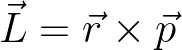
Angular momentum, L, for a point particle, is the cross product of the distance, r, from the axis of rotation and linear momentum, p.

The fact that angular momentum has a direction is crucial to understanding spin. Angular momentum always points in a direction perpendicular to the plane of rotation.
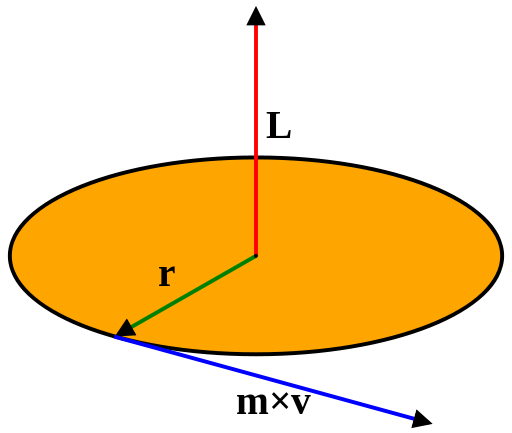
Source: https://www.askiitians.com/revision-notes/physics/circular-and-rotational-motion/

As can be seen above, angular momentum is directed upwards and the particle is rotating anticlockwise. If the direction of rotation were to be reversed, angular momentum would be directed downwards.

Now that we have discussed the meaning of the terms intrinsic and angular momentum individually, lets combine the two:

Spin is a property such that a particle possesses angular momentum without rotating!

To understand more deeply what this means, and to see how we know particles have this intrinsic angular momentum, lets explore the Stern-Gerlach experiment.

Stern-Gerlach Experiment

The set up is very simple. Particles are fired through the space between two magnets and the position in which they emerge is recorded on the other side by a detector. The key feature of the apparatus is that the shape of the magnets mean the field of the south pole is stronger than that of the north pole; there is a varying magnetic field.
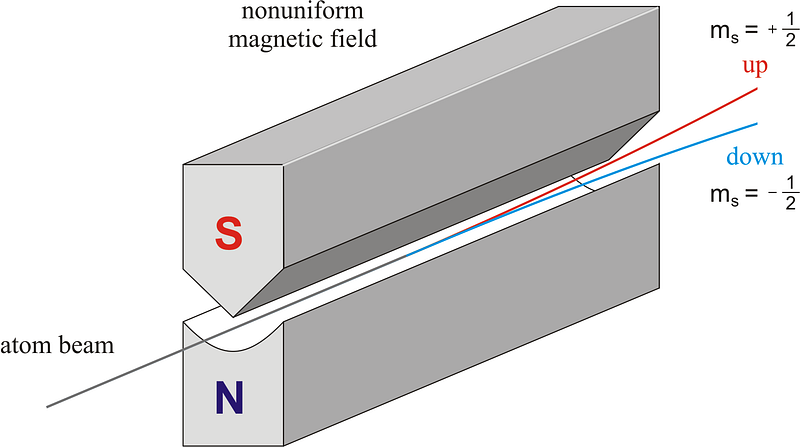
Source: http://plus7.info/stern-gerlach-experiment-55.html

My struggle to understand spin was due to the following misconception: electrons possess a magnetic field similar to a bar magnet because the electron is spinning. This is actually taught in school textbooks and diagrams such as the one below are abundant on any image search, which clearly gives the impression the electron is spinning.
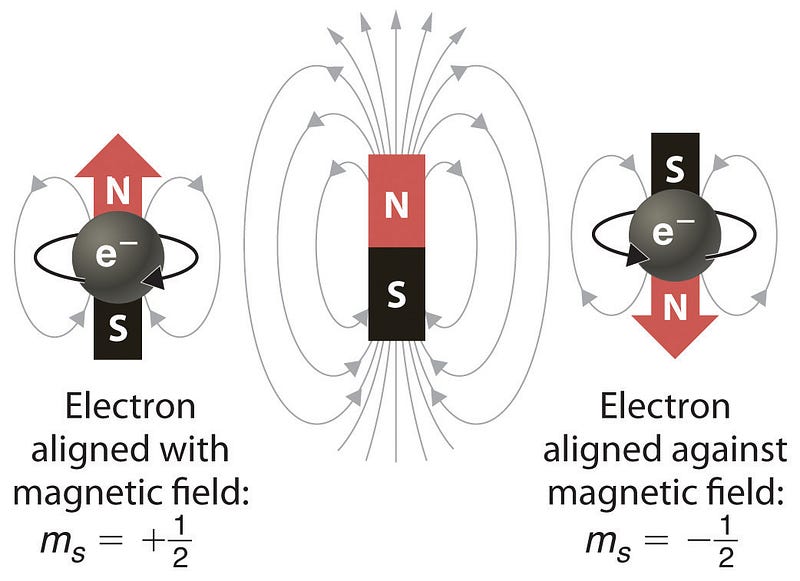
Source: https://chem.libretexts.org/Bookshelves/General_Chemistry/Map%3A_General_Chemistry_(Petrucci_et_al.)/08%3A_Electrons_in_Atoms/8.09%3A_Electron_Spin%3A_A_Fourth_Quantum_Number

Now, I knew that the electron was not spinning. This is because, given its size, if it were to be rotating to produce the amount of angular momentum it has, it would have to move one million times faster than the speed of light. However, my misunderstanding of spin was that the electron spin created the magnetic field and I completely ignored angular momentum (I omitted this because there is no physical rotation).

Essentially, electrons are not the same as bar magnets, which was the assumption I had made.

So how did the Stern-Gerlach experiment resolve my folly? Well, lets see what happens if we were to pass bar magnets through the apparatus and then compare this to what happens when electrons are used instead.

When the bar magnet enters the field it could be in one of three orientations; south pole pointing up, north pole pointing up or at an angle.
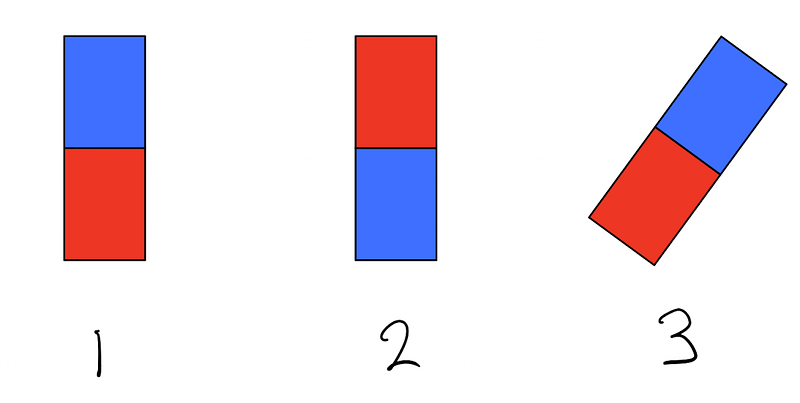
What would happen in each case?

  1. The bar magnet is pushed downwards by the stronger field of the south pole.
  2. The magnet moves upwards as the north pole of the bar magnet is attracted to the stronger south pole.
  3. The bar magnet twists to align the north pole with the stronger south pole.

As a consequence, once emerged from the magnets, we would see a distribution of positions recorded by the detector. The first two orientations would hit the top and bottom of the detector while the magnets that twist would fill the space in between, determined by how fast they travel through the apparatus and how much twisting occurs.

This does not happen for particles with spin! And this was the remarkable result of the Stern-Gerlach experiment. When electrons pass through the apparatus they emerge either at the top or bottom of the detector. There is no distribution of positions. The question now is why does this happen?

Larmor Precession!

Surprisingly, although spin is a quantum property, Larmor precession is described by classical mechanics and this is the key to the Stern-Gerlach experiment. When electrons enter the magnetic field they have intrinsic angular momentum. A vector pointing up or down depending on the direction of their “spin”.

The magnetic field wants to twist the electron, just like it twisted the bar magnet, to align the electron’s magnetic field with its own. However, the electron does not rotate, but instead precesses.
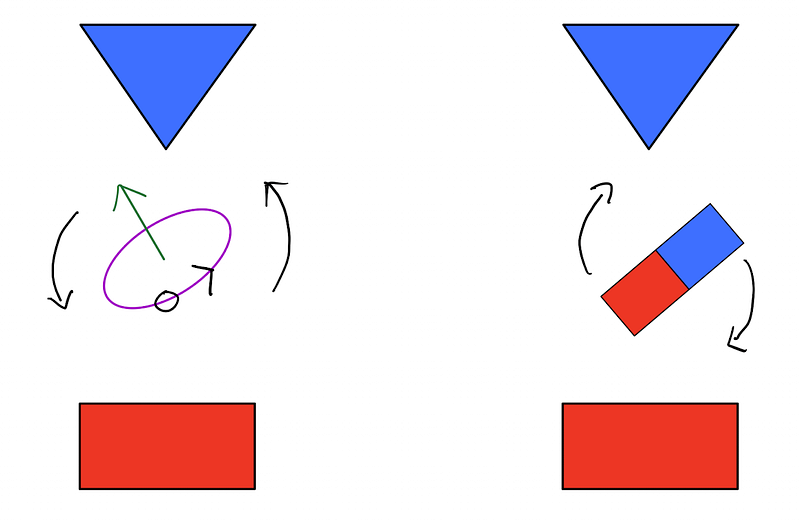
In both cases the magnetic field wants to twist the electron and bar magnet to align their magnetic fields. The electron will resist this rotation and precess as a consequence of its intrinsic angular momentum.

To understand what this means we need to introduce torque. Torque is a vector quantity so it has a direction as well as magnitude and is the result of a force that causes rotation. It is defined for a point particle as the cross product of the distance vector and the force.

In the example below, the force wants to rotate the particle anticlockwise. The torque generated is directed out of the page towards us, at right angles to both r and F.
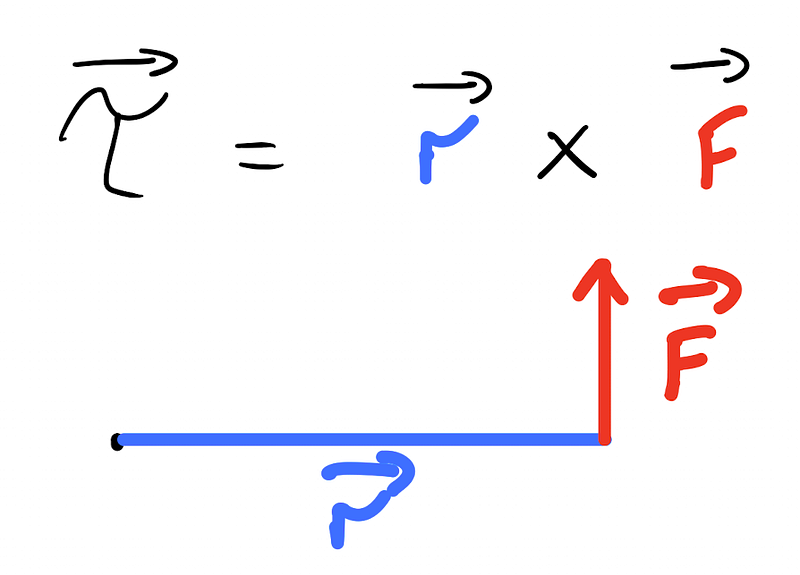
Torque is the cross product of the radius from the axis of rotation and the force applied. In this example, torque is directed out of the page at right angles to both F and r.

When a force causes an object to rotate a torque is produced. This is where the intrinsic angular momentum of the electron comes into play. Torque changes the direction of angular momentum according to the formula below:

The new value of angular momentum is equal to the old value plus torque multiplied by time.

So, although the field wants to twist the electron, the torque produced changes the angular momentum such that it will describe a circle. This is called precession. A classic example of precession is displayed by a gyroscope.
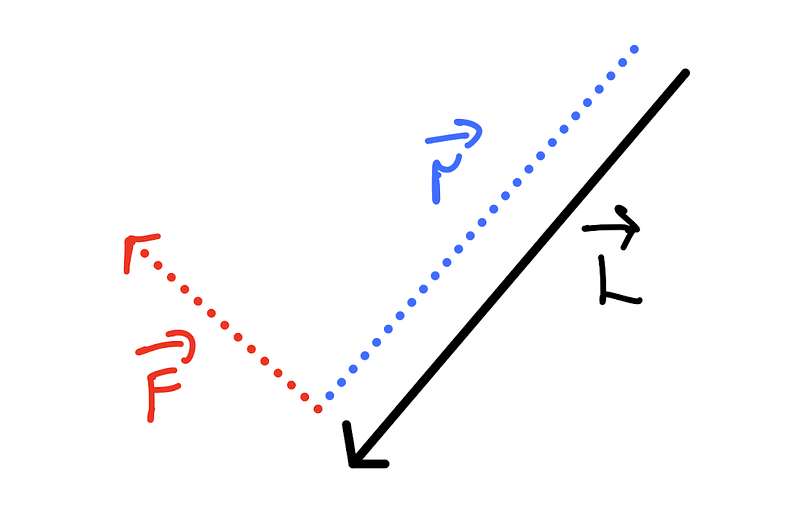
In the image above, the force wants to rotate the particle with angular momentum, L, clockwise. However, as the torque produced is directed into the page, it moves the angular momentum vector such that it describes a circular path, rather than rotating in the direction of the force. It is difficult to display in two dimensions but when tracing out the circular path the arrow head of the angular momentum will always be pointing downwards.
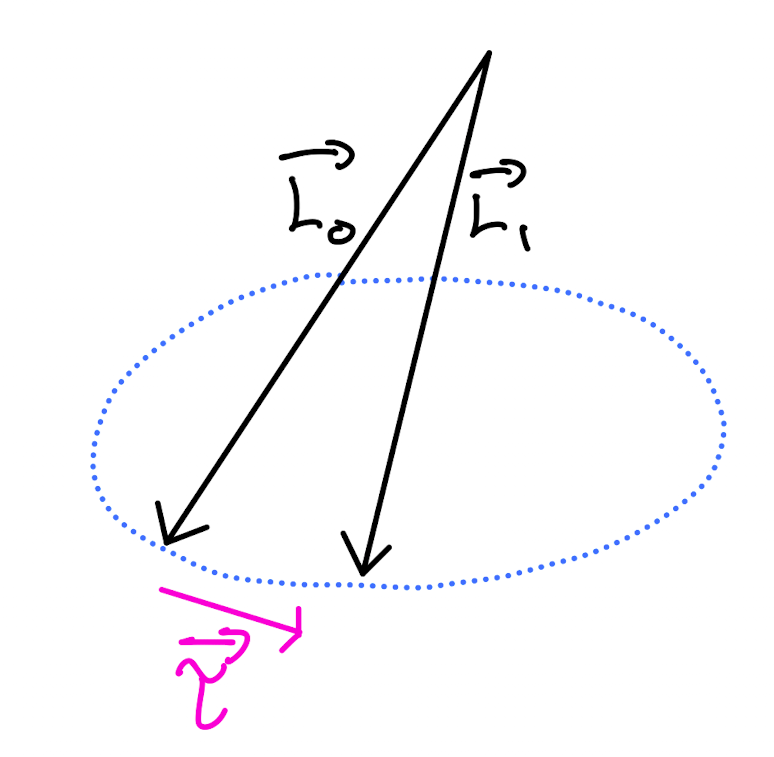
The intrinsic angular momentum of the electron traces out a circular path caused by the torque produced by the magnetic force trying to rotate the electron. This is Larmor precession. At each instant, the change in angular momentum changes the direction of the torque which in turn changes the direction of the angular momentum.

Although difficult to depict in static two dimensional images, this was the breakthrough moment for me. Yes, electrons have a similar magnetic field to that of a bar magnet but the fundamental difference between the two is that electrons possess an intrinsic angular momentum. They are not physically spinning but we know they have something analogous to angular momentum because the Stern-Gerlach apparatus causes them to precess.

Bar magnets would pass through the magnetic field and produce a distribution of positions at the detector. Electrons on the other hand cannot rotate and create the same distribution because they precess. They are either oriented with angular momentum pointing up or down; hence the term “spin up” and “spin down”. The angular momentum vector cannot change orientation from pointing up or down. The torque causes the angular momentum vector to trace out a circle while remaining pointing either up or down.

This was a real revelation for me and I began to feel as though, to some extent, I understood quantum spin. Of course, the fine detail and intricacies of the Stern-Gerlach experiment have been somewhat ignored. For example, silver atoms were used, not electrons. However, what has been discussed captures the essence of the experiment.

The fundamental step to understanding spin is to comprehend how torque causes a particle with angular momentum to precess. Without an intrinsic angular momentum, the electrons passing through the Stern-Gerlach set up would produce a distribution of positions at the detector, not discrete points of accumulation.

In summary, quantum spin is an intrinsic angular momentum. It is a property particles possess because they are that particle. This angular momentum would be produced if a particle were to physically spin but the measured values are simply too high. The necessary speed of rotation would be faster than light.This is why spin is an intrinsic angular momentum. The particles are not spinning but posses an angular momentum as though they were. We know that intrinsic angular momentum exists because applying a torque to particles that have spin causes them to precess rather than rotate. the brilliance of the Stern-Gerlach experiment was to induce this effect.

Spin is a wonderful feature of the quantum world and it is hoped the discussion above provides some help in grappling with the concept. What is so exciting is that even weirder concepts exist in quantum mechanics. The next instalment hopes to explore retrocausality!

Quantum Mechanics
Spin
Angular Momentum
Stern Gerlach Experiment
Recommended from ReadMedium