
Bust Through the Creativity “Wall” by Remixing
How to adopt a DJ-like mindset for continual idea flow

In a rut. Plateaued. Spinning our wheels. Trapped. We all get stuck.
Sometimes it feels like our idea machine seems to have died, while the creatives around us are seemingly having a field day — testing out and succeeding with an endless flow of ideas. It’s that ugly feeling inside of being “washed up” and it’s agonizing.
Steven Pressfield refers to this stuck-ness as The Resistance: the universal force that acts against human creativity. The Resistance gets a firm hold over us, preventing our creative engines from chugging forward, so we sit in despair.
Getting stuck happens to everyone, in every professional field.
Take the endemic of writer’s block — seemingly paralyzed and unable to tap our keyboard, we bang our head on the desk instead. Or the programmer that can’t quite figure out how to make the user interface an intuitive one. We hit a metaphorical yet powerful wall. But is this necessary?

There are ways to blast through our stuck-ness. As Seth Godin says, “No one ever gets talker’s block. No one wakes up in the morning, discovers he has nothing to say and sits quietly, for days or weeks, until the muse hits, until the moment is right, until all the craziness in his life has died down.”
We are each in our own way.
Getting unstuck isn’t difficult…if we have a process.
There Are No New Ideas
“Nothing of me is original. I am the combined effort of everyone I’ve ever known.”
— Chuck Palahniuk
There’s something peculiar about a “new” technology: it looks surprisingly like the last version of an old technology. Take the iPhone.
The iPhone history story we all know centers on Steve Jobs and Apple crafting a revolutionary new device and user experience that changed the world — something brand new. No doubt, the innovations on top of previous smartphones (e.g., LG Prada) were impressive, but those features were incremental. The world changed not through the device that Apple made, but through a combination of factors: the iPhone itself, marketing, Apple’s supporting ecosystem, and user uptake. Apple changed societal demand, thinking, and behaviors for such a device. That is what changed the world.
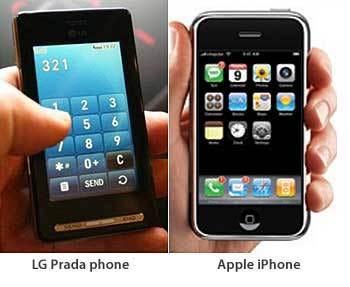
There is no single genius that simply (a) thinks the unthinkable, (b) creates something purely from scratch, and then (c) introduces it to the world. Innovation doesn’t work like that. Steve Jobs built upon similar ideas from LG and Palm, and even Einstein built upon the work of numerous physicists in codifying his theory of special relativity. Almost always, innovation is more nuanced than that — and frankly, unoriginal.
As entrepreneur and investor Naval Ravikant commented in a recent podcast referring to “geniuses” living around Silicon Valley:
“I didn’t see a single genius inventor creating a single thing that suddenly changed the world. I saw, instead, lots of people doing lots of tinkering.”
There are no new ideas.
Innovative ideas all come from somewhere. They might seem original at first, but dig deeper and you’ll find the pieces of any seemingly novel concept all have separate lineages. As Isaac Newton said to fellow scientist Robert Hooke, “If I have seen further, it is by standing on the shoulders of giants.”
But sometimes the giants you seek don’t exist yet. In that case, do this:
- Find a select set of non-supersized humans (ideas)
- Stack them in a unique way
- Climb a tall ladder to the top and plant your flag

Originality in the Remix (Like a DJ)
“It’s not where you take things from — it’s where you take them to.” — Jean-Luc Godard
Clever inventions — whether they be products, services, artworks, or words — come to life through creative synthesis…of existing ideas.
The best DJs do this for a living — remixing different songs to create fresh beats. The process of isolating certain vocals, slowing the tempo, and fusing these “chopped up” tracks in a harmonious way is how a DJ brings about something new and beautiful. It’s old and new.

You can — and must — do the same in your field.
In Steal Like an Artist, author Austin Kleon hits this point hard. He lays out how nothing is original and that we must delve into the works of others to be influenced by them. Only then can we connect the dots to creatively reimagine and remix something that is uniquely ours.
Take Kleon’s pastime of making zines — self-published, non-commercial, small-batch prints that are mash-ups of art, narrative, and emotion. They are super creative and inherently involve splicing together disparate ideas to make a fresh one.
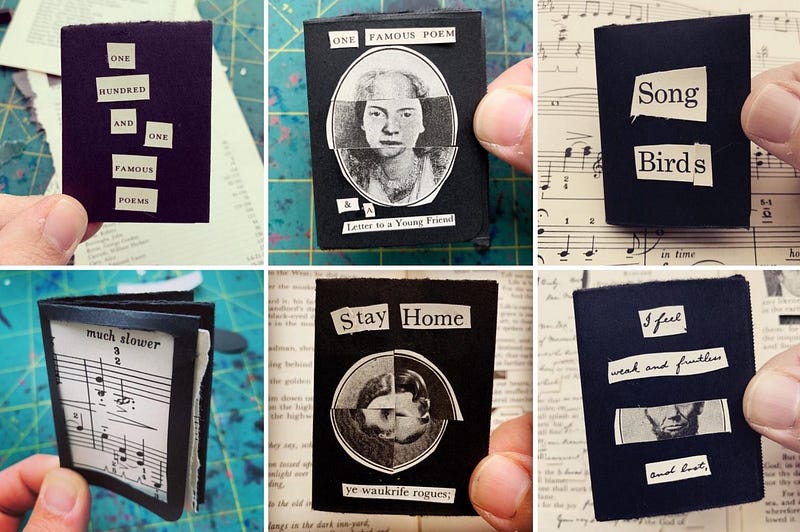
Embodying a DJ’s mindset turns every life encounter into raw material — books, articles, podcasts, TV, family stories, travel, all of it. Here’s how I’ve learned to enjoy the DJ-like remix process:
- Consume a thought-provoking podcast episode or YouTube documentary
- Latch on to a big idea and immediately go for a walk to stew on it
- Toss associated ideas against the big one (hint: build a “second brain” and reference it as an idea library)
- Craft a 3-part narrative in my head to tell it in story form (like I’m talking to a child)
- Document the essence ASAP and schedule a formal “build” session (e.g., write an article, sketch a visual, hash it out over dinner with my wife)
Now, this will get you started, but it’s only through deliberate practice that you get from quantity to quality. There’s no shortcut here. As Godin says about writer’s block: “Just write poorly. Continue to write poorly, in public, until you can write better.”
The remix approach frees you of the pressure to be original all on your own and helps us break free of the dangerous comparison spiral that we’ve all experienced.
No matter what field you’re in — writer, product inventor, artist, etc. — establishing a remixing (DJ) habit will get you out of the cycle of being “stuck” and on a path of constant learning and growth. Let it free you. Go now!
PS — thank you for reading to the end. I’ll now clarify this remix (above) was generously informed by Steven Pressfield, Seth Godin, Naval Ravikant, Matt Ridley, Austin Kleon, Abraham Lincoln, and others that I know are in my head that I can’t recall at the moment. Thank you, all, for helping to create me.
Want to stay in touch? Follow me on matthewdoan.com, Medium, LinkedIn, and Twitter.