
Business Growth in SEA and the potentials of Chatbot
In recent years, the Southeast Asian region is rapidly growing into its social commerce potential. As social adaptiveness growing rapidly and messaging taking lead as the top communication channels between buyers and consumers, it begins to dominate social interactivity. It is obvious that businesses are now turning to this platform to inform, understand and sell their products/services to their customers through extensive use of massaging for both marketing and sales purposes.
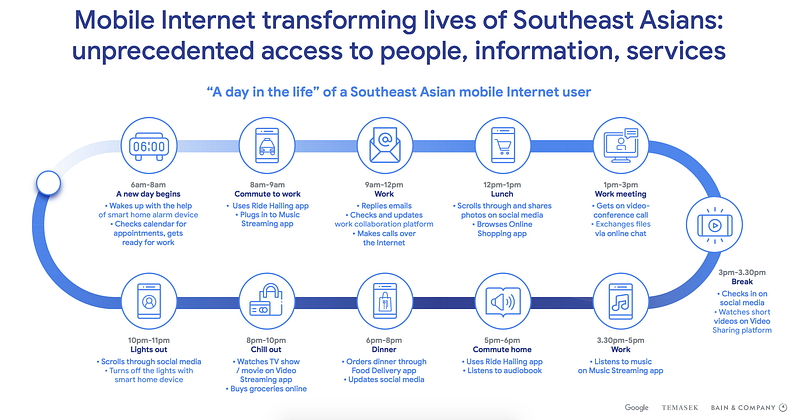
We can now imagine being able to complete our purchase without leaving the messaging app. Businesses are providing their customers with a convenient, time-saving and easy to use service. It’s a win-win for both sellers and buyers. The main reason for use is still being narrowed down to answering customer queries, providing product recommendations, and simplifying online purchases.
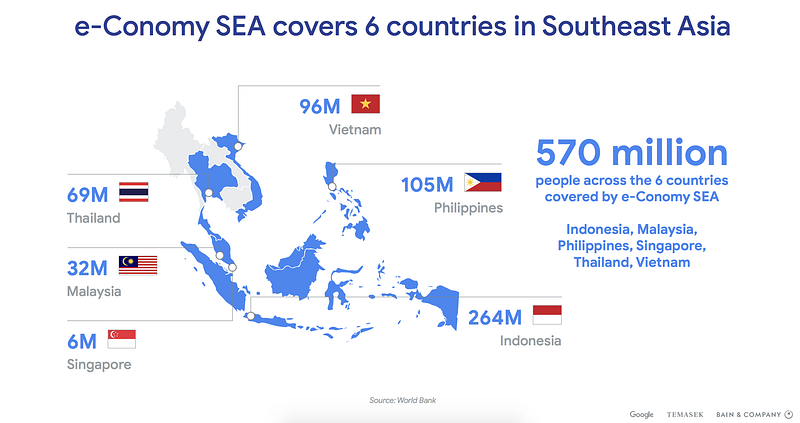
Ever growing internet penetration in SouthEast Asia’s all aspects of human life is a primary factor currently driving business leader towards new innovations and creative use of the internet for the growth of their business and soon the chatbot revolution in Southeast Asia is found itself in a new high with the growing number of people who are increasingly using the internet.
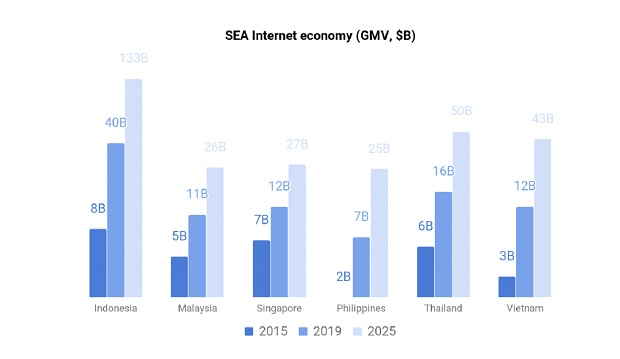
In 2019 Southeast Asia’s internet economy hits $100 billion
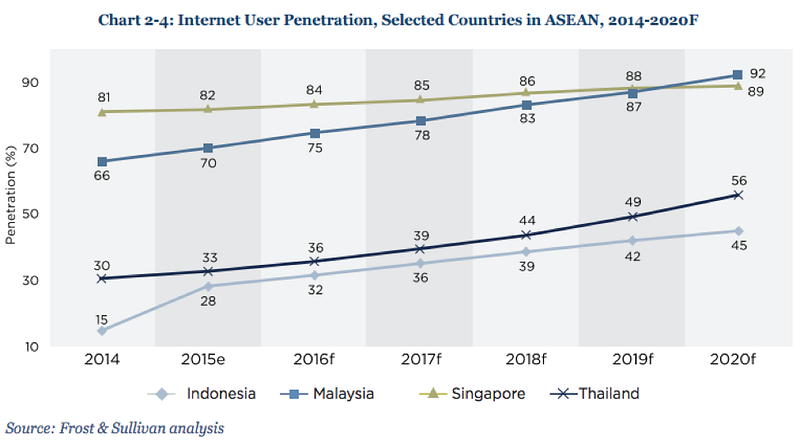
The 199 million Internet users in 2014 have increased to 294 million users by 2017. Out of the 150 million digital consumers who search for products online, two-thirds of them proceed to make purchases there.
By the number we got from the surveys and statistics tells us,
- Smartphone users spend half of their time using just one app, and that’s typically a messaging app.
- 3 out of four smartphone users use at least one messaging app.
- The number of messaging app users is more than the number of social network users.
- Five of the top 10 apps of all time are messaging apps.
With the increasing number of people using messaging services, with roughly a dozen major platforms claiming various geographic and demographic strongholds. Five of the 10 all-time apps are messaging apps, and 75 percent of smartphone users use at least one chat app. Today’s consumers expect to be able to communicate with businesses on their favorite chat platforms, just as they already accustomed to doing with friends and family. They want to do so because it’s easier, less intrusive and quicker than using other communication channels.
One of the top trends observed in 2019 in Southeast Asia was the usage of chatbots into daily tasks for businesses. The goal was to make use of AI to meet the needs when it comes to staff shortage. A chatbot for a marketing team is similar to having a staff member always on duty. Moreover, chatbots are great for funneling sales with the aid of on-brand messaging, no matter the time of day.
ChatBots — what it can do?
Chatbots represent programs designed to engage with received messages automatically. They can be created in such a manner that they offer the same response each time they’re engaged, or they can even provide tailored interventions depending on specific keywords. Mostly, they use machine learning to create replies suitable for a wide array of situations. Such programs are usually designed in a way that can convincingly simulate how a human would behave as a conversational partner, typically used in dialog systems for various practical purposes including customer service, information acquisition or lead generations.
On the whole, this is a machine-learned program that is used to interact with the customer and improve the overall user experience. By using various types of human interactions based on the business needs as a source to learn, chatbots are aimed to prepared with everything that a mutually beneficial conversation requires. With more business models and product avenues available, strategies are emerging for different conversational objectives, each of these strategies will require a different set of skills and a different type of conversational AI bot to perform as Chatbot that will be an accurate fit. However, there are still things to be done that can make them meet the target and give exact attributes of actual human interaction to the user.
In my next article(s) I will elaborately describe the principles of Chatbot and its growing importance in the SEA’s business.