
Burnt Offerings: The Trend No One is Talking About
Don’t make the wrong move in your family’s death plan.
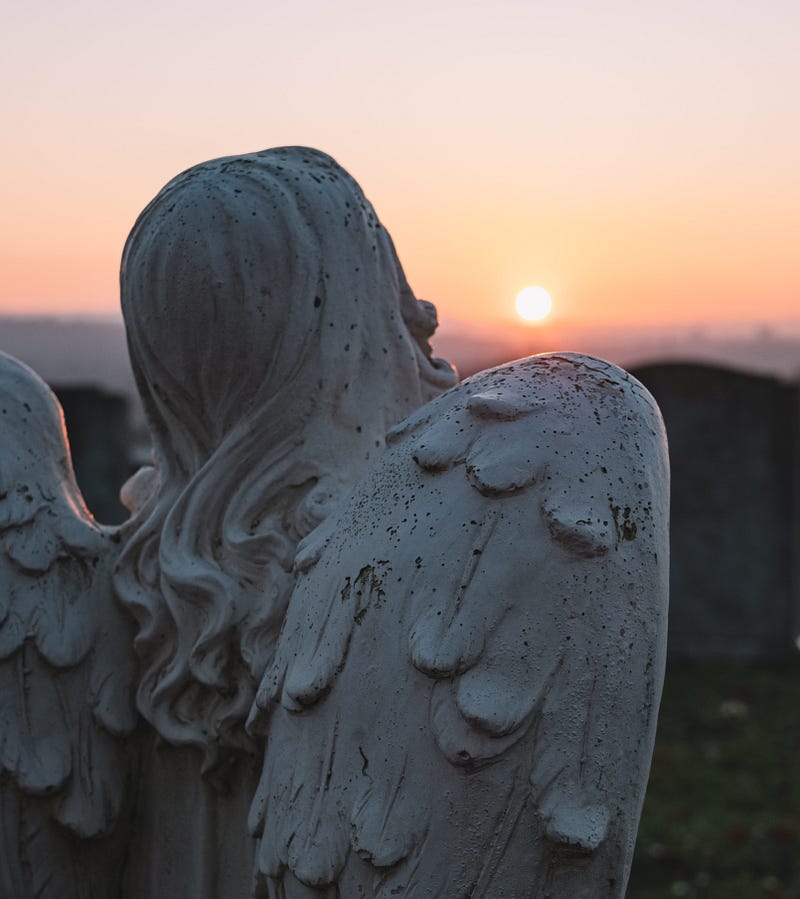
You probably didn’t care to or expect to read about death practices today, but we’ve got to. We must. For the sake of my sanity, please see this thing through.
Yes, death is still very much a taboo topic and is sure to not win me any favors. However, if your community is anything like mine, you’ve seen mourners make snap decisions on their own in the absence of an advance directive. I understand the stress and the urge to just have the whole thing done and over with, but honey, you can’t sweep these ashes under the rug.
Over the last 17 years or so, I’ve lost four family members from either side: a step-grandfather, my biological grandfather, an uncle, and a first cousin. Unlike my relatives who passed away before them, every single one was cremated.
The Cremation Association of North America corroborates this trend away from traditional burial, noting a near 2% increase between 2019 and 2020, with a projected cremation rate climbing to 65.2% by 2025. We don’t need to discuss why here, as I think many of you already know why. What worries me about this trend is that we’re not talking about it.
To elaborate on my situation a wee bit, the ashes of 3 out of the 4 aforementioned family members are with other relatives, so I don’t have access to visitation like I do with my ancestors who were buried in a traditional cemetery. My biological grandfather’s cremated remains (cremains, if you like) reside with his third wife — wherever she is. Heck, I’m not even sure we were technically invited to his memorial service.
To be honest, I’m not too broken up over this, but my mother might be. I wouldn’t know because we don’t talk about it, you see. So, let me ask you, how detrimental is it to not have access to our dead?
This country’s traditional garden cemeteries and burial grounds were all designed to be a peaceful place integrated with nature. Most of these spaces are public and can be accessed by any of us who were left behind, including old bar buddies, childhood pals, former co-workers, and so on. I think it’s unusual for immediate family members to realize their passed loved one meant something to those outside the family — or care.
I realize the argument I’m setting up here might be a WASP cultural construct, and many of you might question what I’m going on about. I remember when I stayed with a host family in Kyoto, they had a special cabinet dedicated to their ancestors. This cabinet contained some photos and a small portion of each loved one’s ashes. Every day at dinner time, the youngest daughter Shoko would set out miniature bowls of rice and a stick of incense as an offering. Now, I thought that was really something. I learned later that cremains are usually divided up between multiple family members and their households.
I thought about doing something like that with photos, but I knew it wouldn’t be exactly what I needed. There’s something remarkable about being in the open air of a garden cemetery, like being under that big open sky allows me to be closer to a loved one’s spirit.
As for that fourth relative, my cousin’s ashes were placed in a regular ground plot, right next to my father’s parents. I know I can get in my car right now and go visit with all of them, along with the five other generations of family members in that same cemetery.
Granted, ground space is in high demand everywhere, so here’s another solution. My family cemetery also has several attractive columbaria (singular: columbarium), which is a fancy name for any structure that contains multiple niches to place urns. From what I’ve seen, the modern ones are about fifteen long and made of sparkly granite. In front of them are a few flower patches and benches for loved ones to visit. Not too shabby, I say.
As traditional burial costs continue to rise and old religious dogma crumbles to dust, many of you will eventually face the same conundrum. My humble request is this: when you’re debating on what to do with your loved one’s ashes, please consider placing them in a community cemetery or memorial park. Not only is it a more permanent option than inside your home, the urn would also look awkward sitting next to your Precious Moments collection.
Ashley Treadwell, 2022