
BURNOUT: When Writing Is Your 9–5 & 5–9
Keeping your brain (& fingers) loose when they’re always active.
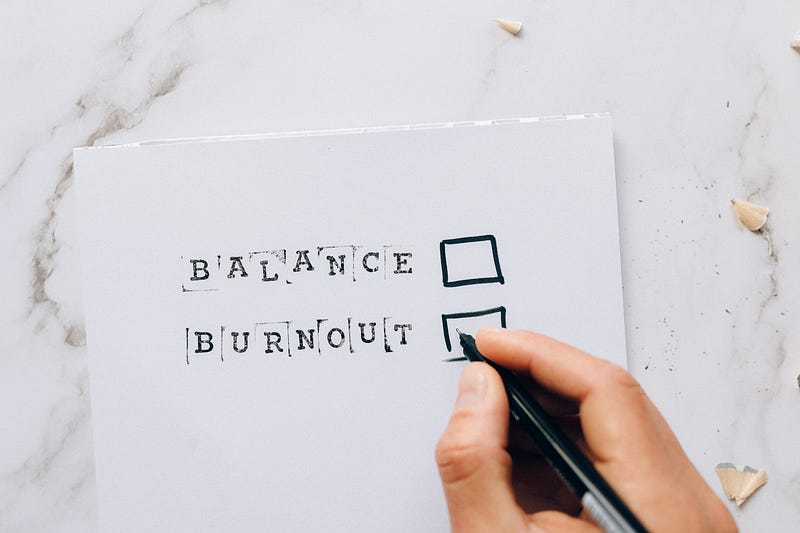
Working full-time and writing on the side is a balancing act worthy of applause. If you’re doing so, consider this a pat on your weary back.
Maybe you’re waiting tables, working at a surf shop, or in a corporate job that’s sucking your soul.
You work the 9–5, and from 5–9, you hit the keyboard. I’m familiar with the balancing act.
Then there are the arthritics who write 9–5 only to come home either unfulfilled or riddled with side work. Content and copywriters who need to tend to their personal blogs, newsletters, or clients after hours, for example.
We write thousands of words for either an agency that treats us like a content mill, or a company that’s profiting off of our verbiage. Then we return to our abodes with empty word banks, feeling like wrung-out towels.
It’s a great recipe for BURNOUT — a common obstacle among us full-time wordsmiths.
There are three remedies that keep my juices flowing (besides the sweet embrace of Casamigos):
Exercise
Not to say you need to rip powerlifts after a 5AM cold shower, but it’s important to get the blood flowing and calories burning.

Exercise brings clarity. It wipes out all those intrusive and unnecessary thoughts, hones you in, and leaves you with a sense of fulfillment.
People expect to be tired after a gym session. It’s really the opposite. After an hour of sweating, you strangely feel more energized than when you entered the gym.
Working out is good for the brain. You’ll find yourself coming up with new ideas, thinking of ways to improve old ones, and feeling motivated to keep on writing.
I just got a new gym membership two weeks ago. Three times a week, I head over and sweat it out. It’s done wonders for my bouts of writer’s block.
The only prerequisite is the motivation and ability to get out of bed and do the damn thing. A step I struggled with for weeks before getting used to the torture.
Friends

Even the most extreme introverts need some socialization to stay sane.
The same goes for 24/7 writers. You’re writing all day at your 9–5. You get home, eat, and type from 5–9. Where’s the time for the people in your life?
For a few months, I was that “busy” guy. The person in the group who often couldn’t make it because he was too “busy.”
Don’t be the busy guy. There’s no pride to be taken in being too swamped for the people you love.
We need friends to connect, to vent, to stay grounded when our heads are in the clouds. Life spirals when it’s all about work. Newsflash — your friends will leave you in the dust if you’re constantly too busy for them.
Nope, it’s not because they’re bad friends. How would you respond to a friend who hasn’t “had the time” to see you for the past few months?
I lost a handful of friends due to being “busy.” People I cherished, but valued less than my work. These are the people that keep you sane when the 16-hour days grind you to bits. Cherish and tend to them.
The Great Outdoors
Nature also brings clarity. I’m telling you — a breath of mountain air or an ocean view can instantly take you from a place of stress to solace.
As writers, we live in our heads. We’re constantly inundated with ideas to jump on and topics to write about, rarely spared the time to rest easy and take it all in.
We want to write a blog, book, and newsletter, all at the same time.
We want to tweet regularly and post on Medium x times a week to keep up with our cadence and promote our words.
Like a firehose of ideas and tasks that’s bottlenecked at the base.
It’s tough to sort through your ideas with a cluttered head. And what I’ve found is that staying in your room or workspace will keep those ideas from blooming.
We need nature to sort it all out. Fresh air, shining sun, and the smell of the natural world is as holistic as it gets, and has a distinct way of recharging our writing brains.
Strap on your hiking boots, get out there, and have your Notes app ready — because the best ideas often arise when the sun’s out and you’re not expecting it.
If you’re both a 9–5 and 5–9er, let me know if you relate with these struggles. Would love to know if other full-time content/copywriters with side projects have felt the same pains.


