
Burning Biomass for Electricity is Worse Than Coal
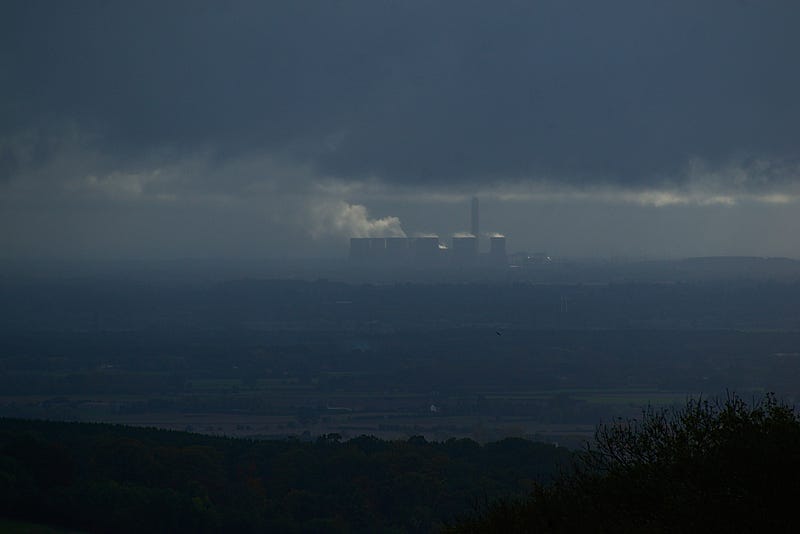
Burning biomass has long been misclassified as ‘renewable energy’. The reasoning was always overly simplistic, and amounts to little more than: “we can always grow more trees, amirite?!” In reality, the biomass industry destroys forests, harms health and communities worldwide (especially in North America), and emits a shed-load* of CO2 and PM10 pollution (*not a scientific term — precise quantities to follow).
The story as to how — and why — this happened is a little more complex. The industry for forest-derived wood pellets for electricity generation is barely a decade old, over which time it has dramatically increased. Since 2012, the UK’s biggest coal power station, Drax, received more than £4 billion in public subsidies to convert four out of its six boilers to burn wood pellets instead of coal to produce electricity. In 2019, the UK imported 8.5 million metric tons of wood pellets — astonishingly, given its small size, more than any other country in the world. By 2022, Drax’s giant wood pellet boilers generated 11% of the UK’s overall ‘renewable power’, at times peaking at up to 22%. Drax closed its two-remaining coal-fired generation units in March 2021.
But is it really ‘renewable power’? Drax chooses to import its wood pellets rather than invest in UK forestry. According to figures from Friends of the Earth, 4.6 million tonnes of its wood pellets come from the USA, 1.2 million tonnes from Canada, 0.8 million tonnes from Baltic states, and the rest from a handful of other European countries. Drax says that 60–80% of this wood pellet feedstock comes from sawmill residues, “thinnings” (small trees removed), branches, tops, and bark. But Friends of the Earth claim that more than one-third of the wood it burns is from large whole trees. They also say that Drax, an old power station that opened in 1974, has a terrible thermal efficiency of around 38%, which means for every 10 trees burned, 6 are wasted as uncaptured heat.
Logging and transporting the trees from halfway across the world is anything but ‘carbon neutral’. Drax’s own figures claim that for every kilowatt hour (kWh) of electricity it produces it releases around 124g of carbon dioxide (albeit other research suggests the true figure may be 4 times as much). Transportation of the wood pellets to Drax accounts for around a half of this. But if you compare this with truly renewable energy, it is more than ten times that of offshore wind or solar power, which produces electricity at around 8g CO2e per kWh (yes, even including the manufacture, construction and maintenance).
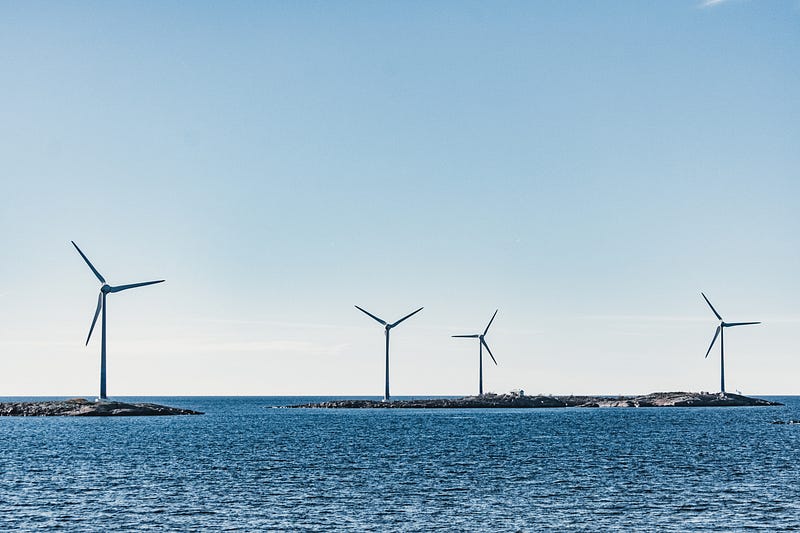
And then there’s the smoke emissions. To most of us, the image of renewable power is something with zero emissions at source — a wind turbine blade slicing through the air, or solar panels soaking up the sun. Whereas burning millions of tonnes of wood pellets does exactly what you’d imagine: produces millions of tonnes of smoke particles.
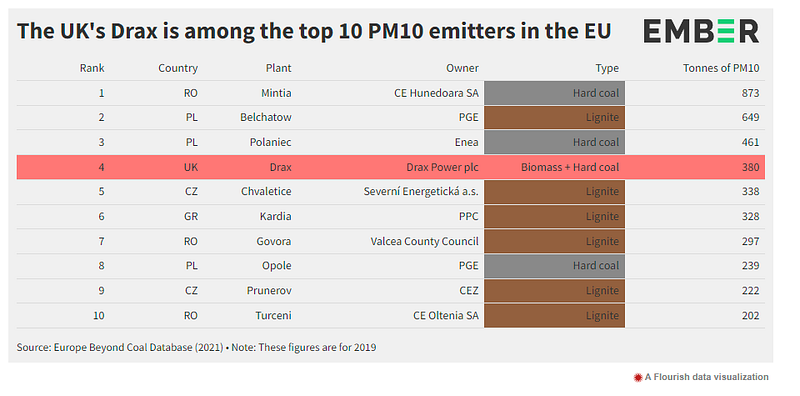
Burning wood pellets for electricity releases huge quantities of particulate matter (PM) into the atmosphere. The sheer scale of wood burning by Drax each year makes it one of the top five emitters of PM10 air pollution in the whole of Europe, above some of Europe’s worst coal power plants. In fact, in 2019 it was the fourth largest single emitter of PM10 in the whole of Europe.
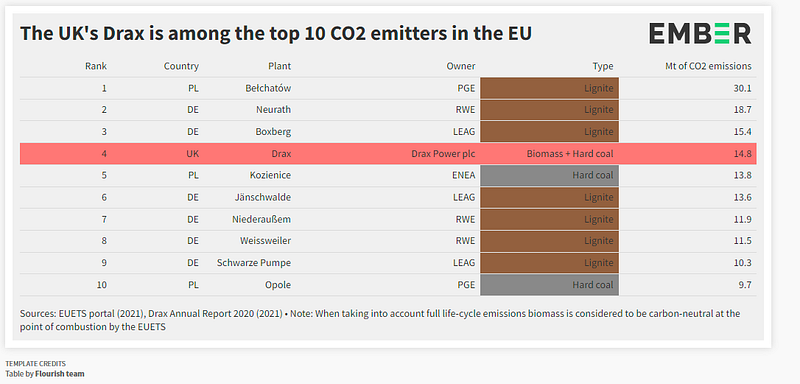
As for CO2, Drax is by far the largest single emitter in the UK power sector at 14.8Mt CO2, with RWE’s Pembroke Gas Power Station coming in a distant second at 4.3Mt CO2. Drax’s CO2 emissions are such that it is also the fourth largest CO2 emitter in Europe, too. Only the notorious lignite behemoths at Belchatow in Poland (30.1 MtCO2/yr) and Germany’s Neurath (18.1 MtCO2/yr) and Boxberg (15.4 MtCO2/yr) emit more CO2 than Drax.
What possible definition of ‘renewable energy’ includes Europe’s fourth largest polluter? How is a country’s biggest emitter allowed to advertise itself as part of the drive towards ‘net zero’ emissions? Drax has an active and aggressive media team, which pushes its own definitions such as: “Bioenergy that uses woody biomass from sustainably managed forests to generate electricity is carbon neutral because forests absorb CO2 from the atmosphere as they grow, meaning the amount of CO2 in the atmosphere remains level.” (In short, we can always grow more trees, amirite?!)
But what part of the two tables above look ‘carbon neutral’? Even if you stripped away the logging, drying and manufacture of the pellets, and the trans-Atlantic transport — even if you only burned trees grown next door to the power station itself — and those are big, fictional ‘ifs’, the tree you are burning captured its carbon over 60 years or more. By burning it, yes you only release the same amount of carbon as the tree captured during its growth, but you are releasing 60 years of carbon in one short puff of smoke. That’s carbon — and air pollution — added to the atmosphere at a time when the latest (and indeed all previous) IPCC report makes very clear that we cannot afford to release any more.
Despite claims from forest biomass proponents, the IPCC does not support the use of forest bioenergy (even if combined with carbon capture and storage, known as BECCS) as a climate solution and has not determined biomass as a sustainable means of addressing climate change. According to the IPCC, it is inaccurate to “automatically consider or assume biomass used for energy [is] ‘carbon neutral,’ even in cases where the biomass is thought to be produced sustainably.”
In February 2021, over 500 scientists wrote to President Biden, EU Commission President Von der Leyen, European Council President Charles Michel, Japanese Prime Minister Suga and South Korean President Moon, urging them to reverse policy on biomass burning, stating that “The burning of wood will increase warming for decades to centuries. That is true even when the wood replaces coal, oil or natural gas”. Alex Mason, Senior Policy Officer at WWF European Policy Office described fighting the climate emergency without changing the EU’s biomass rules as being “like trying to bail out a boat with a hole in the bottom.”
“The burning of wood will increase warming for decades to centuries. That is true even when the wood replaces coal, oil or natural gas”
A journal article in Environmental Research Letters in 2018 asked “Does replacing coal with wood lower CO2 emissions?” It argued that, “the combustion and processing efficiencies of wood in electricity generation are lower than for coal. Consequently, the first impact of displacing coal with wood is an increase in atmospheric CO2 relative to continued coal use, creating an initial carbon debt… atmospheric CO2 is higher than it would have been without the use of bioenergy, increasing radiative forcing and global average temperatures, worsening climate change, including potentially irreversible impacts”. The carbon debt incurred by burning wood biomass for electricity within the short window we have for lowering CO2 “may never be repaid”.
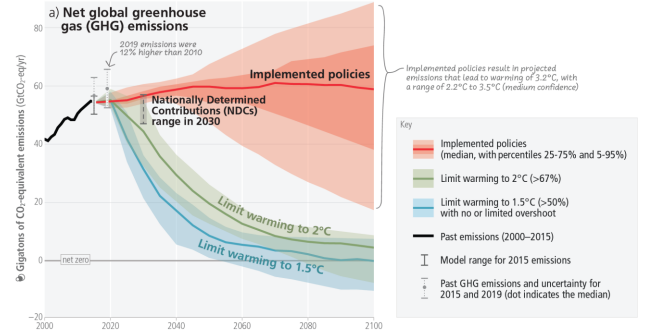
Further research has added more detail while reaching the same conclusion. What happens, for example, when you factor in the loss of ‘carbon sink’ capacity when chopping down forests? Researchers in 2022 found a mean carbon storage balance of 1 tonne of CO2 m-³ in coniferous trees used for wood pellets (and about 1.4 tonnes of CO2 m-³ in beech, oak and long-lived deciduous tree species). The authors asked, “what happens when we include the loss of this amount of forest carbon in our calculations as to whether wood is a good substitute for fossil-fuel-derived fuels?” The answer, in their words, should “completely reverse the received wisdom” of current government renewable subsidies. If you factor in the carbon storage loss of felling the trees, “we find that wood harvesting for energy will actually serve to raise emissions 13% over a fossil fuel equivalent.”
Sasha Stashwick, NRDC’s Director, Industrial Policy, Climate & Clean Energy Program, writes that deploying forest biomass energy or BECCS plants risks worsening climate change at a time when the IPCC says we have no time to waste: “An established body of peer-reviewed science tells us that when forest-derived biomass is used for largescale electricity production, it makes climate change worse for decades, with or without CCS (see here, here, here, here and from the IPCC here).”
Then there’s the carbon released from the soil when you remove trees — something that you’ll never hear bioenergy generators talk about. A 2015 meta-analysis in Nature concluded that ‘intensive harvests’ lead to soil organic carbon losses “across all layers of forest soils”. It found that 142 million tonnes of exposed soil could turn into 521 million tonnes of CO2 over 30 years. Sustainable forestry practices can of course minimize this effect, but can’t avoid it entirely.
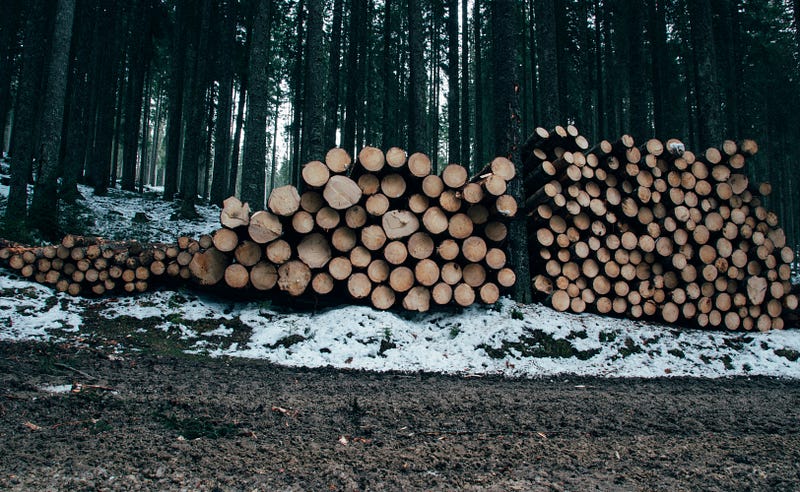
Currently, most of the forestry for pellets comes from North America. A recent report to mark International Day of Forests by Cut Carbon Not Forests argues that marginalised communities in the U.S. Southeast are paying the price for the UK’s continued reliance on biomass energy. Wood “pellet mills” where trees are processed into wood pellets are 50% more likely to be sited in economically depressed areas of color.
Jimmy Brown, chair of Environmental Justice for the Gloster chapter (Mississippi) of the National Association for the Advancement of Colored People (NAACP), told Cut Carbon Not Forests: “Drax’s wood pellet production facility makes it hard for us to breathe. There is significant noise and air pollution and in 2021 we learned that Drax had been illegally emitting air pollution for years before being caught. Drax received a fine of $2.5m — but compared to the nearly £2m it receives every day, that’s just a slap on the wrist. Meanwhile, we’ve been slapped in the face.”
Matt Williams, Senior Advocate for the Natural Resources Defense Council and campaigner for Cut Carbon Not Forests, added: “If the Government is going to ask families to pay extra through energy bills to fund renewables, they deserve to know it’s good value for money, especially during a cost-of-living crisis. But bioenergy isn’t — it increases bills but makes climate change worse. Shockingly, the bioenergy industry — including Drax, the UK’s largest bioenergy producer — is clearcutting forests the world over, including ones that are hundreds of years old, nature reserves and other protected areas, and biodiversity hotspots.”
Meanwhile, the ‘renewable’ subsidies continue to flow towards biomass. Just days after the UK committed to increased forest protections at COP27, a report revealed that it wasted almost £2 billion on subsidising the logging of forests for bioenergy in 2021. According to reporting by Sky News, Drax’s bioenergy operations alone received £617m of government subsidies in the year 2022; £1.7 million a day. By the time most UK subsidies are due to end in 2027, billpayers will have spent £13 billion in direct support to biomass-burning plants (including £10bn just for Drax).
Meanwhile, fattened and fired-up by public money, Drax plans for ever more expansion. Drax has decided to invest in two new pellet production projects — a 450kt new-build pellet plant plus a port at Longview (Washington State), and a 130kt expansion of its Aliceville site (Alabama). The combined investment is in the region of $300 million. Drax also continues with the development of its £2bn BECCS project.
Drax is not ruling out returning to coal, either, if the price is right. In July 2022, at the request of the UK Government, Drax entered into an agreement with National Grid to provide a “winter contingency” service via its legacy coal units.
Let’s be clear: burning biomass, and/or attempting to capture the CO2 with CCS, is simply a means of maintaining the status quo. It merely replaces one polluting solid fuel with another. It is not renewable or sustainable, and it certainly isn’t emissions-free. The UN secretary general, António Guterres, described the IPCC synthesis report as a “final warning”. The IPCC isn’t due to report again until 2030 — after which it will be too late to change course. As Achim Steiner of UNDP put it, “As the narrow window of opportunity to stop climate change rapidly closes, the choices that governments, the private sector, and communities now make — or do not make — will go down in history.” Burning biomass for electricity is clearly the wrong choice.
Tim Smedley’s book The Last Drop: Solving The World’s Water Crisis, published by Picador, Pan Macmillan, is OUT NOW.


