
BUSINESS | PROFILE | INNOVATION
Building the Future: Transforming New Zealand with Sustainable Offsite Manufactured Homes
Meet André Heller, the visionary reshaping construction with eco-friendly, efficiently manufactured solutions — a journey from global insights to local impact.
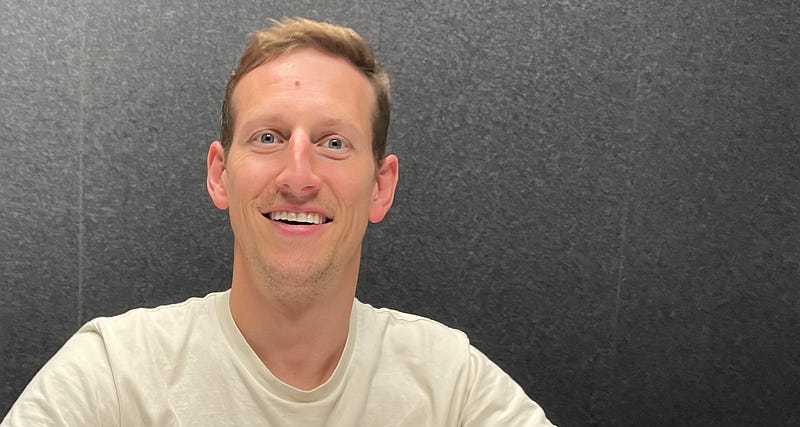
In a world where housing and construction methods desperately need innovation, one young entrepreneur is stepping up to the challenge. Meet André Heller, a visionary industrial designer passionate about sustainability and efficiency.
Recognising the untapped potential of Offsite Construction techniques in New Zealand, André founded Flexi House, a company dedicated to creating high-quality, affordable, and sustainable homes.
Global vision, local pull
“My journey began at Massey University Wellington, where I studied industrial design,” explains André Heller, the young entrepreneur and innovator, “I later delved into marine and transport design before moving to the UK to work with a multidisciplinary architecture firm specialising in Design for Manufacture and Assembly (DfMA)”.
In London, André was a valuable member of a Systematic Product Design team that focused on creating interior cladding and facade systems for various projects in central London, including underground train stations, infrastructure projects, and apartment buildings.
Throughout his time with the team, he gained extensive experience in design for manufacture and the prefabrication space, which he then applied to the large-scale infrastructure projects they were working on. This experience was pivotal for him in understanding the intricacies of prefabrication and the different manufacturing methods, particularly in large-scale infrastructure projects. He witnessed firsthand the benefits of scalability and efficient methodology of the systems they developed, further enhancing his knowledge and skills.
André returned to New Zealand in 2016 to see that the housing and construction industry was not where it should have been — something needed to be done.
Something was not quite right
“I noticed a significant gap in New Zealand’s construction methods,” remembers André, his first observations after spending so much time overseas. “Offsite Construction techniques, widely used internationally, were underutilised here. I saw this as an opportunity to address housing issues in New Zealand, focusing on quality, affordability, and sustainability,” he explains.
“New Zealand has been slower in adopting offsite construction. While countries like Sweden have 85% of their construction offsite, New Zealand only has about 10%. However, the industry is growing, with projections showing a potential increase to 30% by 2030,” continues André, “So, I saw there was an opportunity not only to start a business but help the whole industry to adopt better and more sustainable practices”.
Sustainability is the key to Andre’s thinking. He wants to move the dial from massive waste now prevalent in construction into a circular economy. “It is not easy, but it is doable if you use product design and systemic thinking,” says André.
Three focus areas of innovation, implementation and maintenance
“We focus on three aspects: operational carbon, embodied carbon, and circular construction,” explains André, “Our designs minimise energy consumption, use low-incorporated carbon materials like timber and wool, and adopt circular construction methodologies for sustainability and efficiency”.
Operational carbon refers to the energy required to heat and cool a home over its lifetime. Energy consumption can be reduced by designing high-performing houses with efficient insulation and resistance to overheating.
Embodied carbon, on the other hand, refers to the carbon emissions associated with the materials used in construction. Sustainable construction uses natural and renewable materials with low embodied carbon, avoiding materials like concrete with high carbon content.
Circular construction methodologies involve adopting practices that promote materials reuse, recycling, and repurposing. This approach aims to minimise waste and extend the lifespan of materials, reducing the need for new resources and minimising environmental impact.
“At the end of life of our houses, they can be deconstructed, or the building can be pulled apart, and those components can be redeployed to a new location, which then they can be used for a secondary purpose as a new dwelling,” explains André how Flexi Houses are true to its name.
André explains how their process is creating a circular economy of parts. Instead of using glue and other contaminants, they use mechanical fixings to ensure the materials can be disassembled and recycled at the end of their life cycle. This additional step in the life cycle analysis allows the raw materials to be deconstructed and recycled, further contributing to sustainability.
Andre’s approach also has significant health benefits. “The less formaldehyde and glues you have in a building, the better for health reasons. And many of the material selections we’re specifying are quite natural raw materials. So, there are fewer synthetics, which creates a much healthier environment,” he concludes.
André is diligently working to control waste in a factory setting and reduce on-site waste, significantly impacting the amount of construction waste that ends up in landfills in New Zealand. “I think Between 40% and 60% of landfills in New Zealand are construction waste. And it’s a huge problem, and it’s not going away anytime soon. And so the sooner we start addressing it, the better”.
André knows that larger companies may slowly embrace new methods, and he wants to show them the way as an agile, innovative and highly efficient player in the industry. Being an example of innovation and scalable systems implementer will give his company a higher profile and thus can punch way above its weight.
“We showcased our approach right in the beginning in assembling a house in 13 hours,” says André proudly, “And it gave us a kick start and a lot of positive publicity”.
The future is in design and productisation
Flexi is focused on becoming a leading product supply company in the industry. Their primary objective is to establish partnerships with licensed manufacturers and builders to ensure a steady supply of high-quality products.
The company has set its sights on productising its systems, aiming to offer customers the convenience of designing and ordering home parts through an online tool or retail outlets such as Mitre 10 Mega. “It’s a bit like Lego,” explains André, “You can design your house, and the system then selects the parts, orders them from the network of suppliers and in no time, your beautiful home is ready”. This approach would revolutionise the way homes are built and provide customers with greater flexibility and customisation options.
The secret point of difference
While André values transparency, he also maintains certain trade secrets with the company to protect their unique methods and innovations.
“Traditional prefab home or modular house builders typically resemble a builder who has transitioned into a factory or manufacturer. They usually construct volumetric-style buildings, which means they create complete modules rather than panels,” elaborates André.
“Now, what sets us apart is our panelised system called Flexi House. Unlike modular builders who construct entire homes or rooms in a box-like structure, we focus on panelised construction. Instead of setting up our factory and becoming manufacturers ourselves, we have partnered with expert offsite manufacturers and on-site construction teams”.
“By outsourcing the manufacturing and construction work to those who specialise in it, we are able to leverage their capabilities and expertise. This approach allows us to avoid the high operational and capital expenditures of running a factory”.
Andre’s approach sets Flexi apart from traditional prefab builders. Prioritising a panelised system and using existing manufacturing and construction capabilities to optimise efficiency and quality is the Holy Grail of the future construction industry. By leveraging these resources, Flexi aims to deliver superior products and services to its customers.
The opportunity is global; the springboard there is local
“We see a global opportunity, with places like California needing significant housing solutions. Our model could potentially be exported, contributing to solving housing problems worldwide,” says André, aiming overseas while keeping his eyes on the local balls.
André has chosen a target audience that values quality, sustainability and innovation. Their customers know that it comes with a price tag. “To finance innovation, you cannot start by offering bulk or commodity,” explains André, “we want to be the best and the leader showing the way — and the rest will come”.
Success comes from hard work, collaboration and wise advice
This young entrepreneur has all the necessary elements for success because he has designed a robust support system for the business.
Firstly, they have assembled an advisory board of experienced and senior advisors who provide governance and mentorship in various aspects of the business. These advisors bring a wealth of knowledge and expertise, enabling the entrepreneur to make informed decisions and navigate challenges effectively.
Additionally, André plans to implement an employee share option plan, fostering a sense of ownership and commitment among the team members. This group ownership structure ensures everyone is invested in the company’s success and motivates them to work towards common goals.
Moreover, André has built solid partnerships and relationships with suppliers and manufacturers. They have taken the time to understand the needs and challenges of these partners and have worked towards providing solutions that add value to their businesses. By offering repeatable work and creating reliable pipelines, the entrepreneur has built trust and incentivised the suppliers to maintain long-term partnerships.
For more technology, creative marketing stories, and neuroscience findings, you may subscribe to my newsletter, FreshWrite, here.