
Building Strong Relationships with Customer-Facing Teams for Better Design in B2B Companies
In school, we are trained to use a design thinking approach that involves a discovery-to-test process for the design work we are working on. This approach requires us to conduct research with users to gain insights into their needs, behaviors, and preferences. However, for designers working in B2B companies, the traditional design thinking approach can be a significant challenge. The end-users of their products are often several layers away from the designer, and even if they are nearby, it can be difficult to get them to participate in research and testing. This can make it hard to validate designs and can result in solutions that do not meet user needs.

One effective approach I have found to address these challenges is to build strong relationships with customer-facing teams, such as sales, account managers, and customer success managers. These teams play a crucial role in managing customer accounts and experiences and can offer valuable insights into customer needs and pain points. When starting to work for a new B2B company, I prioritize setting up calls with these teams to gain an overall understanding of how the product looks for our customers and what their biggest struggles and benefits are. Additionally, I schedule regular catch-up calls with customer-facing teams to keep up to date on what customers like and dislike. This helps me make informed design decisions that better meet the needs of our customers.
Of course, this approach doesn’t replace testing with actual users, but it can help to use your internal customer-facing team as the first gatekeeper to test and validate your design. By involving them in the discovery process, designers can minimize the risk of building something that may not meet the users’ needs.
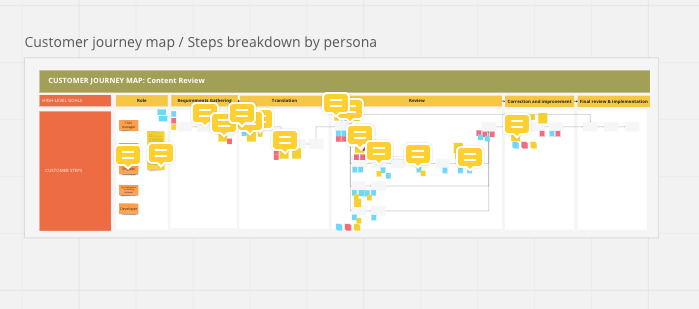
My preferred approach is to involve customer success managers and customer support teams from the very beginning of the design project. I set up a Miro board where we can create a user journey map together and get their feedback on the pros and cons that the customers have been happy or sad about. This approach allows me to get a comprehensive overview of the project and identify potential areas for improvement without any actual user research. Based on the journey map, I then identify gaps and questions that we are not clear on yet and bring them to actual customers for validation.
It’s important to remember that the work you’re doing needs to be helpful for customer-facing teams as well. While it’s not their responsibility to help you with testing your ideas and design, sharing the prototype with them where they can bring it to the customers to show the progress makes customer success managers happy as they can show customers that they are solving their issues.
In summary, designing for B2B products presents unique challenges as the traditional design thinking approach that works well in B2C may not be suitable. However, involving customer-facing teams in the discovery process can help designers validate their designs and ensure they meet customer needs. While internal customer-facing teams cannot replace testing with actual users, they can serve as a helpful first gatekeeper to validate the design. A successful design in B2B companies requires a balance of leveraging internal customer-facing teams and involving external customers in testing and validating designs, leading to effective designs that meet the needs of B2B users.