avatarSomil Gupta

Free AI web copilot to create summaries, insights and extended knowledge, download it at here

2613

Abstract

ith the crappy MVPs, will help you in taking you near your goal.</p><figure id="5aef"><img src="https://cdn-images-1.readmedium.com/v2/resize:fit:800/1*lZKOz7Ql8XACujq1sPgBDA.png"><figcaption>The hair on fire cartoon was generated by the Author using DALL-E</figcaption></figure><p id="7cfb" type="7">The phrase “sets your hair on fire” is often used in a figurative sense to describe something that excites or captures your attention intensely and urgently.</p><p id="3d06">Learning from customers is easier with an MVP than without. Talking to the users with an MVP is the hack.</p><p id="ee8e"><b>Let’s see the hacks for building an MVP quickly:</b></p><ol><li>Time box your spec</li><li>Write your spec</li><li>Cut your spec (30–50%)</li><li>Don’t fall in love with your MVP! (Realize that it will need a lot of improvements and needs to get better with more iterations.)</li></ol><p id="c4da" type="7">In the end — It’s better to have 100 people to love your product rather than having 10,000 people who like your product. — Michael Seibel</p><h1 id="1cb3">KPIs (Key Performance Indicators)</h1><figure id="3788"><img src="https://cdn-images-1.readmedium.com/v2/resize:fit:800/1*7OGP7ibPGJWSzoWCotdyzA.jpeg"><figcaption>ID 108530963 © Trueffelpix | Dreamstime.com</figcaption></figure><p id="2792">Rather than solving what’s hard to solve, focus on what customers want. Why the rush? Why can’t I go slowly?</p><p id="4b36">The main thing to focus on here is How to prioritize.</p><blockquote id="88b2"><p>Keep in mind that you will never be able to check off your complete list; there will always be something on the table.</p></blockquote><p id="db21"><b>Instead, Focus on these keys:</b></p><ol><li>Make revenue growth your primary KPI.</li><li>What’s the KPI goal for this week? Set a target, what you want to achieve in the short term. This will remind you to go fast.</li><li>Identify your biggest bottleneck.</li></ol><p id="a9b2"><b>A simple system to move your KPIs:</b></p><ol><li>Write down the ideas that may help rank them.</li><li>If your KPI is not driving, be brutally honest and think why.</li><li>Do real retros, learn and adjust the course. a. If it’s not working, do something different. b. If it was working, double down.</li><li>Move fast.</li></ol><h1 id="6b6e">Bad KPIs:</h1><p id="3089">Bad Key Performance Indicators (KPIs) can be counterproductive and lead to poor decision-making within an organization.</p><p id="e93d"><b>Here are some of the bad KPIs:</b></p><blockquote id="3332"><p>1. Amount raised 2. Team size 3. Office space sqft 4. Press hits 5. Celebrity endorsements 6.

Options

Instagram likes</p></blockquote><p id="e0cc"><b>Common traps:</b></p><ol><li>Checking off a list feels good.</li><li>It’s easy to convince yourself something is working, even if it’s not. Be brutally honest with yourself cause these things will not help you.</li><li>Working on the secondary problems rather than the existential ones.</li><li>Perfectionism and indecision are your enemies. (fast decisions are good decisions.)</li></ol><p id="afef"><i>Don’t waste your time on the things which will not take you near to product-market fit. It’s good to waste your time on something that could be more scalable as long as it’s not breaking.</i></p><p id="893a">Let’s see <b>Paul Graham’s</b> ideology on setting targets for the growth of a startup or a business:</p><ol><li><b>5–7% Week-over-Week (WoW) Growth — Good</b>: This is a healthy growth rate indicating traction.</li><li><b>10% Week-over-Week Growth — Exceptional</b>: Exceptionally high growth rate, often seen in startups with strong product-market fit.</li><li><b>Early Growth Matters; Growth Rate Compounds</b>: High growth in the early stages compounds, leading to exponential expansion. Sustainability and long-term goals should be considered as well.</li></ol><p id="bd57"><b>Final Takeaways:</b></p><ul><li>Move fast but in the right direction.</li><li><b>Prioritization:</b> > You’ll never get to do everything on your task list. > Use KPIs to prioritize your work — only work on the biggest blocker to your primary KPIs. > Be honest with yourself, and fail fast.</li><li><b>KPIs > Primary KPI</b> = Revenue Growth, unless exceptional circumstances. > <b>Secondary KPIs</b> are essential to track, but they may not always be the primary focus for optimization.</li></ul><blockquote id="3483"><p><b>Prioritization matters. KPIs help you prioritise.</b></p></blockquote><p id="00dd">Do check out my Side Hustle series for more such content.</p><div id="888c" class="link-block"> <a href="https://medium.com/@somil_gupta/list/0968ca13fd09"> <div> <div> <h2>Side Hustle Series: Fiverr journey from zero to $17k</h2> <div><h3>Series of four articles on my freelancing journey on Fiverr</h3></div> <div><p>medium.com</p></div> </div> <div> <div style="background-image: url(https://miro.readmedium.com/v2/resize:fit:320/0*deb1c802ac2409416bf0e97d9e3216306ab9d0da.jpeg)"></div> </div> </div> </a> </div><p id="d5ef">That’s all, folks. Ba bye :)</p></article></body>

Building an MVP and Setting Your KPIs Using YC Strategy

Approach to building an MVP, getting your first users as a pre-launch startup, and setting the right KPIs.
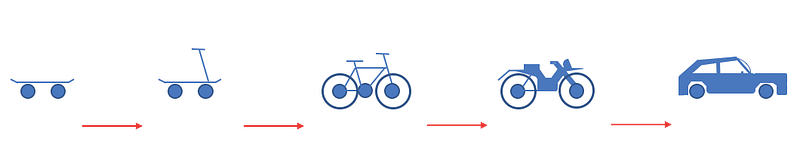
Source: By Teemu — Own work, CC BY-SA 4.0, Wikipedia

MVP (Minimum Viable Product)

The first version of your product. The version where you will be learning what you are going to build.

A minimum viable product (MVP) is the release of a new product (or a major new feature) that is used to validate customer needs and demands prior to developing a more fully featured product. — Gartner

What should be the goal of a pre-launch startup?

  1. Launch quickly.
  2. Get initial customers.
  3. Talk to customers and get feedback.
  4. Iterate (improve your product)

Always remember that you can continually iterate from your MVP. If you think something terrible will happen if I launch an MVP. Then, pause and write down why you think it will go wrong.

For example — Software MVP (things you need to keep in your mind):

  • It should be swift to build (weeks, not months)
  • Minimal functionality.
  • Appeal to a tiny set of users.

Let’s take an example to better understand this: Imagine a guy sitting beside you with his hair on fire; what would you do in such a situation? The immediate and ideal solution would typically involve grabbing a nearby bucket of water and using it to extinguish the fire.

Now, let’s shift the circumstances slightly. Picture the same scenario, but this time, you don't have access to a bucket of water. Instead, you find yourself holding a brick. In this unconventional situation, the most obvious response may not be readily apparent.

Before you start to panic, let’s consider a creative alternative. If you’re without a bucket of water but happen to have a brick on hand, why not consider my innovative solution? You can use the brick to gently tap out the flames on your own head. It’s an unconventional but potentially effective approach.

At these times, solving the problem, even with the crappy MVPs, will help you in taking you near your goal.

The hair on fire cartoon was generated by the Author using DALL-E

The phrase “sets your hair on fire” is often used in a figurative sense to describe something that excites or captures your attention intensely and urgently.

Learning from customers is easier with an MVP than without. Talking to the users with an MVP is the hack.

Let’s see the hacks for building an MVP quickly:

  1. Time box your spec
  2. Write your spec
  3. Cut your spec (30–50%)
  4. Don’t fall in love with your MVP! (Realize that it will need a lot of improvements and needs to get better with more iterations.)

In the end — It’s better to have 100 people to love your product rather than having 10,000 people who like your product. — Michael Seibel

KPIs (Key Performance Indicators)
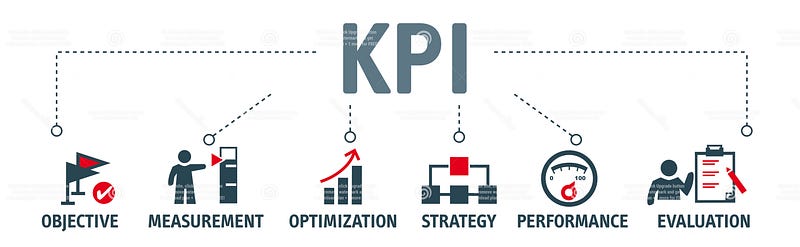
ID 108530963 © Trueffelpix | Dreamstime.com

Rather than solving what’s hard to solve, focus on what customers want. Why the rush? Why can’t I go slowly?

The main thing to focus on here is How to prioritize.

Keep in mind that you will never be able to check off your complete list; there will always be something on the table.

Instead, Focus on these keys:

  1. Make revenue growth your primary KPI.
  2. What’s the KPI goal for this week? Set a target, what you want to achieve in the short term. This will remind you to go fast.
  3. Identify your biggest bottleneck.

A simple system to move your KPIs:

  1. Write down the ideas that may help rank them.
  2. If your KPI is not driving, be brutally honest and think why.
  3. Do real retros, learn and adjust the course. a. If it’s not working, do something different. b. If it was working, double down.
  4. Move fast.

Bad KPIs:

Bad Key Performance Indicators (KPIs) can be counterproductive and lead to poor decision-making within an organization.

Here are some of the bad KPIs:

1. Amount raised 2. Team size 3. Office space sqft 4. Press hits 5. Celebrity endorsements 6. Instagram likes

Common traps:

  1. Checking off a list feels good.
  2. It’s easy to convince yourself something is working, even if it’s not. Be brutally honest with yourself cause these things will not help you.
  3. Working on the secondary problems rather than the existential ones.
  4. Perfectionism and indecision are your enemies. (fast decisions are good decisions.)

Don’t waste your time on the things which will not take you near to product-market fit. It’s good to waste your time on something that could be more scalable as long as it’s not breaking.

Let’s see Paul Graham’s ideology on setting targets for the growth of a startup or a business:

  1. 5–7% Week-over-Week (WoW) Growth — Good: This is a healthy growth rate indicating traction.
  2. 10% Week-over-Week Growth — Exceptional: Exceptionally high growth rate, often seen in startups with strong product-market fit.
  3. Early Growth Matters; Growth Rate Compounds: High growth in the early stages compounds, leading to exponential expansion. Sustainability and long-term goals should be considered as well.

Final Takeaways:

  • Move fast but in the right direction.
  • Prioritization: > You’ll never get to do everything on your task list. > Use KPIs to prioritize your work — only work on the biggest blocker to your primary KPIs. > Be honest with yourself, and fail fast.
  • KPIs > Primary KPI = Revenue Growth, unless exceptional circumstances. > Secondary KPIs are essential to track, but they may not always be the primary focus for optimization.

Prioritization matters. KPIs help you prioritise.

Do check out my Side Hustle series for more such content.

That’s all, folks. Ba bye :)

Ycombinator
Kpi
MVP
Startup
Founders
Recommended from ReadMedium