
Build a High-Performance Culture Like Cirque de Soleil or New York City Ballet
And how school cultures and student success could be revolutionised by thinking like a rock-climber or a coach
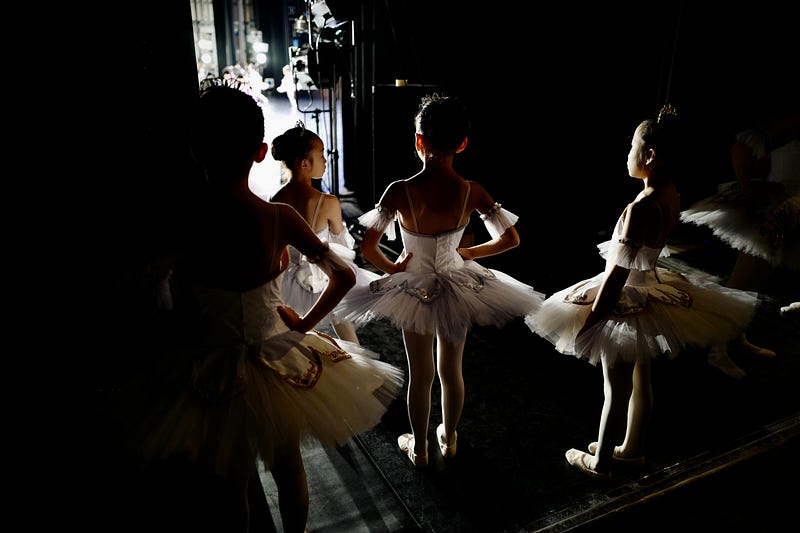
Years ago, I participated in a study and training on high-performance cultures. It was a program that explored techniques employed by some of the most prestigious organisations in the world.
At the time I was running a school for social entrepreneurs and was curious about how to enhance our program to meet the needs of the people we were serving. I was especially interested in how to build powerful cultures in education.
While a certain method had proven successful in the context of elite organisations, this approach had some serious gaps that didn’t vibe with a program seeking to support and develop community leaders and learners.
It sent me on my own search to uncover different approaches to developing cultures. In the process I found one sitting right under my nose.
Here are two contrasting methods I have given the following names:
- The Talent Elevation and Elimination Method, and
- The Tiered Peer Encouragement Approach
Employed in the right contexts, each has its own merits and can achieve remarkable results. But employing these in the wrong contexts can also have negative outcomes.
In the end, we’ll land on several powerful lessons that could be applied to modern-day schools for greater educational success.
The Talent Elevation and Elimination Method
This method is employed by some of the most prestigious organisations in the world such as NASA, Juilliard School, and New York City Ballet. Organisations like this represent the pinnacle of success in their field.
Key elements of this approach are:
- A clearly defined standard of achievement is articulated and known by all participants.
- Standards are objectively measurable and rigorously enforced.
- Highly competitive entry process and requirements.
- The gap between the highest performer and the lowest performer is narrower than typical organisations.
- If a low performer cannot meet a set high standard, they are not able to continue and asked to leave.
- The hierarchical culture is set and fuelled by teaching staff who are chosen for their own status and experience.
- Individuals are singled out and celebrated for their achievements.
Such a frank summary may sound mildly critical, but it is these factors that ensure both their high standards and prestigious status. This is how Juilliard and New York City Ballet are revered around the world.
And within these structures, it doesn’t mean that cultures cannot be warm or supportive in other ways.
The Tiered Peer Encouragement Approach
I stumbled across this approach in an unlikely place — an indoor rock-climbing gym.
Indoor rock-climbing has a tiered approach to climbs with different colours representing progressively harder levels. At the gym I attend, it starts at yellow, moves on to teal, then blue, purple, pink, green, and black.
The environment is warm and welcoming. People greet newcomers with a shake of the hand and friendly introduction.
I enjoy watching how people who far-exceeded my abilities approached difficult climbs, even though I was not anywhere near their level. They in turn encouraged me.
Upon attempting a climb, onlookers clap and shout words of encouragement, regardless of how far I made it.
The only person I was competing against was myself. One guy I met explained it this way:
There’s a moment when rock-climbing will suck you in. You’ll attempt a climb one night and fail. After walking away without that success, you’ll come back the following week and nail it first go. Then you’ll be addicted.” — Dave
So many climbers report this level of addiction. It is the kind of dedication that is required to be successful or a high performer in a field.
My friend Pete had only started climbing less than a year ago. Now he is doing complicated overhang climbs that more skilled, fit, and agile climbers are still figuring out.
Above all else, everyone remarks about how encouraging the culture is. It’s a place you can easily make new friends. And despite a natural discomfort for failing in front of others, I feel totally safe and free to give things a go.
This approach is defined by:
- The standard of achievement allows for individual expression to a high standard of competency.
- While the standard of success allows for individual expression, there is also a very clear progression one can pursue towards mastery.
- All learning, development, and advancement is self-directed and self-motivated.
- Participants go at their own pace, with advancement determined largely by how much they are invested in their practice and improvement.
- Failure is embraced.
- The flat culture is created by the participants through mutual encouragement and peer support.
- No individual is singled out for achievement. Success is individually determined and celebrated.
There is also a noticeable absence of teachers. Any teaching support is generally peer-led with participants sharing their techniques and watching how others go about it. There is almost no perceived hierarchy.
This approach can also work brilliantly in an education context. I have recently been studying with International Coach Academy, one of the world’s leading coaching schools.
When looking around for a school to study with, I wanted more than a baseline competency-based program. I was looking for something transformative.
It has lived up to its promise. While the teachers are impressive, true transformation happens through peer-to-peer coaching, support, and feedback. And being able to learn alongside highly impressive people all around the world elevates the standard of learning and outcomes.
Teachers bring a high standard through their own coaching practice but participate alongside students as mentors. Like the rock-climbing example, there is a markedly noticeable absence of hierarchy.
The right context for the right results
Not all ballet schools employ the talent-elevation-and-elimination method, and not all schools embrace peer encouragement.
It’s not so much about there being a right method for growing high-performance cultures, as it is about the right approach for the right stage of development.
Several years ago, I studied ballet in a local community school. If they employed the same cultural approach as the New York City Ballet, they would likely have lost many children and destroyed their love for dance.
Ballet is an interesting dance form to consider as it values a level of objective perfectionism. It culturally also favours the teacher as expert. Bringing peer encouragement into a ballet is on one level counter-cultural, but also highly necessary in the beginning stages.
On the other hand, rock-climbing becomes more competitive at the elite level. Climbing communities are renowned for their cult-like encouraging cultures.
The quest to summit El Capitan was turning point in the development of rock-climbing. The first 47-day expedition-style ascent occurred in 1958, but later in the 1970s a new movement sought to break records.
A successive series of climbs over the following decades saw climbers successfully reach the top of El Capitan via increasingly more difficult routes, with less or sometimes no equipment, and in shorter periods of time.
The current record is held by Alex Honnold, who made it to the top free solo (no ropes and on his own) in 3 hours 56 minutes.
This competitive shift has a downside. The pursuit of turning it into an elite sport with climbers vying for sponsors led to a dramatic increase in fatalities in recent years.
Blending both approaches
An organisation that perhaps blends both approaches is Cirque de Soleil, which is renowned for its family-like culture.
Unlike prestigious ballet companies where creative direction is driven by Artistic Directors and choreographers, innovation at Cirque de Soleil comes from all levels within the organisations.
Cirque’s culture of innovation and creativity encourages honesty and judgment when ideas are explored. Passionate, provocative dissention and disagreements are not only tolerated but cultivated, to spur the best ideas and, as importantly, to eliminate bad ones quickly. — Avi Dan, Forbes
Cirque de Soleil is synonymous with excellence, and most definitely the gap between the highest and lowest performer is narrow. But the flat structure allows for peer encouragement and co-created innovation.
What this could mean for schools
I’m most curious about the application of these principles in education. School education has become increasingly competitive with standardised testing and published rankings of students and institutions.
It’s easy to mistake standardisation in education for having a clear definition of success. Students end up chasing the next examination without a sense of what they are working towards. There is little room left to chase a personal best.
Elitist schools cherry-pick potential students to narrow the gap between the highest and lowest performers. Doing so has significant cultural and educational ramifications.
Competitive cultures undermine peer encouragement and support. Unlike the climbing gym where one can learn from others of varying standards, skills, and techniques, homogenous school environments that don’t encourage diversity fail to provide the opportunity for students to witness and grow alongside peers.
Peter Drucker says, “culture eats strategy for breakfast.” In the effort to be competitive, elitist schools ignore the importance of culture in how they shape learning and human development.
How fun would a school experience be if it mirrored the qualities of Cirque de Soleil, International Coach Academy, or a climbing gym? And not just fun, but perhaps high-performing and successful too.
Thank you for following me and reading my work. I’d love to hear your own stories and experiences. If you’re new to Medium, signing up is a great way to support fellow writers doing what they love. Plus, you’ll get great content daily.


