
BUG OUT AND DIE
Bug out or Bug in? The choice is your’s but choose wisely.
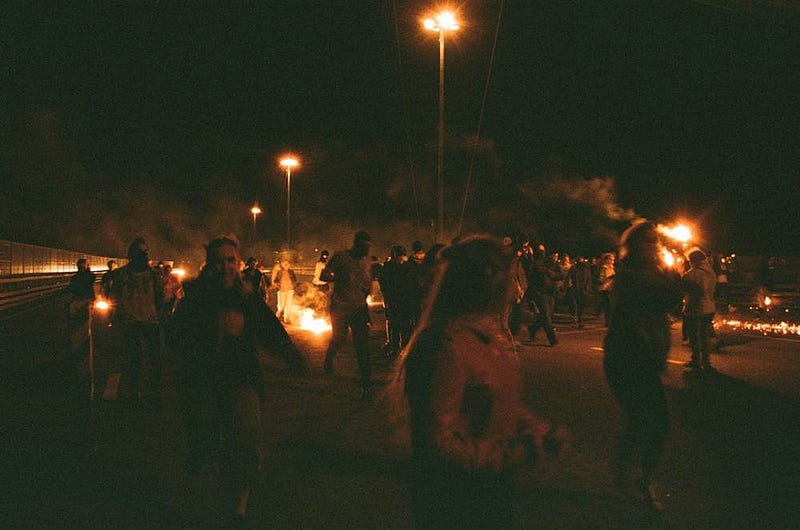
Information abounds about the survival concept of Bugging Out. There are slick expensive magazines full of advertisements for survival products and countless websites and YouTube channels devoted to the bug-out philosophy. Everything you need to know is available from how to stock the perfect bag with the best equipment, to what kind of dream vehicle to purchase to make your escape from danger. In my opinion, there is one area that is woefully short on helpful hints — HOW TO SURVIVE AFTER YOU BUG OUT.
I’m not a proponent of bugging out. Granted, there are scenarios where it makes some sense. If you live in a coastal city that is in the path of a hurricane leaving may be prudent. But, the idea of bugging out to the wilderness when an SHTF event occurs is dangerously ludicrous.
Even a temporary evacuation from a storm event is fraught with problems and perils. On September 24, 2005, Hurricane Rita, a predicted Class 5 storm was heading toward Houston. Thousands of cars jammed Interstate 45 heading north away from danger. The mass exodus turned the highway into a parking lot. Wrecks occurred, cars ran out of gas blocking traffic lanes, vehicles overheated and broke down. Twenty-four elderly evacuees died in a bus fire and dozens of others died from heatstrokes as a result of being stuck in cars in the traffic jam. In the end, Rita was downgraded to a Class 3 hurricane that came ashore far to the east of Houston.
Were the people stuck on the Interstate wrong to evacuate? Not necessarily, but their methods and timing of fleeing the storm were faulty and were made worse by the lack of planning by the city officials.
Temporary evacuation is a subject for another time. My focus now is those misguided folks that plan to leave the cities and survive in the wild for an extended period.
I understand the fear of being stuck in a large city when things go to hell. The danger of angry, desperate mobs is very real and sobering. Even if you are spared from the hoards of criminals you will very likely have to deal with power outages, food and water shortages, and either stifling heat or freezing cold. Unfortunately, none of these problems are going to be solved by fleeing to the countryside.
In a disaster situation like this, there probably isn’t a perfect solution and you just have to weigh the odds and hope your choice gives you the best chance of survival.
The question people who are considering bugging out need to ask themselves is, am I improving my chances of survival or just choosing to die in a different location.
No matter what disaster scenario you deem most likely to occur, the logistics of escaping an urban area are going to be much the same. Anyone living in a large city knows the frustrations of traffic in the best of times. When a disaster event occurs and thousands of cars flood onto the highways it will be worse by far. Wrecks, stalled cars, road rage fights are what you have to look forward to.
Even if you are lucky enough to escape the city, what then? Do you have a place to go? Do you have adequate clothing and equipment to survive once your car runs out of gas? Are you healthy enough to walk a long way to a better place? Do you know how to survive in the wilderness? If you answer no to any of these questions, forget bugging out and plan on bugging in.
Here is another grim fact to consider. Unless you plan to go to a national park or government-owned wilderness area you definitely should forget trying to leave the city. Do not expect people in the country to roll out the red carpet for you. They will see you as a threat,
and if you go wandering around trespassing and hunting on private land you are going to get killed — period.
I think most people are wasting their time and money preparing a bug-out bag. I do feel strongly anyone commuting to and from work should have a ‘get home’ bag. Good shoes, adequate clothing, and water should be a minimum.
So, if bugging out is a bad idea, what can you do to improve your survival chances? For many reasons, I’m a big advocate of leaving the city and moving to a less densely populated area. That is not an option for most people. One upside from Covid is the fact that more people are working from home as opposed to commuting to an office. If you are lucky enough to be in that situation, consider moving out of the city.
If you have to live in an urban area, consider moving to a house instead of an apartment. Large apartment complexes should be avoided. They will be prime targets for mobs and even if that doesn’t happen, some knucklehead will probably set the place on fire trying to stay warm.
Where ever you live, try to have adequate food and water available at all times. I see a lot of people advising stocking up on Ramen noodles. Unless you have a way to boil water Ramen noodles are not going to be a great meal. Since you probably won’t have the power to cook, choose foods you can eat out of the can and a manual can opener will be a necessity. Make sure you have adequate warm clothes and bedding. Every winter numerous people freeze to death in their homes. Trust me you will be much colder if you choose to bug out.
If your space is limited, rent a small storage unit as close to your location as possible to store additional supplies. Most of the looting activity will be directed at retail stores. I think storage units will be relatively secure, at least in the short term.
If you haven’t already done so make it a practice of having certain items with you at all times. This is called ‘every day carry’ or EDC. There is a lot of information available about this subject. My personal first EDC item is a pocket knife. I don’t trust any man that doesn’t carry one. He won’t be worth a damn in a jam.
I consider myself to be a ‘half-assed’ prepper. I live in the country, have a garden, harvest rainwater, and have a fishing lake nearby but I don’t go crazy storing food, guns, or ammo. My wife and I try to have adequate supplies on hand but Covid caught us unprepared in some areas. Who knew toilet paper was a luxury item. We have all learned how tenuous the nation’s supply chain is. Even without unusual events, shortages of everyday items are becoming commonplace. Try to buy a few extra survival items each week.
The bottom line is everyone should try to have adequate supplies on hand to bunker down and ride out whatever emergency occurs.
Here is a list of possible disaster events that some people worry about in order of least to most likely:
CATACLYSMIC POLE SHIFT — Don’t prepare for this, if it occurs you’ll probably be thrown into outer space or be killed by migrating polar bears.
YELLOWSTONE VOLCANO — Unlikely in our lifetime, worry about something else instead but keep your Covid masks handy just in case.
ZOMBIE APOCALYPSE — I think this one’s unlikely, but use your own judgment. It might not hurt to have a big machete or ax handy just in case.
METEOR IMPACT — Possible and potentially devastating. General survival plans apply. If it hits nearby, you’re screwed anyway.
ELECTROMAGNETIC PULSE — Possible. If caused naturally by solar flares it could be short-lived. If caused by terrorists it could be really bad. Keep some cash on hand and have a bicycle since ATMs and modern cars will be useless.
FINANCIAL COLLAPSE — Possible, general survival guidelines apply.
SOCIAL UNREST — Highly likely but hopefully isolated and short-lived. General survival guidelines apply. Avoid crowds and stay inside.


