Budo University
Part of Four Days in London: A memoir about trying to find a way to the Olympics, and finding something else instead. This story takes place in March 2010.
“Loneliness adds beauty to life. It puts a special burn on sunsets and makes night air smell better.” — Henry Rollins
He was gaining on me and we were running out of space. One could argue I knew what would happen when I beat him in groundwork earlier in practice, but as humans, we tend to sacrifice long term gains for short term victories. Z was incredibly physically powerful. One of the rare examples of an athlete who was both a brilliant technician and physical powerhouse by the standards of international competition. I could frustrate him but in giving up twenty lbs of muscle and years worth technical genius I was outmatched.
Jimmy used to say something to me: “Never scratch a tiger’s balls with a wire brush.” It was usually after I had done something really stupid like dig for a strangle hold by grinding my knuckles into the base of his jaw or Muay Thai kick him in the shin with a fake foot sweep. This idea definitely applied here.
I attempted to hold off his power hand and look for an opportunity to attack, to break his rhythm. I never noticed how close we had gotten to the wooden boards near the public entrance to the dojo. I make a gripping error and suddenly Z has control of my upper body. He steps in on a massive hip and leg throw, uchimata. My body hits first, and years of training safe ways to fall keep me safe, that is until I feel a white hot burning sensation as my heel strikes the wooden floor.
CRACK
Whatever emotions were being felt by either of us seem to instantly fade. Especially in practice, sparring can be one of the most emotional experiences of your life. It is normal for tempers to flare, especially if an ego has been hurt. That said there’s are acceptable bounds for behavior, and they are almost always crossed once someone becomes physically hurt. The medic had been right in front of us but to his credit Z stuck around to make sure I was ok.
Thankfully nothing was broken. It was one of those moments that there was thankfully much more pain than damage. Later I would learn I had actually fractured the bottom of my heel, but for the next week, I just assumed it was a bad sprain. Upon it being established I could somewhat walk and that my ankle itself was fully functional, I dusted myself off and finished practice. The next morning I spoke with Sawano. Something was wrong at the Budokan, some kind of mat disease had broken out, and we wouldn’t be able to practice there for the rest of the week. The team was going to go to Budo University the next day to attend a training camp instead.
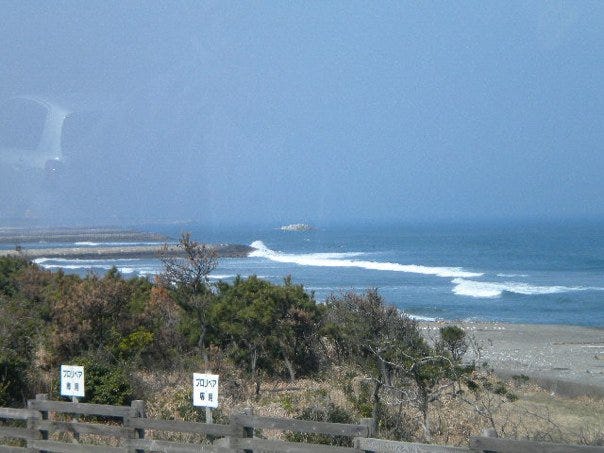
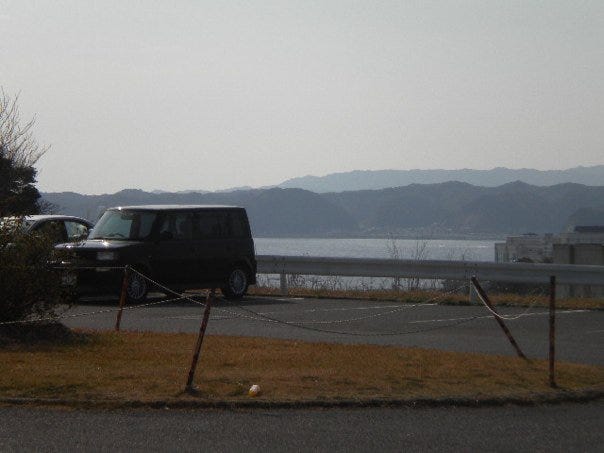
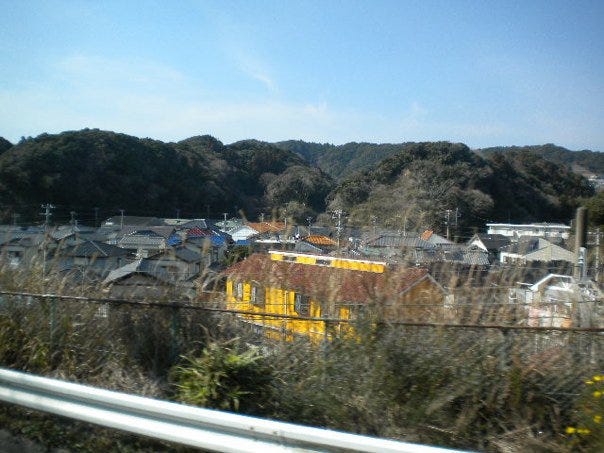
The International Budo University specialized in teaching physical education at the collegiate level. It’s near the town of Katsuura, which sits right on the ocean. The drive there was long but manageable, about four hours. I listened to Malcolm Gladwell’s book “What the Dog Saw” and mostly kept to myself.
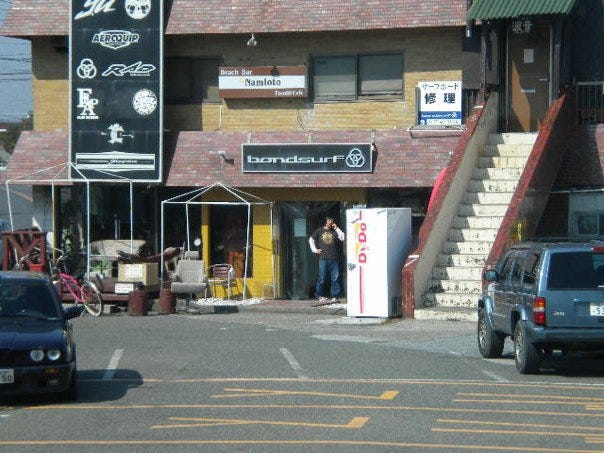
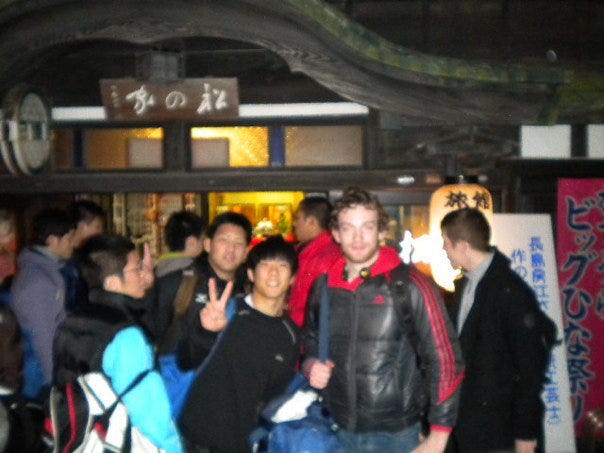
We arrived late at night at a ryokan, the Japanese equivalent a bed and breakfast. I was to stay with Sam that night. We had dinner as a team and I remember being served a complete fish. Thankfully it came apart easily and I hit the hay shortly after.
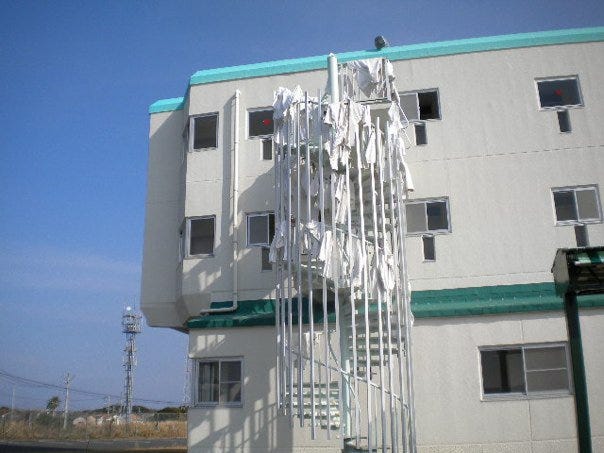
The dojo was up on a hill. You knew you were approaching an area with judo players as we passed by the dorms where judo uniforms were hang drying on virtually any viable surface. The building itself was massive.
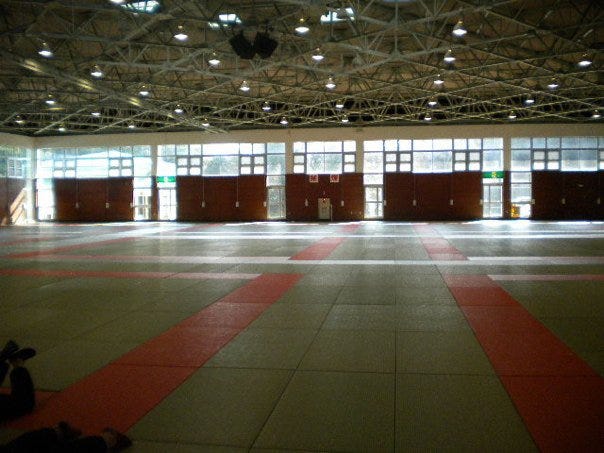
As I limped into the building I was awestruck. What was in front of me was the single largest dojo mat area I had ever seen in my life. The dojo was so large that instructions were provided via a loudspeaker.
When practice started there were hundreds of black belts from all over the world. I became friendly with an American who had been staying there as well as some members of the New Zealand team. The American who had been staying there was from California. When we trained it was evident he was good. I felt comfortable with him but the match wasn’t easy. I had a feeling he and I might compete against each other at some point so I kept mental notes whenever we trained for the remainder of the camp.
One of the New Zealanders, a heavyweight who had spent the last year here, was helpful in pointing out training partners to grab. Several of the top Japanese middleweights were here, and I was excited to compete against them.
The man who was number four in Japan at the time and I were frequent training partners during the camp. His style was soft, like many of the Japanese players. You didn’t feel like he was putting much effort into the round when suddenly you would feel yourself slipping into one of his attacks. I never took a round from him. I was able to throw him using some of my more unorthodox attacks, but I had been warned by friends that not much would be gained by this.
Justin Flores, who had given much a lot of excellent advice ahead of this trip, had warned me upon leaving for Japan that you could throw some of the better judo players with throws common in western wrestling, but it wouldn’t count for much. To improve you needed to spend time trying to get good at what the Japanese players were already good at. You had to attempt to throw them with the big classical judo throws like uchimata. So while it felt good to get messier throws like sumi gaeshi or a fireman’s carry, I reminded myself to stick to upright classical judo.
The night after the first practice we were on our own for food. I took that time to walk around the town. It was beautiful at night, and there appeared to be a festival going on. I turned a corner and discovered a huge shrine displaying many different types of dolls.
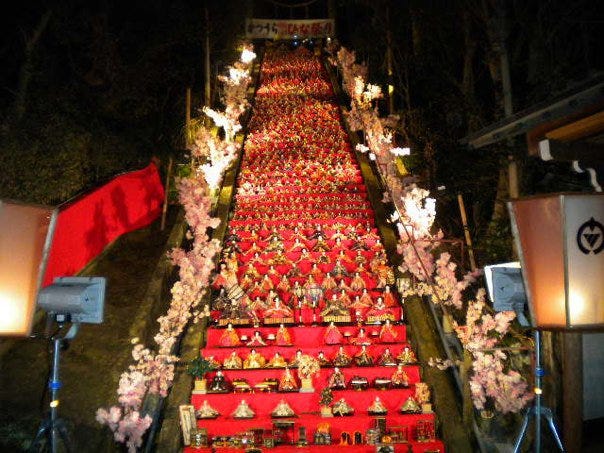
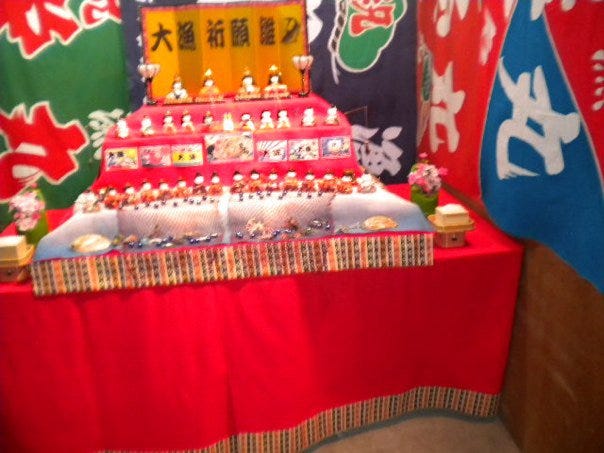
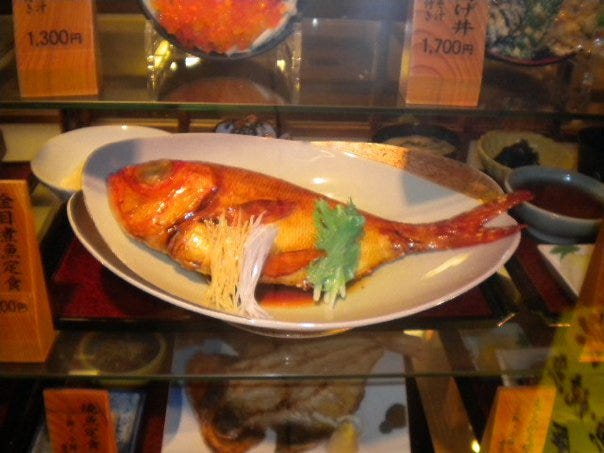
I was alone. The only company I had was the pain in my heel. The feeling, which was constant through much of the trip, was suddenly intensified. I was turned away by several restaurants for not speaking Japanese. Finally, I found a small place. I sat there alone, eating fish and listening to an NPR podcast I had saved on my phone. I was torn between relishing the experience and wishing I was home where I would have someone to eat with.
When I woke up for the second day of practice my heel and now ankle was swollen. I ignored the pain but about halfway through practice, I realized I couldn’t keep weight on it. I then battled through the remaining camp on one leg. Thankfully my right leg, where the damage was, was the leg I used for wrapping around my opponent. I didn’t need to keep weight on it if I just kept attacking.
At the end of the final practice, the strategy had worn itself out. I was worn out, and my body was broken. While my ankle and heel would thankfully heal up after a few days, at that moment they needed rest. I took the last fifteen minutes randori off just to watch some judo. On the mat was Suzuki, or perhaps a clone. Suzuki was a legendary judoka from Japan who had won the Olympics at heavyweight despite being, in reality, a light heavyweight. While he was passed his prime, he still continued to perform on the world stage. Getting to watch him was one of my favorite experiences in Japan.
I walked out of practice after having packed my things to wait for the bus. I don’t have any pictures that really do the area justice, but know it was one of the prettiest places, at least in that moment, that I’ve ever traveled to for judo.