
Budapest Unbiased
Politics penetrate daily life
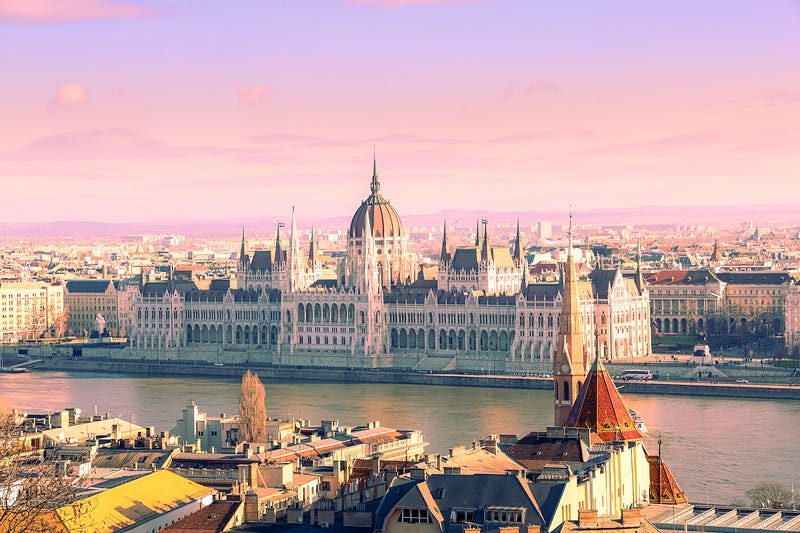
Budapest has become one of the top tourist destinations in Europe, for a good reason. Often, we do not recognize the beauty of the place that we live in anymore. But Budapest is simply amazing, and there is no reason to argue about it. It is not a city to tick in one or two days. Here you can easily spend a week discovering something new. But as in every place, being a tourist or live and work somewhere are two different things. Read till the end of this article if you want to know more about the complex image and the less charming sides of Budapest as well.
Why is Budapest a top travel destination in Europe?
The most beautiful European city at night
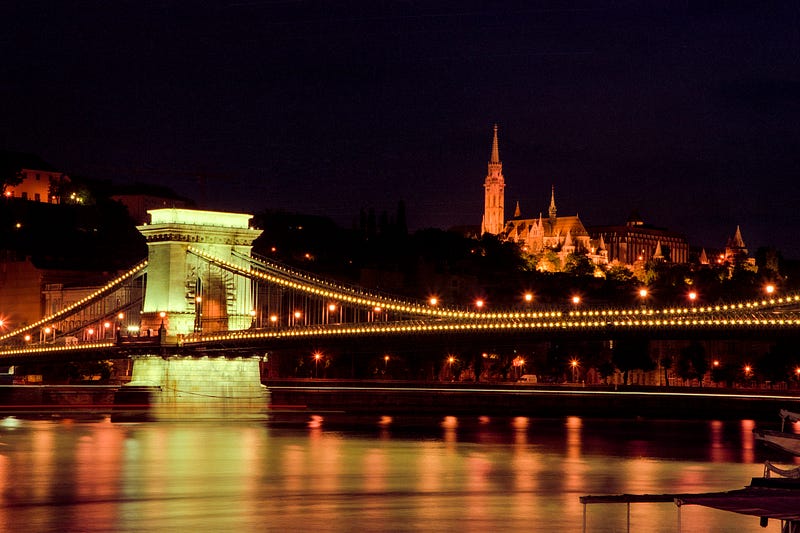
After having been to several corners of Europe, I can say that Budapest is the most picturesque city at night when it is enveloped in lights. No, it is not Paris. Budapest is the city divided by the river Danube into two parts, Buda as Pest. Hence the name Budapest.
I can be bored of seeing Jungfrau in Switzerland, the picturesque villages of Austria, or the countless churches of Italy. Still, I cannot cross the river Danube without throwing an eye on the ensemble of stunning monuments (The Buda castle, The Fisherman’s Bastion, The Chain Bridge, the Gellért Hill, and the historic universities). The Parliament building during the day and at night is something extraordinary.
A student city
Budapest is a student city and thus full of young people. The University of Medicine in Budapest and the countryside attracts international students, many from Arab countries. They get a good education for a much lower tuition fee compared to other countries. After that, some of them settle here as there is always a lack of doctors, while others return home. But those who stay must learn the local language, which is one of the most difficult on earth. Hearing a foreigner speaking a foreign language always makes me impressed. Most of them are happy to be able to say “Cheers” in Hungarian, meaning “Egészségedre.”
Incredible nightlife
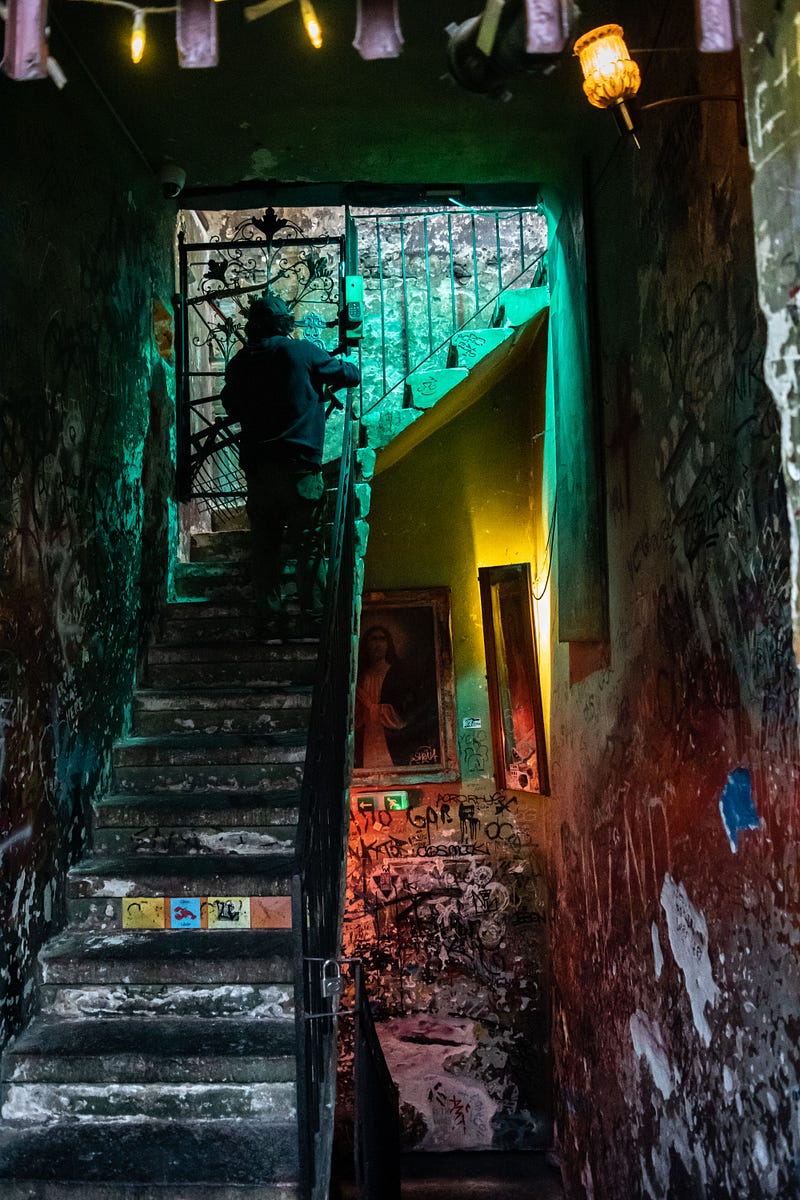
The high number of students makes sure that the city never sleeps. Just head to „Király utca” (King Street), get drifted with the crowd, and have a drink in Gozsdu Udvar, the modern pub street of Budapest, or the Boulevards and main squares of the downtown. Have you heard about the “ruin pubs” that are unique in Budapest? Those are old shabby residential buildings converted into multi-story pubs with a unique atmosphere.
Relatively cheap destination
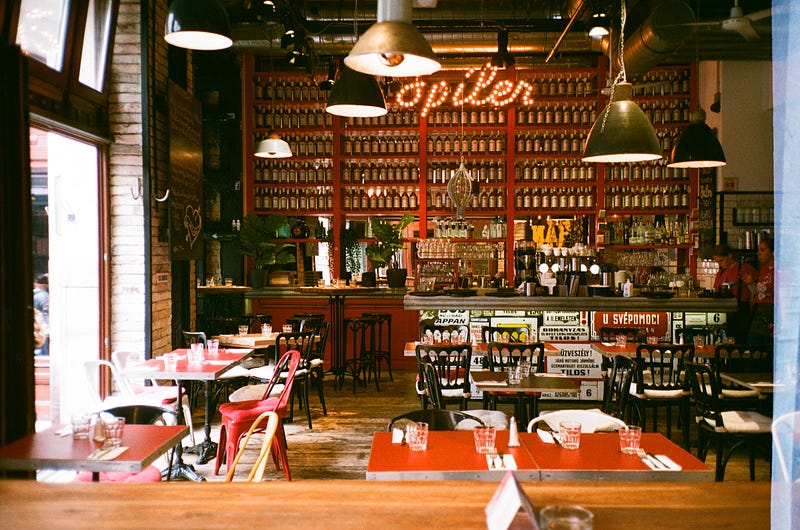
Budapest is also favored because it is cheaper compared to Western European cities. Although this gap seems to be something of the past as prices rapidly increase. But it has a moderate effect on foreigners who arrive with a strong currency. Before the pandemic, 1 EUR was worth around 310 HUF (Hungarian Forint), which increased to 355–360 HUF.
“The party capital of Europe”
No wonder Budapest has become the „party capital of Europe” and the favorite destination of bachelor parties. It is affordable, lively and there is one more thing. Hungarian women have a reputation for being extremely attractive.
But it is a cultural city at the same time with countless pop and classical concerts, international sports events throughout the whole year. There is always something to do.
At first, tourists feel lost by the lack of English inscriptions and not understanding a single word. As my German husband stated after his first visit to Hungary, some of the essential terms to know are „Bejárat”(entrance) and „Kijárat” (exit). It is enough to survive.
Spectacular architecture and complex history
Budapest is a favorite of photographers too. Almost every building has its story and unique architecture with facades decorated with statues, interior courtyards, and ancient staircases. Even if most buildings need renovation, the crumbling walls reflect the complex past of a country that was the scene of the Holocaust and lived under Soviet domination from 1956 till the change of the system in 1989.
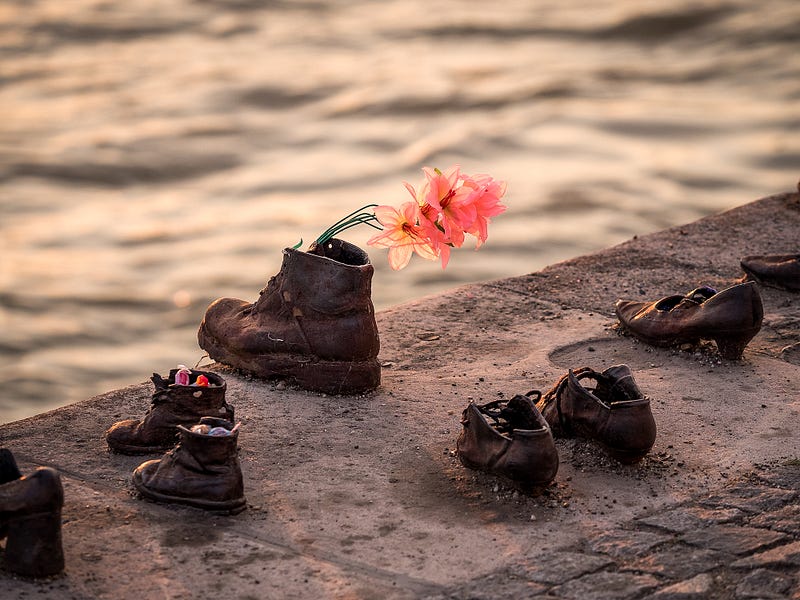
Budapest always had a significant Jewish community. After the German occupation during WWII, the mass deportation of Hungarian Jews began in May 1944 to the concentration camps, mainly Auschwitz. All in all, 566,000 Hungarian Jews were murdered. There is still a significant Jewish community concentrated around the Dohány Street Synagogue, the area of the former Jewish ghetto.
On 14th May 1955, the Soviet Union created the Warsaw Pact, binding Hungary to the Soviet Union and its satellite states in Central and Eastern Europe. The decades of the communist era left a lasting impact on the architecture and atmosphere of Budapest and Hungary. Soviet tanks and troops put a brutal end to the Hungarian revolution on 4th November 1956, a spontaneous national uprising that began 12 days earlier.
During the communist period, my grandfather was jailed for questioning the competence of a former hairdresser. She got into a leading position only for being a member of the Communist Party. Sympathy with the regime was the key to a secure job and a worriless life. Anybody could get into prison for only making an inappropriate remark against the government. Plus, the regime had spies everywhere who reported on any suspicious behavior. Nobody could be sure if the neighbor is one of them and who they can trust.
The decades of Soviet influence isolated the Eastern part of the continent, and it “fell behind” the Western region that already experienced democracy and capitalism. People’s movement was limited to Soviet countries, and for most of them, it was a dream to escape from the rigidness of communism. So did Ferenc Puskás, the legendary football player, probably the most famous Hungarian until today. The change of the system in 1989 raised enormous hopes by adopting a new political and economic approach. Borders opened, people became free to travel to the West, and state properties were privatized. People got equal chances irrespective of their political orientation.
The downside of living in Budapest right now as a local
And now, let’s see the other side of the coin and understand the less charming side of the city. Budapest is still glowing outside, but increasing discontentment, anger, and disappointment create extreme tension in daily life under the surface.
The constant attempts to cheat tourists
The constant attempts of cheating the tourists make me upset about Budapest. And it already starts at the airport right upon arrival.
Landing at Budapest airport, I get immediately angry seeing foreigners going to the money change that set the buy and sell rate with such a gap that it qualifies usury. The buy rate for Euro was 250 HUF, and sell rate for 350 HUF. If you went downtown, the same varied between 305- 315 HUF. As I mentioned, the numbers are different now after the pandemic, but I’m sure the proportions have not changed much. Our currency is relatively unknown and weak, so it is easy to fool naïve foreigners. I often went to tourists and advised them against changing much here and going to the city for better rates. Lately, they have reduced the enormous gap between the buy and sell rate, but it is still better to avoid it. It is the same when you arrive by car and buy the vignette for the highway at the border. The price in Euro is calculated with HUF 260, far from the current rate of HUF 355.
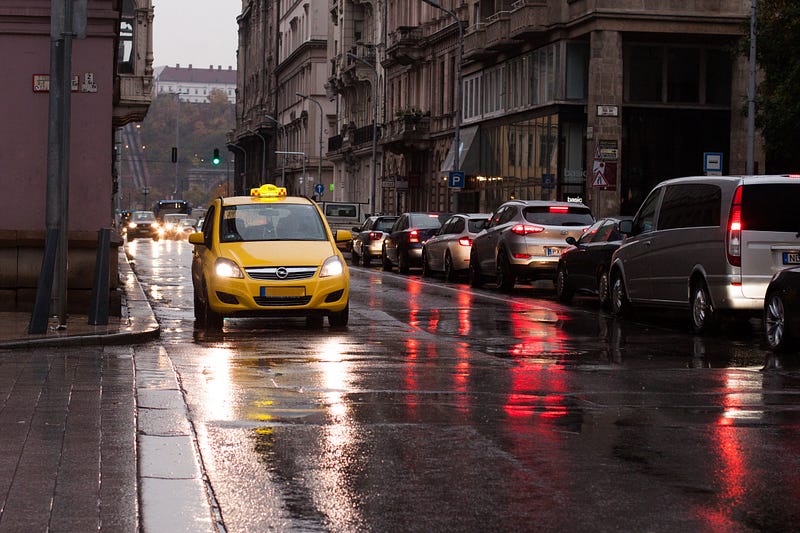
Then come to the taxi drivers who charge exorbitant prices without using the meter or using but turning that manually ahead. They do not bother to do that with locals as well. For that, I always ask the approximate price before getting into the taxi.
The restaurants are no exceptions as well. Some tourists reported that they got a couple of hundred euros bill in a restaurant for a simple meal.
Safety is an issue although not worse than in other European capitals
The safety of Budapest is not better than other big cities in Europe. Pickpockets are common on the metro, trams, buses, and there is hardly any resident who did not have anything stolen during the years. Always keep an eye on people around you when it gets crowded.
Not the cleanest city
Although the improvement in cleanliness is visible, there are still some undergrounds you had better avoid even during the day. Hold your breath at “Népliget” and “Blaha Lujza tér” metro stations.
There are much fewer homeless people around the city, but not because of the improved standard of living. The new law made it illegal to live in public places and can entail imprisonment.
Corruption is rapidly expanding
The metro lines and stations are often under renovation, but for some “inexplicable reasons,” the actual costs multiply, and the completion is postponed even for years.
The government-close companies manage most large-scale projects, and competitors stand no chance to win a tender.
Friends of the current prime minister are buying up as they like companies and properties and accumulate enormous wealth.
The overwhelming political propaganda
Political propaganda overwhelms the city. Before the parliamentary elections in 2018, posters with the image of George Soros, the Hungarian-born American billionaire investor, decorated the road leading from the airport to downtown with the inscription “Stop Soros.” The Hungarian government accuses him of financing the immigration waves towards Europe and other non-government organizations that try to undermine the current political system.
The ruling Fidesz party declared him the enemy of the state and tried to incite public hostility against him. The Hungarian government also revoked the Central European University (CEU) license, founded by Soros in 1991, forcing it to relocate its campus to Vienna. Simultaneously, anti-migrant and anti-European Union boards with “Stop Brussels” inscriptions were added to the Soros posters. Hungary joined the European Union in 2004 with immense optimism, but by now, there is a general dissatisfaction nurtured by the Hungarian media.
The posters mentioned above have been removed since then, but the political campaign to incite hatred continues. The new targets are the LGBTQ communities. One-sex couples do not have the right to adopt a child. On top, the government plans to make all somehow related content on television, including the popular series Friends, inaccessible for the juvenile under 18. Educative programs of schools cannot talk about the existence of homosexuals and transgender people. Hungary faces sharp criticism for its discriminative new law from the European Union. Some agree, but others feel that the government went too far by penetrating the families’ lives.
Due to all the above, opinions are sharply divided in Hungary about the government’s campaign. Politics have become a sensitive topic that ruins family relationships. You would probably experience two types of attitudes in Hungary. Either people refuse to talk about politics at all, or they burst out in complaint mixed with anger.
Conclusion
As somebody who traveled the world, I can say that Budapest is a beautiful tourist destination that you must see. It is lively, relatively cheap, with incredible architecture, landscape, and spas.
However, locals suffer under the corrupted and manipulative political campaign that creates extreme tensions, and there is a fear that it makes even more people consider leaving the country. But let’s see what the elections bring next year!