
The Reflective Eclectic
Bubbles
People can love one another and have very different perspectives on things
In my earliest memory of my mother, I must have been around three. We were at the beach. She had spread a towel out on the sand and was sitting there, doing whatever it was adults did when they sat on the beach in those days.
I didn’t pay much attention to what adults did back then.
I suspect my Aunt Cosette was there because she often was around whenever my mother did fun things. There was probably a transistor radio playing. It was 1960 or 1961, so imagine some early Rock. Seagulls were flying. A horseshoe crab, straight out of the Pleistocene was flipped over and getting an examination by kids. I had a plastic pail and was doing something with it and the sand.
I waded into the water.
This beach was on Long Island Sound. There are no big waves there. It’s a very safe place, as long as a kid doesn’t go out too deep. It’s like a wading pool.
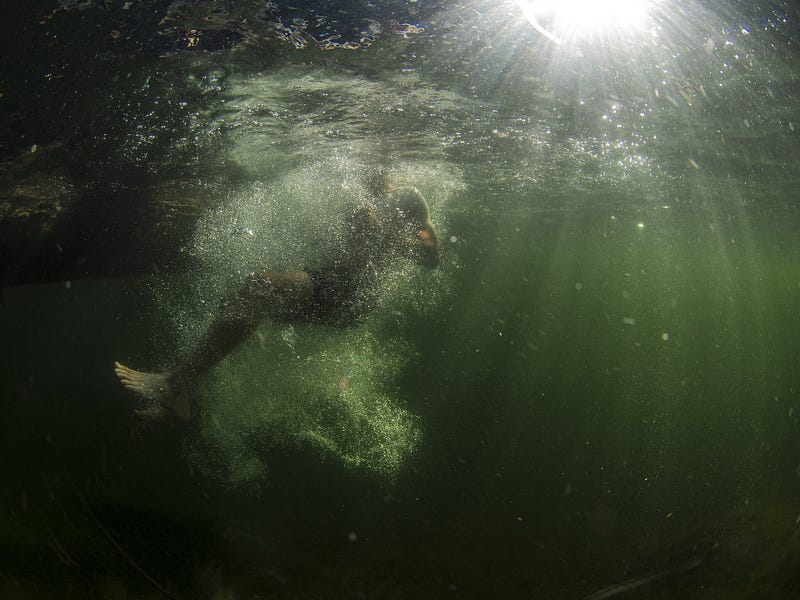
I must have tripped or slipped or just totteled under the water. I had gone out too far, so I went under. When I went under, I saw my hand holding the pail. They looked the same, but strangely different through the water. I looked up towards the sun and I saw the light coming through. They looked different, too. And then there were the bubbles. I had never seen bubbles like that before and they were gorgeous. These bubbles were the last of the air coming out of my lungs.
Someone must have fished me out of the water then. The next thing I knew I was being carried up to the towel where my mother was. She was crying, simultaneously afraid that I almost drowned, relieved I hadn’t, angry that I had gone out too far, and horrified she had almost lost me.
I was excitedly trying to tell her how wonderful it was under the water with all the bubbles.
Neither of us were understanding one another.
It would not be the last time.
I learned many things that day on the beach. I learned about the bubbles and how wonder dwelled in unexpected places. I learned that wherever peril was, there might be a marvel. I also learned that my mother loved me, and that loss, and the fear of loss, was the flip side of love. You can’t have one without the other.
It was the very strength of this love, fear, and wonder that kept us from understanding one other. I was unable understand the price she paid for my discoveries. She was unable to set aside her feelings to listen to me explain what I had found.
She never did understand the thing I had about the bubbles.
People can love one another and have very different perspectives on things. There’s often nothing you can do to reconcile them. She just wasn’t going to get it about the bubbles because she hadn’t experienced them, and I wasn’t going to get it about how scared she was because I hadn’t just seen my son almost drown. I didn’t even know what drowning meant.
Now, in a sense, our positions are reversed, my mother and me. I’m on the beach and she’s in the water. She’s gone down and is not coming up.
I get it now.
I wonder if she’s getting it, too. Is the view from where she is as wonderful and unexpected as what I saw under the water?
Keith R Wilson is a mental health counselor in private practice and the author of three self-help books, two novels, and innumerable articles. A third novel, Who Killed the Lisping Barista of the Epiphany Café? is currently being published one chapter at a time in Medium.


