
Brutal Psychology of Attraction
The external traits of attraction are superficial. These are deeply rooted in our biology
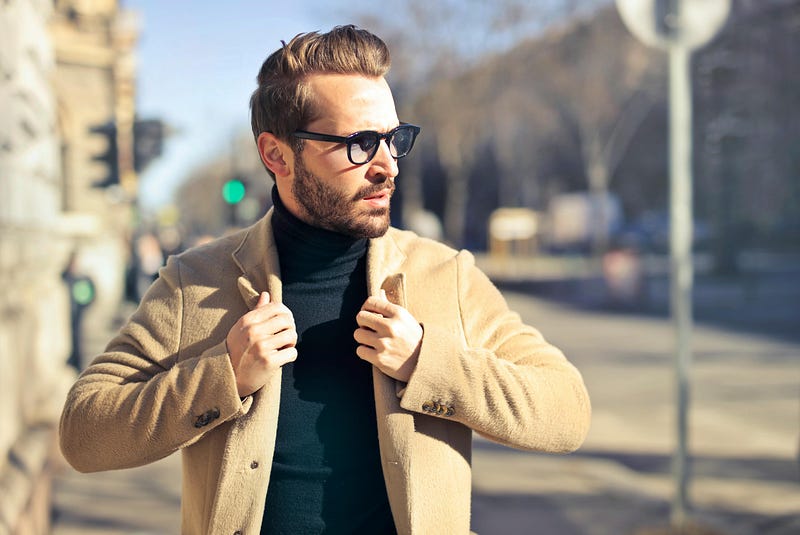
Attractive people are seen as having more positive attributes. Studies also show that attractive students get higher evaluations and more attention from their teachers.
A study that scared me a little revealed that good-looking patients get more personalized care from doctors.
Some studies also show that attractive criminals receive lighter sentences than less attractive ones all in all plenty of reasons for you to work on becoming more attractive.
Is this unfair?
May be, but biology can be brutal anyhow.
How can you increase your attractiveness?
One way to increase your attractiveness instantly for men and women is to dress exquisitely. Having an impeccable style is eye-catching and will gather attention from the opposite sex, which may be the initial spark that you are looking for.
It also shows people that you are someone who takes care of him or herself.
There is a big difference between men and women on why dressing well will make you attractive and dressing well, is more important for one sex than the other in terms of attractiveness.
Let me explain why.
The reasons for the different goals of dressing are evolutionary wired. By the way, I’m well aware of religious dressing and people dressing to be part of some kind of group.
A term coined by Robert Trivers in 1972 predicts that one, the sex that invests more in its offspring will be more selective when choosing a mate. And two, the lesson investing in sex will have intra-sexual competition for access to mates.
As for evolution favored women who were highly selective about their mates. Whether you look at it from the initial investment per gamy, the fertilization, gestation, and breastfeeding period. There is no denying that sex investment for women is much higher than for men.
David B in evolutionary psychology rights says.
In the case of humans, it is clear that women have great obligatory parental investment for long-term mating or marriage. However, both men and women typically invest heavily in Children.
So the theory of parental investment predicts that both sexes should be very choosy and discriminating.
A great example is given in the same book that if an ancestral woman had to choose between two men, one who shows great generosity to her with his resources and the other who is stingy, all else being equal, the generous man would be more valuable because he’d be more likely to share food, to sacrifice his time, energy and resources for the benefit of the Children and thus aiding the woman’s reproductive success.
What has this got to do with dressing?
Well, women generally are looking for through an evolutionary lens in a mate. Let’s see what men look for men seek due to many advantages in our evolution. Past fertile women, there is a distinction between fertility and reproductive value, but let’s not bring that in right now.
By the way, the notion of women reaching their peak, quote unquote sexual market value, not their value as a person. Let’s get that very clear is at its highest in their mid-twenties. The problem that arises for men is that, unlike our closest primitive relatives, chimpanzees get bright red, swollen genitals and scents that are highly attractive to male chimpanzees.
We as men don’t know when women are fertile the ovulation is to a large part concealed.
David Boss explains in the aforementioned book that men, however, could have evolved adaptation sensitive to observable qualities of a woman that are correlated with underlying reproductive value.
Potentially observable sets of cues would have included a woman’s youth and her health. So men seek proxies for a healthier fertile female, attractive external qualities like skin quality.
Why do you think so much money is being made by selling all kinds of creams makeup or rouge that make your cheeks look like?
There is a lot of blood flowing there just like when you are having sex or lumber curvature, think of high heels that make your buttocks appear larger.
Facial symmetry. That’s some more difficult one to take care of femininity, full lips, one of the many cues of femininity.
Why did you tell me all of this?
Well, it has brought me to explain to you the fascinating nugget mentioned in the book, The Consuming Instinct by God.
The author explains that men and women wear clothes as a form of sexual signaling women are more likely to use their clothes to highlight their physical attributes and men, are more likely to use them as a status symbol.
He points to a research study that takes the same man and has them wear one of several attires, each of which signals a different level of socioeconomic status.
He writes, for example, placing him in McDonald’s uniform or medical scrubs, then wearing a sleeveless shirt and unfashionable jeans versus dressing him in a high-powered suit along with an expensive watch.

Women are then asked to rate how physically attractive the man is across the various status conditions. Not surprisingly, the same man is construed as much more attractive when wearing high-status clothes.
When the same manipulation is administered to men using female models, men generally care less about the social status of women’s attires than most men, whether a woman is wearing Prada or Walmart knockoffs is utterly irrelevant.
However, any garment that accentuates a woman’s curves is noticed. Simply we can say, that women look for handsome and men seek sexy.
Physical attractiveness in a long-term mate is more important to men than women. So men use their clothes as a way of showing off their status. Indirectly, man says, I’ve got so many resources, I’m able to spend money on these things that I don’t need for my survival.
Short-term Vs Long-Term Relationships
However, The psychological literature for short-term mating is different than long-term mating, which shouldn’t be hard to fathom if you are a woman and just want to have a fling.
You put a higher importance on their physical attractiveness and less on whether they have a college graduate or not or their ambition, which might translate to more resources in the future.
A Research Findings
Boss and Schmidt asked women to rate 67 characteristics of desirability in short-term and long-term mates. The rating skill ranged from minus three, which meant extremely undesirable to plus three, meaning extremely desirable.
Women found the following qualities to be more desirable in a long-term marriage context than in a short-term sexual context, ambitious and career-oriented.
Results
This got an average rating of 2.45 in the long term versus 1.04 in the short term.
College graduate, 2.38 versus 1.05.
Devoted, 2.80 versus 0.9.
Kind, 2.88 versus 2.5.
Look, 2.05 versus 2.45.
Conclusion
The external trait of look is more attractive in both long-term and short-term relationships than the internal trait of kindness.