
Brussels Terror Attacks: How I Skipped a Rendezvous With Death
And dodged a bullet at the heart of Europe.
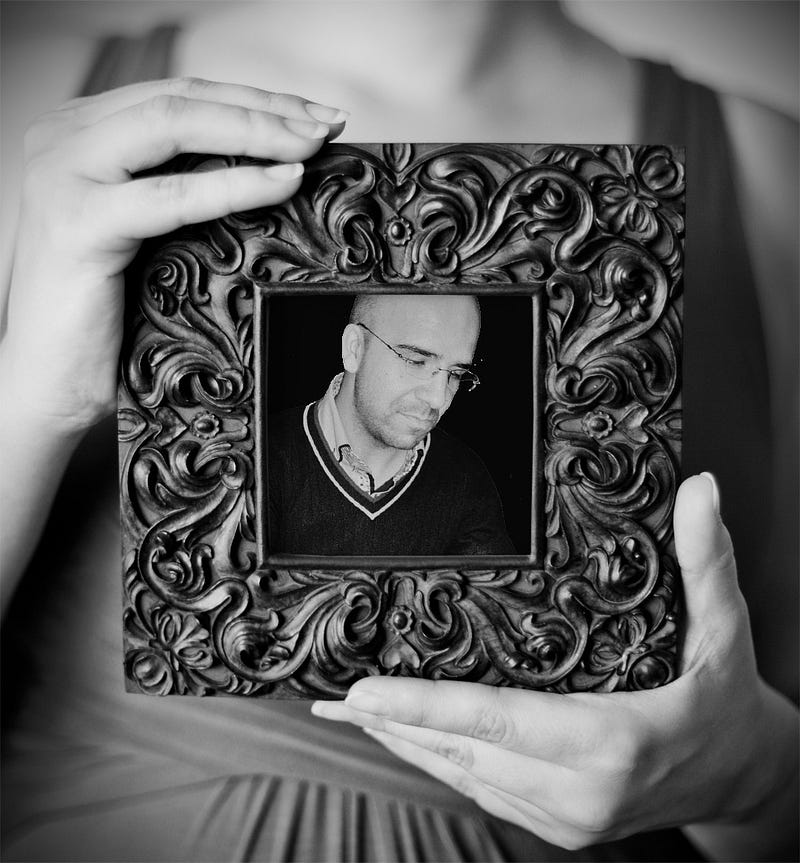
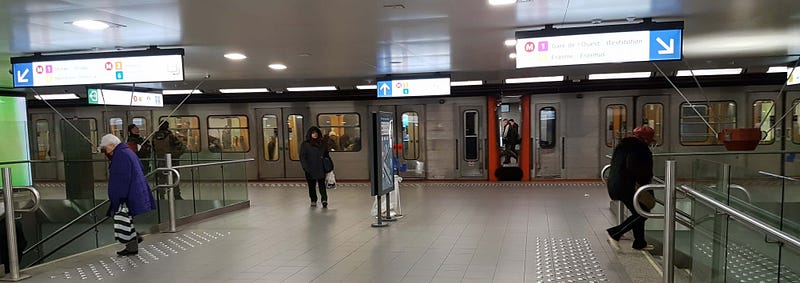
On the day of the Brussels bombings, I was on line 6 toward the city center. Death was coming my way on line 5. I alighted one station before we ever met.
Overture
It’s 7:58 a.m., March 22, 2016; I’m running late to catch the streetcar that crosses the Charles-Quint boulevard in Berchem-Sainte-Agathe.
I wake up to a heavy-eyed morning. The scent of fresh coffee and toast tickling my languid nostrils. I’m unaware of the terror that broke out at Brussels International Airport in Zaventem.
The explosion still echoes through the open space of the airport’s departures hall. A suicide bomber detonates his DIY explosive charges. Seventeen innocent people fall victim to the blast near the Brussels and American Airlines counters.
Chaos erupted immediately after the first explosion. Amidst the carnage and havoc, debris precipitate from the partially collapsed ceiling. A shroud of glass shards covers the floor. Hundreds are running in panic. Someone yells in Arabic, and then a second explosion erupts as people scramble to escape the building.
The ensuing devastation could have been far worse. The third terrorist panicked at the last minute and abandoned the dreadful luggage. Then, the man fled the scene. Authorities will later inactivate three undetonated explosive charges in the airport hall.
Rendezvous
A frosty March morning greets me at the door as I leave the house. Metairie street is quiet, and life seems to run its ordinary course on a Tuesday morning.
Grumpy faces greet me at the stop. I glance at my neighbors and only find perfect strangers wrapped together in the heart of Europe. We carry our hurried lives on our shoulders. We kept ignoring the surrounding threat—taken in by the daily routines of our urban life.
I check the time, and it’s 8:30. Hélas, the streetcar to the subway station in Simonis is late again. Zut! I hate showing up late for work, but with STIB public transportation, that’s bound to happen sometimes.
The clock now shows 8:40. I’ve arrived at Simonis to catch the subway train to the city center. With some luck, I can still catch up and arrive at Arts-Loi on time. From there, it’s a mere two-minute walk to the offices of the NGO where I work.
Subway stops pass before my eyes: Ribaucourt, Yser, Rogier, Botanique, Madou. Finally, Arts-Loi, the clock shows 8:58 as I exit the train and run up the escalator in a sprint against time and death. Unbeknownst to me, I was late for work and running early for a rendezvous with death.
It’s 9:10, and I’m sitting in front of two screens in my workstation immersed in Excel spreadsheets. Despite being late, I was the first one here. The project manager arrives shortly after. As she greets me, suddenly, the city center erupts in a shrill blare of sirens. We stare at each other, alarmed and astonished.

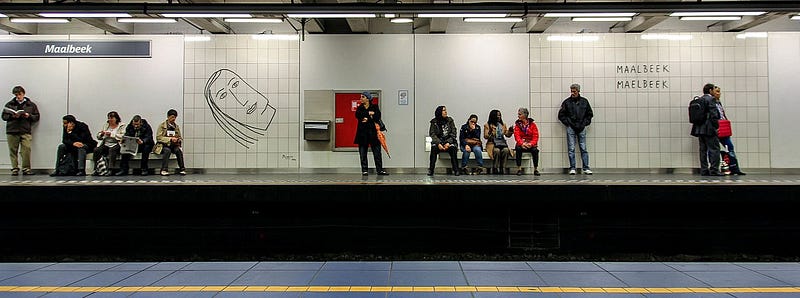
9:11
The time is 9:11 in the Maalbeek subway station next to the European Parliament. Those numbers combined are harbingers for tragedy. On line 5, towards Arts-Loi and the Brussels city center, suicide bomber Khalid El Bakraoui detonates his explosives inside the train driven by Christian Delhasse.
While the train was leaving the station toward Arts-Loi, an explosion ravages the second car cruising the platform. The engineer immediately stops the vehicle. At first, Christian thinks of a technical incident but soon realizes he is facing an unprecedented tragedy.
The train driver escapes unharmed; blind by the smoke, he goes back to help the victims. The engineer’s behavior is exemplary. Unaware of what is going on, Christian keeps a cool head; he abandons the relative safety of his engine driver’s seat, making his way back to the platform. There are bodies on the floor and passengers in a frantic state of shock.
The station recalls a disaster movie scenario. The driver maintains his composure while he helps evacuate passengers from the first and last cars. Some of them seem severely injured, covered in blood, in shock, crying.
The scene is horrifying, but Christian keeps guiding disoriented people with the help of other passengers that discreetly remove sporting pieces of flesh from traumatized people’s clothes while escorting them to safety.
.jpg)
Aftermath
Standing in our offices, we remain in the dark, not knowing how close we were to the eye of the hurricane. Minutes ago, I was traveling on line 6 going downtown. Our Project Manager passed by Maalbeek, and she takes subway line 5 regularly. We escaped tragedy by the skin of our teeth.
Something awful happened; Adrenaline spikes as my seven-year military training kicks into high gear, awakening all my senses. I walk to the windows to check the US embassy grounds across the street. There’s some commotion at the gate, but everything seems fine.
I go down to the entrance. The security guards from the Turkish Embassy in the building next to ours are on red alert. They are screaming something about a bombing in the subway and have orders to close doors and barricade inside the building. Meanwhile, the receptionist asks me to go back inside. The landlord gave the order to lock our entrance door.
No one is to leave or enter seems to be the superimposed rule across town. Out of nowhere, police and emergency medical vehicles swarm the city center. Authorities closed the airspace. Hence, only police helicopters are taking off to ensure surveillance.
I run up the stairs, avoiding the elevator, and take a vantage point near a window from where I have a clear line of sight to Avenue des Arts and the U.S. Embassy. My mind wanders to the old days as I envision elite special ops on the rooftops—the glare from the telescopic sight of an M24 sniper weapon system scanning the vicinities for any threat.
It’s 9:14 when the Belgian government increases the state of alert to the highest level (4). Brussels looks like a city under siege. The police patrol cars give way to armored vehicles and riot police brigades. I go back to my office, where the project manager shares the official status report.
As of 10:28 a.m., they shut all public transportation in Brussels. We are to remain barricaded in the office and try to get back to work as much as possible, but our thoughts are with the attack victims.
Later in the afternoon, it’s time to go back home. I take a three-mile walk through town to ease my mind. Despite the morning events, there’s plenty of people on the streets making the journey on foot or cycling.
They closed the bookstore in our building. There’s military personnel in front of the Turkish embassy armed to the teeth with assault rifles. The police and army reinforcement is even more noticeable in front of the US embassy.
I walk past the entrance to the Arts-Loi station, now blocked by police tape and patrolled by the military. I cross the street and pass in front of the Charlier museum towards Madou. Further ahead, I gaze at the green heart of Brussels in Botanique while crossing Boulevard Baudoin. The long avenue slashes through this part of town, leaving a scar that stretches for miles toward Elisabeth park.
I’m following the same route on the surface that I take every day underground through the subway system. I cross the Brussels Canal and focus on the National Basilica of the Sacred Heart in Koekelberg that rises on the horizon to symbolize human resilience in the face of adversity.
As I cross Elizabeth Park, I meditate on the frailty of human existence and how we are walking toward death from the day we are born. We repeat our days oblivious to our fatality until tragedy almost hits us, and we realize that each day is precious, and we shouldn’t take anything for granted in this life but death.
I get home. I am safe and sound, and only at that moment, the complete picture hits me in the stomach. For hours, I’m drawn to the news and notice the actual extent of a tragedy that afflicted families nationwide and around the world.
New Dawn
Life was never the same in Brussels after that day. It’s 7:58 a.m., March 23, 2016. I’m running late to catch the streetcar that crosses the Charles-Quint boulevard. I rush to the stop and, crossing the corner, I breathe a sigh of relief, seeing people there. The streetcar hasn’t passed yet. I can still catch it.
When I get to the stop, the digital displays don’t show any vehicles running. Yet my neighbors still cling to the hope that a bus or a streetcar will surface. I am more skeptical than that. Hence, I don’t lose another second. Again, I walk across town to get to work—the same three-mile-long route as yesterday. I will be late, as it will take over an hour to cover the distance on foot, even in my fast walking pace from army days.
The bombs have shaken Europe’s heart, but it keeps beating. Terror does not diminish us, and everyone who walks with me that day is the face of the determination to conquer fear. I realize that life is short, and there’s no time for hate; hence, love will always prevail against terror.
Hundreds of people walk with me to the city center, and many others pass us on bicycles or scooters. A blatant demonstration that terrorism may frighten us, but it will never conquer our hearts.
As I walk on the surface above the same subway line that the day before left me one station away from a rendezvous with death. The grim reaper follows close by, and it may lurk across the corner. And only fate knows when we will meet. So we need to live each day as if it were the first and each second as if it were the last.
I follow the same route on foot for days on end until the urban arteries of the city slowly come back to life. Meanwhile, I had to find alternative ways and adapt to the new commuting map. At first, I had to take a bus, then a streetcar, and finally the subway in a loop through the city before getting to work.
Life had changed in Brussels’ European Quarter. We had a police officer on every corner and armed military personnel patrolling the subway stations and trains. I also raised my awareness state when I went back to the subway after dodging a bullet.
I remember waiting at the station, leaning against the corner at the platform's edge with all my senses alert and applying all the teachings I learned during my military training. I always boarded the last car and traveled while standing in the back with an unobstructed view of the whole train section and the doors.
For months, I couldn’t go back home to see my mother, who missed me terribly. Then, on Sunday, April 3, the Belgian government reopened Zaventem’s International. The first day of operations since the March 22 terrorist attacks.
That week, I was among the first passengers returning to the renovated Zaventem airport departures hall. My flight was scheduled to depart at 6:30, and I recall taking a taxi to the airport as no public transports were running at that hour. I will never forget walking through the vast halls and, for the first time, seeing one of the largest airports in Europe almost deserted.
At that early hour, the silence was dismal. There was only a skeleton crew of airport staff and a few travelers strolling around the same airport, overflowing with people in the past.
Afterward, I recall boarding that which became my most surreal flight to date. From the moment I sat down in my seat until we landed at Porto airport in Portugal, we never saw a crew member again.
We didn’t have the usual flight safety procedures and best practices briefing, and there was no catering service during the entire flight duration. Stewards didn’t offer us a glass of water or sold a single perfume on board.
As soon as the flight was complete, the crew closed the curtains in the cabin, and we never had contact with anyone else until they opened them so we could disembark the aircraft.
Requiem
It’s around 8:30 a.m., April 7, 2016. I’m disembarking the plane at Francisco Sá Carneiro Airport in Porto, months after my last visit. I close my eyes, breathe a sigh of relief and let the gentle, salty breeze from the Atlantic ocean and Memory beach fill my lungs.
I walk down the stairs, thinking about all those who weren’t as lucky. All the innocent victims that arrived on time for an ill-starred rendezvous with death.
Down on the tarmac, I give thanks for the grace of being alive. Life as an ex-pat is hard on the heart, however, as in the lyrics from Pedro Abrunhosa’s song. I made it back into my beloved mother’s arms. I can’t wait to hold her in my arms and kiss the tears of joy rolling down her face for finally having me home safe and sound.
P.S.
My thoughts and prayers are always with those we lost, their families, and friends. I probably crossed paths with them countless times along those subway lines without sharing a word or exchanging glances. With these last words, I pay tribute to those we lost on that sad day. I will strive to uphold their memory and promise always to raise my voice against terror or violence of any sort.

⭐️ Sign up through this link. Support your favorite platform and its talented authors. You’ll boost our community’s success and support my work with a small commission, all while gaining exclusive perks and benefits as a member.
