
Listening to Springsteen’s Latest, ‘Letter to You,’ Feels Like Spending Quality Time With an Old Friend
Like the Boss’s best work, it is both deeply personal and wholly universal
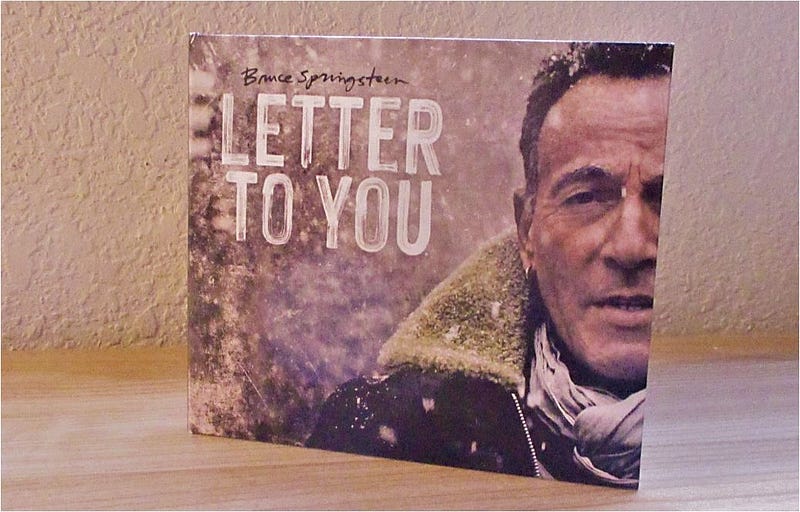
I was fourteen when I discovered Bruce Springsteen and the E Street Band.
I’m 56 now, and I’ve listened to “Letter to You,” his latest, five times since buying it three days ago. It has the feel of what we late 20th-century rock-and-roll fans used to call “an instant classic,” at least in terms of Springsteen’s own canon. And for an artist as accomplished as the Boss, that’s really all that matters.
My relationship with the music of Bruce Springsteen goes back more than four decades. The year was 1978, and the album that changed my teenage life was “Darkness on the Edge of Town.” 1978 was the year I moved on from grade school to high school, the year that rock and roll started to feel more than just something on the radio and more like something I could experience in the flesh, with friends and raucous crowds, in a way that even the best-sounding radio could only begin to hint at.
The late ’70s, as it happened, also fell right smack dab in the middle of an era when mail-order vinyl could be had at the rate of something like eight cents for eight albums, plus shipping, handling, and a commitment to buy eight more LPs at regular prices over the next three years. All one had to do was look for the magazine insert in the Sunday paper to get in on the action. With my short-term attention focused on the initial eight-for-eight aspect of the deal and not the ensuing obligations, I eagerly signed up.
It is a testament to how deeply Bruce Springsteen’s music affected me in those days, and in the decades to follow, that I do not remember any of the other albums that arrived in my introductory shipment along with “Darkness.” Not a single one, though I can venture some guesses.
There may well have been LPs by groups like Boston and Kansas, maybe some outlaw country by the likes of Waylon Jennings or Willie Nelson, maybe both. Maybe some offerings by Bob Seger, the Pretenders, or the Cars. I could go on, but the point is that nothing came close to touching Bruce’s influence in terms of my developmental impact.
What I do remember, very clearly, is hearing the first roaring notes of “Badlands” blasting out of my bedroom speakers as the vinyl spun round and round on the turntable, the way music used to come calling. I remember the Boss’s voice booming forth like some irrefutable demonstration of the inspirational power of sound, full of confidence, full of purpose, full of a righteousness that knew we had it in us to be better people — better to each other and better to ourselves.
It wasn’t until years later that I read the famous 1974 quote by rock critic Jon Landau: “I saw rock and roll future and its name is Bruce Springsteen.” But when I did finally read those words, years after I first saw Springsteen perform in St. Louis on “The River” tour in 1981, I knew exactly what Landau meant.
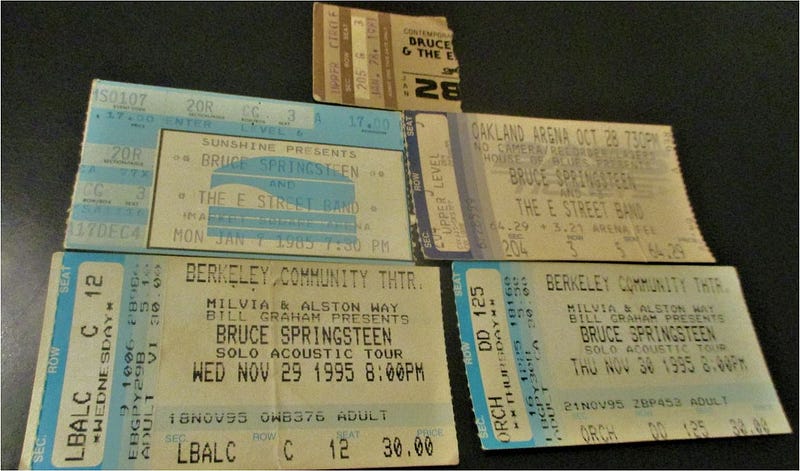
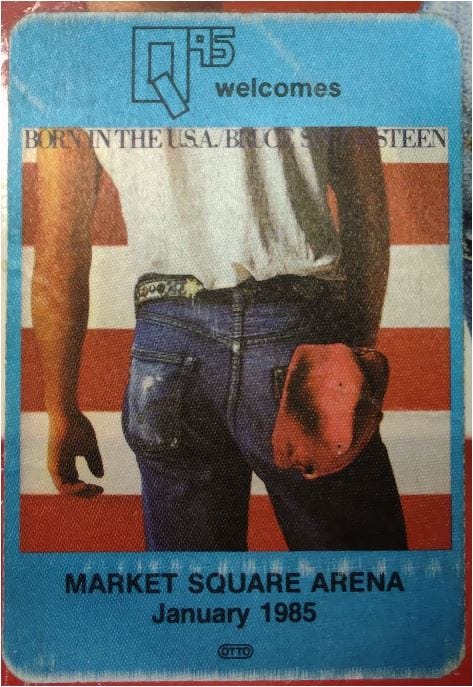
By 1985, when I saw Bruce, saxophonist Clarence Clemons, guitarist Steve Van Zandt and the rest of the E Street Band at Market Square Arena in Indianapolis on the “Born in the U.S.A.” tour, Bruce seemed like a good friend who would never let me down, regardless of my mood or frame of mind. In an uncertain world, Bruce Springsteen and the E Street Band held steady, keeping rock and roll on the front burner for anyone who cared to dine on the very special and intricately flavored sounds they cooked up time and time again.
We live in strange times but can still have faith in a better future
Flash forward to 2020, the year of COVID-19, political disarray and a pervading sense of things getting stranger by the day, if not the hour.
I no longer own a turntable, and I no longer subscribe to print newspapers with fat Sunday editions and all the inserts that used to make for a full, lazy morning of reading.
But I do get a monthly magazine from AARP, and when I pulled the October/November 2020 edition from my mailbox, Springsteen was right there on the cover, looking as cool and casual as he did in 1978 on that bleak yet hopeful cover of “Darkness on the Edge of Town.”
He’s not as young as he was then — who is? — but he’s still ready, willing and able to do what it takes to help us all answer with a resounding “yes!” when he asks, as he often does in concert, “What I want to know is, are you alive out there?”
For this Springsteen fan, the answer is still yes, and “Letter to You” goes a long way in reinforcing that feeling.
The opening track, “One Minute You’re Here,” rings with the wisdom of a man who knows he’s blessed to have come as far as he has, still savoring the magic of life but knowing in his soul the pithy yet profound truth of the song’s title and the conclusion to that familiar phrase: “One Minute You’re Here, Next Minute You’re Gone.”
Next up is the title track, “Letter to You,” which features some of the most heartfelt vocals of Springsteen’s storied career. He lets listeners know that he cares enough to share his life lessons with them in a way that he trusts will still be honest and genuine enough to make a difference:
“The things I found out through hard times and good I wrote ’em all out in ink and blood Dug deep in my soul and signed my name true And sent it in my letter to you”
‘Letter to You’ is packed with creativity, artistry of the highest order
By this point, listeners are more than able to recognize the creative and artistic depths of “Letter to You,” Springsteen’s 20th studio LP, which was recorded with the E Street Band at his home over the course of four days in November 2019. Clearly, everything fell into place during the recording of the 12 tracks, and their order of appearance on the album feels exactly right.
Additional highlights include “Last Man Standing,” in which the saxophone of Jake Clemons — nephew of the late Clarence Clemons, an original member of the band — seems to channel the same style, sound and spirit his uncle perfected on the Jersey Shore and went on to share with the world until his death from a stroke in 2011.
“House of a Thousand Guitars” is another song that stays with you long after the music stops, a composition about looking back at the good times even as the political age we’re living in now weighs heavy on our collective spirit:
“The criminal clown has stolen the throne He steals what he can never own May the truth ring out from every small-town bar And we’ll light up the house of a thousand guitars”
“Rainmaker” is perfectly paced rock-and-roll romp about how people facing desperate situations sometimes let themselves fall prey the most absurd promises and cons. It has the potential to be a crowd favorite in the post-COVID live music era, which may seem a long way away right now but nonetheless gets closer with every passing day.
“If I Was the Priest” and “Song for Orphans,” tracks 9 and 11, were written in the 1970s and are brought to life by the same penchant for lyrical storytelling that Bruce showcased on early albums that featured such gems as “It’s Hard to Be a Saint in the City,” “Growin’ Up” and “Lost in the Flood.”
Track 10, “Ghosts,” is in some ways the centerpiece of “Letter to You” as it encompasses all the themes that fuel the album: loss and endurance, the hero’s journey, the way that rock and roll still has the power to lift us up from the mundane and the madness and take us into another, more positively energized dimension. And perhaps most importantly, it answers Springsteen’s long-running question to his audience — what I want to know is, are you alive out there?
With a vigor undiminished by the mere passage of time and the losses suffered along the way, or even the losses still to come, Springsteen leaves no doubt where things stand:
I’m alive, I can feel the blood shiver in my bones I’m alive and I’m out here on my own I’m alive and I’m comin’ home
Where is that home, and how might we all be so lucky to find it?
For Springsteen, the specific answers are not be as important as the faith that enables him to trust in something more, something beyond this physical journey that will inevitably one day come to an end.
As he sings in “I’ll See You in My Dreams,” the album’s last track:
I’ll see you in my dreams We’ll meet and live and laugh again I’ll see you in my dreams Up around the riverbend For death is not the end And I’ll see you in my dreams
For those of us who became eager, willing recipients of Springsteen’s musical messages early on in his career, the cumulative effect of “Letter to You” is a sense of the sacred pervading the vicissitudes of day-to-day living, a perpetual rebirth of hope even in the face of unprecedented adversity, and an enormous sense of gratitude at having had such a loyal, talented and musically inclined pen pal lo these many years.
And yes, faith to believe in our dreams — even if they have changed from our long-ago idealistic visions of how our lives would unfold.
So long as Springsteen keeps writing, singing, and sharing his thoughts with the world, he’ll never lack for fans who always unearth profound synergistic gold in the act of listening. “Letter to You” is a gift from someone for whom giving of himself is a way of life. And as someone who continues to find joy in being on the receiving end of Springsteen’s musical gifts, the least I can do is thank him for writing.


